


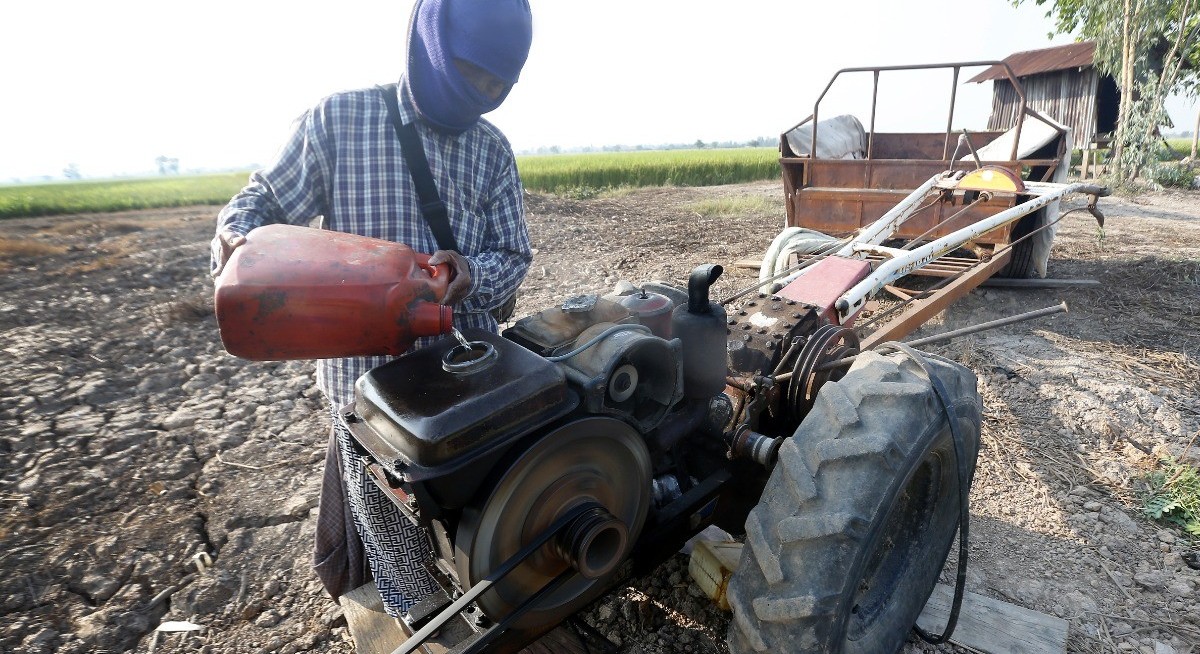


(March 26): Millions of motorists across Thailand woke up Thursday to the steepest fuel-price increases in decades after the government moved to rein in subsidies strained by surging global oil costs.
A routine late-night price announcement on Wednesday revealed a sharper-than-expected six-baht-per-litre increase effective on Thursday, sending gasoline prices up 14% to 22% by morning. Diesel — the backbone of Thailand’s transport, agriculture and industrial sectors — rose 18%, amplifying the shock for households and businesses already facing rising costs.
The impact was immediate, with long lines forming at gas stations overnight as drivers rushed to fill up before the price hike took effect. Concerns over shortages and rising costs had been building for weeks.
The increase marks a turning point for Thailand’s long-standing fuel-subsidy regime, introduced in the wake of the 1970s oil shocks. The Oil Fuel Fund, designed to stabilise and subsidise domestic prices, has seen its deficit widen as global crude costs climbed following the war in Iran, forcing the government to scale back support.

Prime Minister Anutin Charnvirakul’s government had already been forced to lift diesel price cap this week to contain mounting fiscal pressure, underscoring the limits of state intervention as global energy markets tighten.
See also: World’s top oil exporter driven to cut Asia flows as war bites
Higher fuel prices are expected to ripple through the economy, pushing up transport and production costs and adding to inflationary pressure on food and other essentials.
Emergency meeting
The prime minister convened an emergency cabinet meeting on Thursday to tackle the price surge and instructed ministries to propose measures to ease energy and living costs.
See also: Europe faced with near-empty gas stores just as war hits supply
The cabinet approved plans to cut fuel excise tax to help bring down retail prices. The government will also increase stipends for welfare card holders, subsidise fertiliser for farmers and fuel for fisheries, as well as price controls on essential goods.
Separately, the Bank of Thailand released an open letter from governor Vitai Ratanakorn to Finance Minister Ekniti Nitithanprapas, saying that higher oil prices could bring inflation back into the central bank’s target range sooner than expected.
Headline inflation, which has remained in negative territory for nearly a year, could return to the 1-3% target range earlier than anticipated, driven by rising energy costs and potential disruptions to global production, transportation and supply chains linked to the Middle East conflict, Vitai wrote.
Uploaded by Felyx Teoh




