


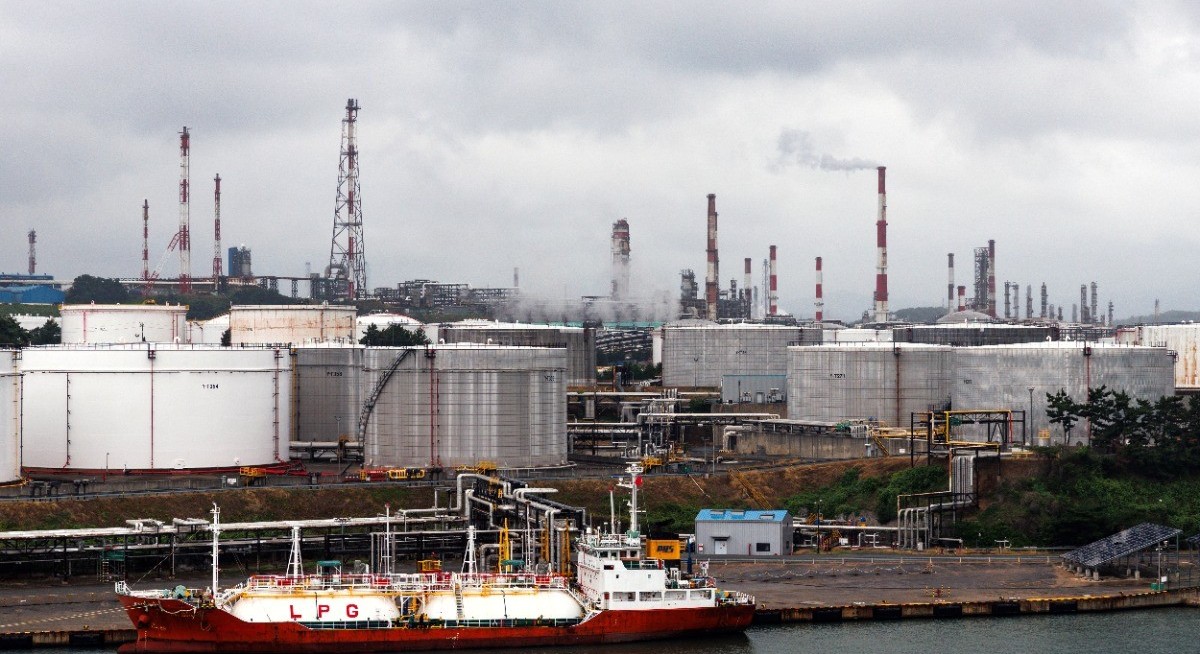


(July 16): Asian oil refiners are well placed to ship petroleum products to buyers in other regions, as renewed conflict in the Middle East and a ban on Russian diesel exports crimps supplies.
With fuel markets in Europe and the US already flashing signs of record tightness, Asian processors have inventories of products on hand to sell, as well as holdings of crude procured during an earlier lull in the fighting. That means they are in a good position to take advantage of healthy margins.
The outlook could change quickly, however, as the market faces a fresh round of upheaval after the US-Iran truce disintegrated amid a new wave of attacks focused on the Strait of Hormuz. While the return of the conflict has boosted crude oil, product prices rallied harder. That’s in part because Moscow recently halted diesel exports following a wave of Ukrainian drone strikes on its plants.
The situation represents a reversal of conditions faced by Asia in the early days of the US-Iran war, when the initial closure of the Hormuz cut off crude supplies, jolting processors. Now, China has given the green light for its refiners to ship more gasoline, diesel and jet fuel, relaxing curbs. Elsewhere, processors in India, South Korea and Japan may also benefit.

Asia “has been comfortably supplied with crude for the past month and refineries have cranked up to max intake to capitalise on strong product cracks,” said June Goh, senior oil market analyst at Sparta Commodities SA, referring to estimates of processing margins.
See also: Asian gas prices near four-month high on Mideast tensions
That suggests fuel exports from the region to Western markets including Europe “are possible if freight economics become more favourable and governments do not implement policy changes capping refined-products exports,” she added.
In India, the nation’s plants are geographically well placed to address shortages in Europe at a time when they are flush with cheap Russian crude and running at full capacity as the monsoon cuts domestic demand. Two of the largest plants, run by Nayara Energy Ltd and Reliance Industries Ltd, have also just completed planned maintenance.
Still for now, the situation remains fluid, and Asia may be prompted to prioritise domestic consumers again, as some governments did earlier in the war. In a sign of the shifting dynamics, India has again hiked taxes on diesel and jet-fuel exports.
See also: Oil holds gains as attacks on ships near Hormuz threaten supply
The situation in Asia “may be set to change in a few weeks as refineries reassess their crude-arrival programmes, which may not materialise now that Strait of Hormuz flows are more disrupted again,” Sparta’s Goh said.
There was also a note of caution from the International Energy Agency, which highlighted risks for Asian economies were Hormuz to remain closed much longer. “We may again have some difficulty for global economies, including those in the region and developing nations and Asia,” Fatih Birol told Bloomberg Television in an interview.
Although the disruption to Persian Gulf energy and feedstock deliveries has impacted economies such as South Korea and Japan, countries like Bangladesh, Pakistan and India are far more vulnerable to such cutoffs, Birol said.
Uploaded by Magessan Varatharaja




