


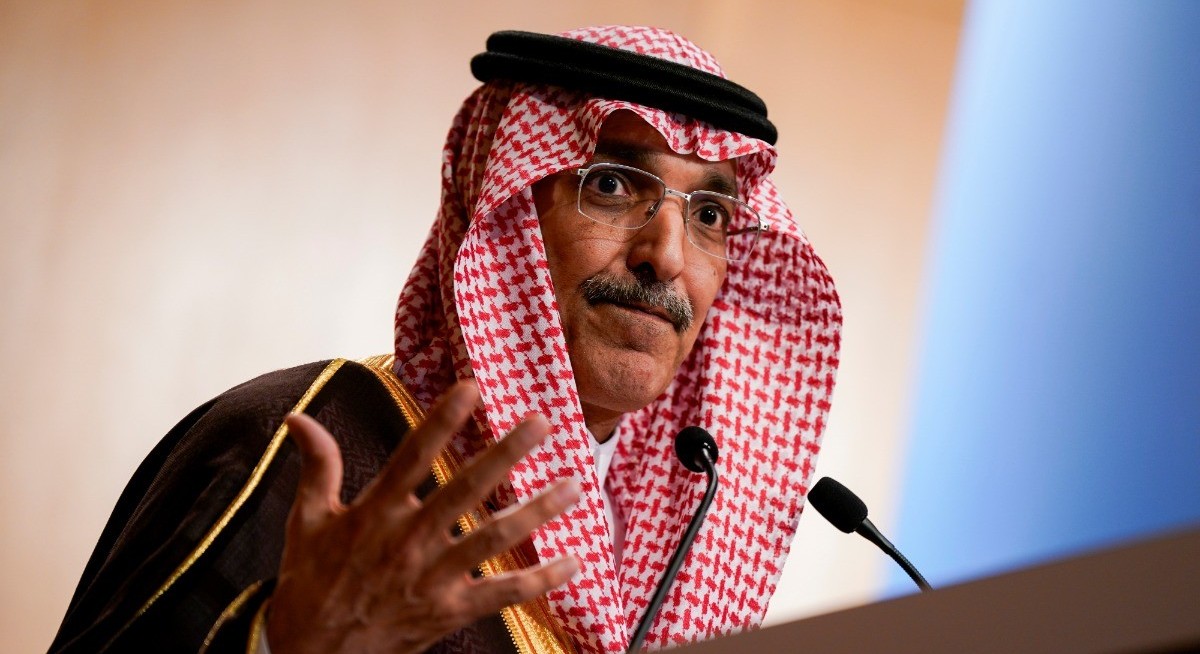


Saudi officials have widely telegraphed an ongoing review of Crown Prince Mohammed Bin Salman’s multi-trillion-dollar economic transformation plan that includes dozens of projects from desert ski slopes to gaming cities. But comments until now had mostly focused on delays or downsizing, rather than cancellation.
The hardening in tone aligns with the newly-released Saudi 2026 budget statement, which puts emphasis on the push to spend more efficiently amid challenges stemming from low oil prices and persistent budget deficits.
“Spending efficiency doesn’t mean cutting spending,” Al-Jadaan said. “It means decreasing spending on some items to increase on others.”
When Bloomberg asked if potential cancellation could include projects at futuristic desert city Neom, he said: “It’s for the Public Investment Fund (PIF) to decide.”
See also: a2 Milk CEO says he’s bullish on China as formula sales rise
Several parts of Neom — a project that has long been at the heart of the Vision 2030 portfolio — are facing delays and construction challenges, Bloomberg has reported. That includes Trojena, the site racing against a deadline to host the 2029 Asian Winter Games, and the Line, the 100-mile long skyscrapers set to undergo a strategic review for feasibility.
The US$1 trillion ($1.29 trillion) PIF, the entity tasked with driving the agenda to diversify the economy away from oil, is due to unveil an updated investment strategy in early 2026. That’s expected to include more of a focus on domestic companies and sectors including technology and tourism.
Al-Jadaan mentioned in the Riyadh briefing that the Finance Ministry’s re-calibration exercise included collecting data from government agencies on their strategies and financing needs, then deciding a course of action based on relevance of projects to the diversification drive.
See also: BlueScope eyes US growth with expansion, boosts investor payout
The PIF is now doing “something similar to what we did, reprioritising and making sure that their initial plans, now that they have the details of these projects, are recalibrated to ensure that they are delivering what they are meant to deliver”, said Al-Jadaan, a board member.
Monica Malik, the chief economist of Abu Dhabi Commercial Bank, said Al-Jadaan’s comments on the potential cancellation of projects gives confidence that the government can pull back on capital expenditure, while noting that managing spending on investments with returns will remain critical.
Farouk Soussa at Goldman Sachs Group Inc also welcomed the remarks, saying they show a willingness to adjust plans in line with economic and financial realities.
“The more transparent they are, the more reassuring they can be that financial and economic considerations will trump the social and political drivers of investment, the more favourably markets are likely to view the investment environment.”
Uploaded by Tham Yek Lee




