




Yet, if the series of unforeseen (and frankly, unfortunate) events in the past few years is anything to go by, demand for coal does not seem to be subsiding anytime soon. If anything, coal — typically seen as a more affordable source of energy — may be sought after again after the closure of the Strait of Hormuz led to oil price surges. About 20% of the world’s oil and liquefied natural gas (LNG) transits through the Strait of Hormuz.
According to the International Energy Agency (IEA), global coal demand is likely to remain “broadly unchanged” between 2025 and 2027. However, that estimate was given in December last year, before the Hormuz crisis. Given the ongoing circumstances, industry players believe that average coal prices — based on the Indonesian Coal Index Price for 4200 GAR (ICI4) at above US$50 ($63.95) will hold for at least one to two years.
Indeed, the coal business is very much alive for Geo Energy Resources (SGX:RE4 ) . On May 18, the company announced an offtake agreement with commodities trader Trafigura, under which Trafigura will purchase the entire production volume of Geo Energy’s Harfa mine, amounting to approximately 1.5 million tonnes per year. Under the terms of the agreement, Trafigura will provide between US$50 million and US$100 million in prepayment to help ramp up the production.
Also, Geo Energy will spend an initial capex of US$60 million to hire a mining contractor for 15 years to extract coal at the same Harfa mine, estimated to have reserves of between 15 million and 20 million tonnes. The contractor, East Wonders Indonesia, is backed by China’s Shanxi Yulong Group.
See also: Unearthing the business of Southern Alliance Mining
For Charles Antonny Melati, executive chairman and CEO of Geo Energy, coal is definitely not a sunset industry, but quite the reverse. “With the global uncertainties [and the] market economy not [doing well], for emerging countries, coal is still being adopted because it is the cheapest and most accessible energy,” he tells The Edge Singapore. Less infrastructure is required to mine coal than to build power plants for other sources, for example, Melati explains.
Evidently, some investors are willing to back Melati. On April 15, the company announced it had raised gross proceeds of $18.4 million by placing new shares to a group of investors at 52.5 cents each. The investors include Asdew Acquisitions, Ascend Open Master Fund, Icham Master Fund and Han Seng Juan, one of the two controlling shareholders of Centurion Corp. The growing interest from investors marks a stark contrast to a few years ago, when the company was shunned, along with the rest of the coal sector, over ESG concerns. For years, the company traded at a fraction of its book value and at a low single-digit P/E, even though it was being cheered along by Jim Rogers, a notable commodities bull, as both a shareholder and a director.
Macroeconomic factors aside, Geo Energy is set to enjoy stronger top and bottom lines with its upcoming integrated infrastructure project, which is tipped to be completed by 3Q2026. In a March 17 announcement, the group said the project, a 92km hauling road and jetty in South Sumatra, Indonesia, was 80% completed. The road cuts through two provinces, South Sumatra and Jambi. For context, that is roughly the distance from Singapore to Yong Peng in Johor, about an hour’s drive up the North-South Expressway.
See also: Regis to buy Vault Minerals to form US$7.7 bil gold miner
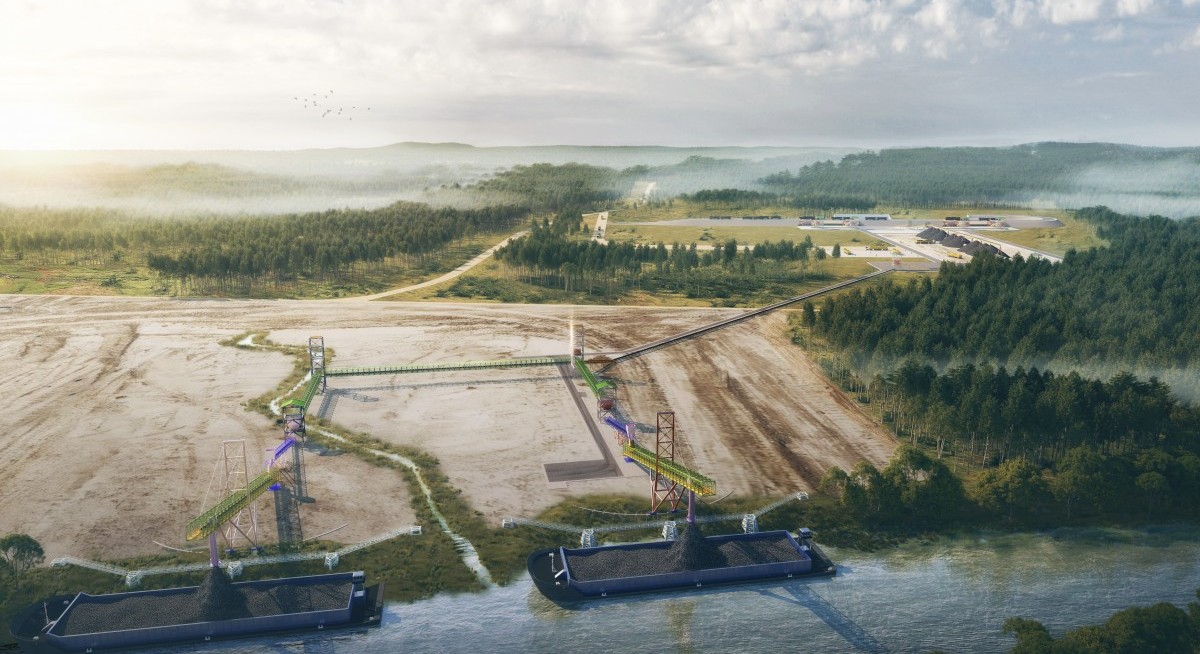
It all began when Geo Energy first acquired a 33% stake in PT Marga Bara Jaya (MBJ) on Oct 18, 2023. According to the group’s website, the latter came with several features, including a ready-for-development 92km-long all-weather hauling road with key permits and licences, as well as land and a 50ha riverbank. The road and coal terminal port at the river has a targeted capacity of up to 50 million tonnes per year. Of this, 25 million tonnes of coal is reserved from the TRA mine per year, while the remaining 25 million tonnes will be leased to the surrounding mines.
On Aug 1, 2024, the group increased its stake in MBJ to 58.7% after exercising the option to buy an additional 257 shares, representing a 25.7% stake, for US$150 per share. It has since increased its effective interest to 71.3%.
To construct the road, the group awarded an engineering, procurement and construction (EPC) contract worth US$150 million to a consortium comprising Chinese state-owned enterprises (SOEs), CCCC First Harbor Consultants Co and Norinco International Cooperation. A groundbreaking ceremony was held on Nov 20, 2024.
The road, which connects Geo Energy’s Triaryani (TRA) coal mine — as well as the neighbouring mining concessions — to the jetty, is expected to generate recurring income for the group. The new route is not only shorter than the current 137 km-long, non-all-weather road; it will also save 30% on logistics costs.
An investment that paid off
Even before the infrastructure is completed, Geo Energy has already attracted investor interest.
On May 11, the group announced that Swiss-based private commodities investment group Resource Invest AG (ResInvest) will invest in MBJ at a valuation of US$1.5 billion. Both parties signed a term sheet, with the amount, percentage holding and other details to be finalised in the definitive agreement. ResInvest is not new to Geo Energy. Its subsidiary, ResInvest Commodities (formerly EPR Asia), is already the offtaker for TRA’s coal.
To stay ahead of Singapore and the region’s corporate and economic trends, click here for Latest Section
The investment will comprise an initial one in 3Q2026 and the remainder in 1Q2027. The amount brought up in the discussions is deemed to be “substantial”, said Geo Energy.
The valuation, says Melati, was calculated based on the road’s capacity. Assuming a load capacity of 50 million tonnes at a net profit of US$5 per tonne, the group will make US$250 million per year. At a P/E multiple of eight times, which is “normal” for infrastructure, Melati says the group arrived at a valuation of US$1.5 billion ($1.9 billion). The May 11 announcement added that the infrastructure is targeted to generate an additional US$300 million in ebitda per annum for the group “within a few years”, well above the group’s highest recorded earnings of US$179.1 million in FY2021.
Beyond the toll fees, the group will also charge for loading and unloading of goods at the jetty, though the toll will make up a bulk of the margin. A third party will undertake haulage. On March 17, Geo Energy announced that it signed two binding term sheets with third-party coal producers for an aggregate haulage volume of about 9 million tonnes per annum. Including the 25 million tonnes of annual haulage allocated to the group’s TRA mine, the group has secured up to 34 million tonnes per annum of throughput for the infrastructure.
While the fees have not been formally announced, Melati expects them to be linked to prevailing coal prices. “We may explore the same business model for the road users — toll fees in tandem with the coal prices. If coal prices drop, we may lower [our fees]. If coal prices are high, we may get an upside, together.”
Even without third-party fees and purely on a 30% cost reduction for TRA’s own coal, the group estimates it’ll take about three to four years to break even, based on a production target of up to 25 million tonnes a year from the mine.
While the “good thing” about the mine is its reserves of over 300 million tonnes, Melati acknowledges that the group’s real purpose was to buy the road. “The opportunity to own the road infrastructure was a key reason to acquire the TRA mine.” Even if the TRA mine is mined out after 20 years and beyond, the road will remain, providing toll revenue, he adds.
Once completed and operational, the group will think of ways to unlock value from the road.
Still, the road is already bringing value to the local community. “This road has a multiplier impact on the community. Imagine we run this road 24 hours, it would create jobs.” The road and the TRA mine together are expected to create between 4,000 and 5,000 jobs.
Asked why its neighbouring mines had not attempted something similar, Melati notes the project’s complexity and cost.
“First thing, of course, is the capital. Second thing, it’s not easy to acquire 92km of land. That will take a very long time.” He adds that the pre-approved licence Geo Energy inherited with the MBJ acquisition compressed what might otherwise have been years of groundwork.
As of the group’s annual general meeting (AGM) on April 29, Melati estimates that the road would be almost 90% complete, with monthly progress improving to 5%–6% from 2%–3% as construction enters its final phase. The group is careful to ensure its foundations are stable, as it intends to use the road for the next 20 to 30 years.
Expanding the transport network
While MBJ is the group’s focus at the moment, Geo Energy has other growth plans.
In January, the group completed the acquisition of 51% stakes in two Indonesian shipping companies, PT Trans Maritim Pratama and PT Bahari Segara Maritim. This move lets the group “secure key logistics capacity and maintain control over the entire logistic transportation process”. The acquisition will also allow the group to reduce reliance on third-party transporters, improve operational reliability and increase its operational margins in its shipping business.
Then there is coking coal. On April 1, Geo Energy signed a binding term sheet to acquire a majority stake in PT Harfa Taruna Mandiri, a hard coking coal concession in Central Kalimantan. Coking coal, which is used in modern steelmaking, consistently commands a “significant price premium” over ordinary thermal coal. In its announcement, Melati said that the proposed acquisition is structured to be “value-accretive with minimal upfront commitment and strong long-term upside”.
Despite the diversity of these acquisitions, Melati frames them as extensions of the same business rather than departures. “We have been in the coal business since 2008 till now and coal is still our core. These acquisitions are all downstream from our coal.”
FY2026 expected to be a good year
For now, Melati believes 2026 will be a good year for the group, especially given higher coal prices.
The group has targeted a production volume of 11.5–12.5 million tonnes. Assuming these volumes at current prices, the group expects to generate US$170 million to US$200 million in ebitda from coal sales alone.
For 1QFY2026, the group reported a net profit of US$4 million, down from US$14.1 million in the same quarter a year earlier. Despite the drop, the group is optimistic it will do well, given the current strength in coal prices and the ramp-up of TRA production in the second half of this year.
1QFY2026 revenue also fell by 42% y-o-y to US$95.8 million, mainly due to the lower coal sales volumes in the coal mining segment. While the average selling price rose to US$48.56 during the quarter, up from 1QFY2025’s US$46.98 per tonne, the group’s first-quarter results had not fully reflected the higher ICI4 prices, given that the spike occurred around March. The group’s cash profit per tonne was US$10.66, down from US$11.16 a year earlier; based on current coal prices, it expects this figure to increase.
Geo Energy, which pays dividends quarterly, has maintained its 1QFY2026 payout ratio at around 30%–34%. When asked whether the group was considering raising dividends, he noted that its dividends are paid more frequently than expected and that it still intends to expand its business over the next few years. “I try to give value to our shareholders. It’s not only for them, but also for myself,” laughs Melati, who is the company’s single-largest shareholder with a stake of nearly 30%.
The group is also still on the lookout for acquisitions.
“We are exploring a few mines also in this area in Sumatra, near our infrastructure project,” says Melati.
Regarding the factors he looks for, Melati says the acquisitions must be “economical,” and the reserves must be “sufficient” for the group to mine.
The most important thing, he says, is to ensure that they’re buying the land, too. “In Indonesia, you can only buy the mine, not the land. You can apply for the licence and only get the licence, but the land still does not belong to you,” he says. “Any potential mine that we consider buying has to have good logistic connectivity.”
On valuation, Geo Energy’s market cap crossed $1 billion on April 13, some 14 years after its listing. That said, Melati believes the group is still being undervalued given its US$1.5 billion investment in MBJ alone.
Analyst Paul Chew of PhillipCapital, who has a “buy” call on Geo Energy, believes the group is benefitting from a “trifecta of tailwinds”. “Coal prices are rebounding strongly, and the new US$190 million infrastructure is expected to double coal production and provide recurrent toll and freight fees for the company,” he says. As at his March 16 report, Chew has a target price of 75 cents — up from 59 cents previously — and an FY2026 revenue and net profit estimate of US$573 million and US$56.8 million, respectively.
KGI Research’s Alyssa Tee has maintained her “outperform” call in a May 18 update, raising the target price to $1.27 from $1.02. Tee’s new target price factors in the removal of MBJ from the discounted cash flow (DCF) framework and is based on the ResInvest deal, including the addition of the group’s marine logistics arm to the DCF at the group’s 51% economic interest. Given the group’s 71.3% interest in MBJ, the latter alone is attributable at US$1.07 billion, exceeding Geo Energy’s market cap, she points out. In FY2026, Tee estimates that Geo Energy will bring in US$606.6 million in revenue and US$56.9 million in net profit.
Regulatory issues
Given volatility in the energy market, the Indonesian coal miners may be able to move ahead despite criticisms from the ESG crowd. However, as recent developments have shown, they need to brace for external influences of another kind: regulatory challenges.
On May 20, Indonesia announced plans to centralise control of commodity exports, including palm oil and coal.
The announcement sent the share prices of various Singapore-listed Indonesia-based commodity stocks down. Geo Energy’s share price, for one, was down from 56 cents on May 19 to 47 cents on May 26.
In response to this development, Geo Energy views the announcement as part of a broader effort to strengthen state oversight and improve coordination across key resource sectors.
“While the initiative may enhance regulatory efficiency and support national revenue objectives over the longer term, further clarity is expected regarding the implementation framework, administrative processes and documentation requirements,” says Geo Energy in a statement on May 25.
Geo Energy adds that, given the involvement of multiple agencies and industry players, this “transition period may take time to fully evolve and be implemented”.
As of May 25, Geo Energy says it has not received any official communication or directive regarding the matter and will continue to closely monitor developments while engaging with the relevant authorities and stakeholders as appropriate.
In the meantime, Geo Energy says its fundamentals remain strong. “Our current production, logistics, customer relationships, and export activities continue as normal” and that it is making “steady progress” on the construction of the road and related infrastructure.
“The group will continue to execute its growth strategy and operational plans in a disciplined manner while remaining agile and responsive to evolving regulatory and policy developments,” says Geo Energy.




