


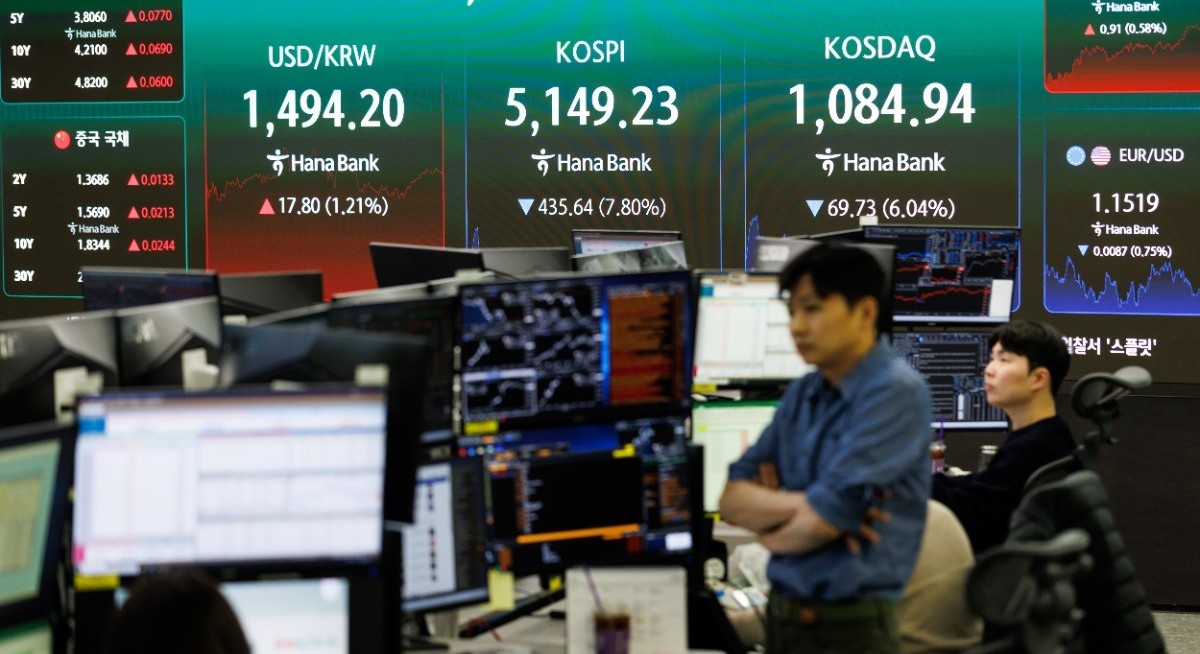


(March 18): South Korean stocks jumped on Wednesday after authorities moved to restrict publicly traded companies from listing certain subsidiaries, curbing a practice long blamed for diluting shareholder value.
The benchmark Kospi surged 5%, extending gains for a third session, after Financial Services Commission (FSC) chairman Lee Eog‑weon announced new measures at an investor meeting in Seoul on Wednesday. A more than 5% jump in Kospi 200 futures also triggered a halt in programme trading to curb volatility.
“We will establish solid standards to ensure that the rights and interests of general shareholders are not harmed by the simultaneous listing of parent and subsidiary companies,” Lee said. “We will prohibit duplicate listings in principle through strict screening.”
“Double listings” tend to depress holding‑company shares and are widely seen as one of the structural causes of South Korea’s chronic equity undervaluation, known as the “Korea discount”. By banning them, the government aims to lift market value and narrow the gap with global peers.
The move is also part of President Lee Jae Myung’s broader push to modernise governance and restore confidence in capital markets. Such measures helped fuel the world’s best stock rally last year, but momentum has largely stalled since the Iran war, with investors seeking fresh catalysts.

See also: Is accountancy still relevant for the Singapore stock market?
To prevent companies from ignoring low share prices, South Korean authorities will push companies with low price-to-book ratio to enhance corporate value through measures such as naming-and-shaming, the FSC chairman said.
South Korean stocks also drew support from Samsung Electronics Co’s shareholder meeting on Wednesday, in which the chipmaker offered a positive outlook on AI demand. Samsung Electronics and SK Hynix Inc both jumped more than 7%.
“The move to bar duplicate listings is being seen not as a blunt regulatory curb but as a structural remedy” to the Korea discount, said Kim Namho, a general manager at Timefolio Investment Management in Seoul. “By pre-emptively blocking shareholder dilution at holding companies, the policy is set to reduce large conglomerates’ reliance on subsidiary IPOs.”
See also: Newly-listed UltraGreen.ai joins three SGX ‘veteran’ stocks on iEdge Singapore Next 50 Indices
IPO plans
Many South Korean conglomerates, known as chaebol, have relied on affiliate initial public offerings or IPOs for fundraising. Several major chaebols such as SK Inc, HD Hyundai, and Hanwha Group currently have plans to list shares of their affiliates.
But with new rules restricting affiliate listings, fewer strong business units are likely to be spun off into separate firms, said Jung In Yun, the chief executive officer of Fibonacci Asset Management Global.
“Conglomerates have repeatedly spun off their best divisions and taken them public through IPOs,” Yun said. Such moves “create dilution and prevent the value of the existing company from rising”.
Shares of holding companies including CJ Corp and SK extended gains following local reports on the proposal earlier in the week. Shares of CJ rose 3.6% on Wednesday, while SK jumped 3.7%.
LG Energy Solution’s 2022 IPO is often cited as a case in point. LG Chem Ltd spun off the fast-growing battery unit at the height of the electric-vehicle boom, after which the parent’s shares fell about 9% in the following month before entering a prolonged decline.
The new rules will push companies to rethink long‑term financing strategies, said Dilin Wu, a research strategist at Pepperstone Group.
For now, investors appear to be focusing “on the valuation premium that better governance can bring rather than the temporary loss of an IPO window”, Wu said.
Uploaded by Tham Yek Lee




