


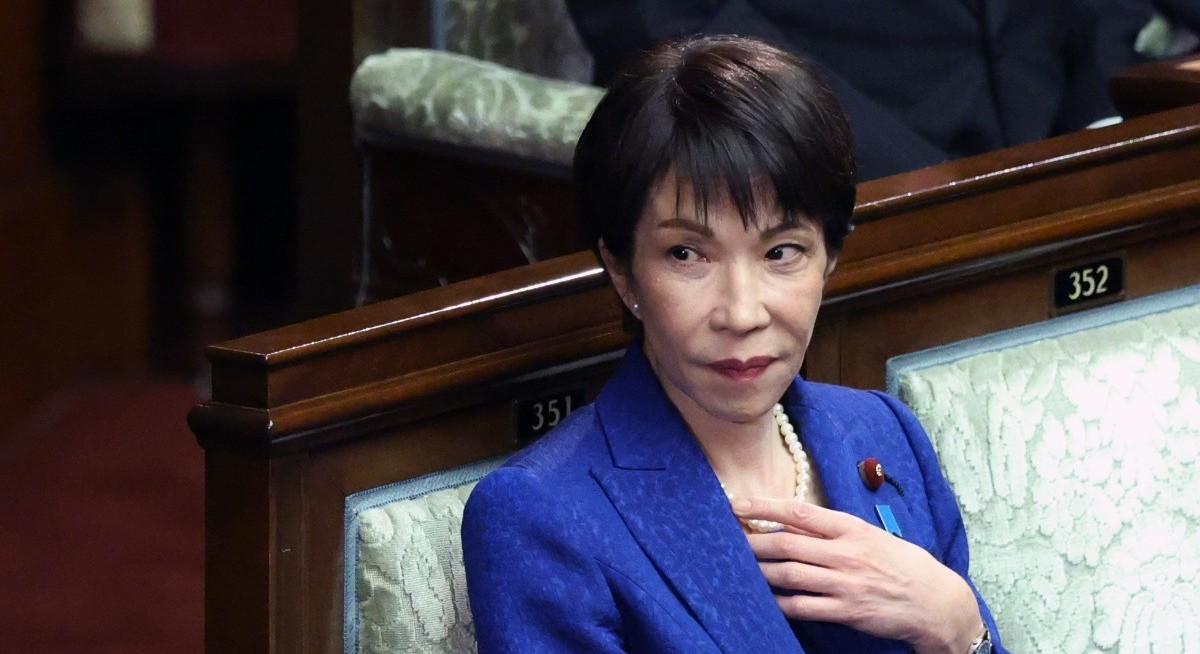


(Jan 26): Japanese Prime Minister Sanae Takaichi’s approval ratings saw a slight dip in several polls conducted over the weekend, pointing to the riskiness of her decision to call a snap election in early February.
The polls paint an early picture of how voters are viewing the election that Takaichi announced last week as she seeks a mandate backing her premiership. While her approval rate remains fairly high by historical standards, the dip in support shows some voters didn’t support her decision to call a snap election.
Support for Takaichi slipped four points to 63% in a Kyodo poll, four points to 69% in the Yomiuri newspaper, and 5.4 points to 57.6% in broadcaster ANN’s survey. Bigger drops were seen in the Nikkei and Mainichi newspapers, with Nikkei marking an eight-point decline to 67% and Mainichi seeing a 10-point fall to 57%.
Takaichi brushed off concerns over the dip in approval ratings during a party leader debate held on Monday afternoon. Instead, she dug in her heels by putting her job on the line.
“If the Liberal Democratic Party (LDP) and the Japan Innovation Party (JIP) can’t win a majority, I will immediately have to resign,” she said.
The Mainichi report showed that 41% of respondents didn’t agree with the timing of Takaichi’s dissolution of Parliament, which fell on the opening day of the regular parliamentary session, inevitably delaying passage of the budget for the fiscal year starting April.
See also: Japan’s Takaichi details possible response to Taiwan issue
Despite the slide, Takaichi’s approval is still hitting the upper 60s in some polls, speaking to her enduring underlying popularity and leaving her with some leeway.
The Centrist Reform Alliance (CRA), a party borne out of a merger between what was the largest opposition Constitutional Democratic Party (CDP) and the LDP’s former junior coalition partner Komeito, appears to be struggling to gain ground despite its efforts to challenge the ruling party.
The ANN poll showed that 26% had hopes for the CRA while 62% said they didn’t. The Yomiuri survey tracked a similar trend, with 22% saying they were hopeful while 69% said they weren’t.
See also: Japan’s bond meltdown spurs speculation of GPIF portfolio shift
Despite frustration over Takaichi’s decision to call the election and some skepticism over her plans to suspend the sales tax on food temporarily, voters were supportive of the current coalition formed last October between the LDP and JIP.
Some 67% of people in the Nikkei poll wanted to see the LDP-JIP partnership in government, while 54% in the ANN poll wanted to see a continuation of an LDP-led coalition in power.
An age-based breakdown of the Nikkei survey showed that the LDP remained the most popular party among voters aged under 39. If they didn’t support the LDP, they were more inclined to vote for the DPP or Sanseito instead of the CRA, compared to older generations. While 35% said they would vote for the LDP, 18% preferred the DPP and 11% went for Sanseito, while just 4% supported the CRA.
That survey also showed that 40% of respondents planned to vote for the ruling LDP. That figure is on a par with a similar survey published before the previous lower house election in October 2024, when the LDP led by then-prime minister Shigeru Ishiba lost its grip on power in that chamber.
While Takaichi seems to be banking on her personal popularity to boost the number of seats in the lower house and cement her power, polls suggest that her personal support hasn’t necessarily translated into support for the broader party. That throws into question whether the LDP can pull off a win, especially as a key issue that undermined its support in the last two elections persists: soaring costs of living.
Food sales tax
Consumer price growth has stayed above the central bank’s 2% target for four straight calendar years, and date due Friday are expected to extend that streak for another month.
To stay ahead of Singapore and the region’s corporate and economic trends, click here for Latest Section
Soaring food costs are a key component driving broader inflation higher. The proportion of food spending within overall household consumption came to 28.9% in November, the highest for that month since comparable data became available in 2000.
To address such voter concerns, many of the parties have pledged to cut the sales tax on food, though to varying degrees and for different lengths of time. The ruling bloc has called for a two-year suspension of the sales tax cut on food, while the CRA is seeking to eliminate it.
The debate over the sales tax has moved beyond whether to cut it, to whether pausing or eliminating the tax is a viable option, and how best to replace the lost revenue. While the ruling bloc and the CRA have both said they do not plan to issue deficit bonds to fund the tax cut, details beyond that have remained hazy.
“We will accelerate the discussion of how to fund the tax cut and when to implement it,” Takaichi said on Monday, referring to a ‘national panel’ that will be established to discuss the possible suspension of the food levy. She added that she personally wants to submit the food tax suspension bill by April next year, but deferred to the panel on the details.
CRA head Yoshihiko Noda, on the other hand, sought a speedier delivery. “The markets are very jumpy at the moment, so we’ll be sure not to issue any deficit bonds and be clear about funding. I want to see implementation by this autumn, if it’s possible,” he said.
Yuichiro Tamaki, the leader of the DPP, took a different tack and said that he only supported a sales tax cut as a form of economic stimulus, rather than as a means of helping households cope with inflation.
“We will decide whether a tax cut is necessary based on whether mid- to small-size businesses manage to reach a nominal wage growth rate of 5%” in upcoming annual wage negotiations, he added.
Official campaigning starts on Tuesday. Voters will head to the polls on Feb 8.
Uploaded by Tham Yek Lee




