


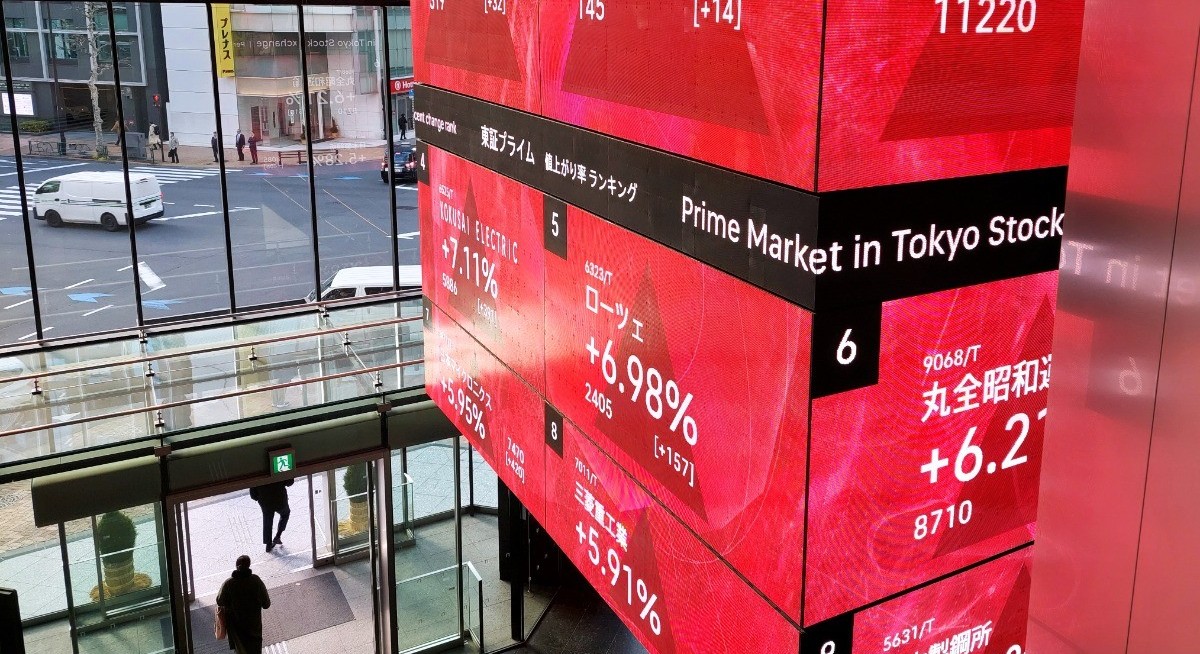


This comes after Japan’s stock market posted the strongest start to the year since at least 1990, according to Bloomberg-compiled data. The Topix and the tech-heavy Nikkei 225 climbed for two consecutive days at the beginning of the trading year. Both indexes also hit record highs on Tuesday (Jan 6).
“Whether it’s Taiwan stocks selling off because China might invade or Japanese stocks selling off because China is trying to punish Japanese policymakers for what it perceives as interferences—it’s a buying opportunity,” said Phillip Wool, head of portfolio management at Rayliant Global Advisors Ltd. “I would bet against this turning into something bigger that should concern investors.”
The Topix Transport Equipment Index, which is comprised of auto companies and car parts manufacturers, led declines with a drop of as much as 2.5%. This reflects potential supply chain disruptions stemming from China’s dominance of rare earths, which are essential for electric vehicles.
“You should expect continued pricing volatility in the electronics and automotive sectors,” as those such as EV motors rely heavily on rare earths sourced from China, said Sandeep Jadwani, head of investment advisory at H Capital Ltd.
See also: Japanese investors stay wary Takaichi will spur another bond crash
In contrast, Toyo Engineering Corp, which makes technology to recover rare earths from the seabed, climbed 20% on the view that Japan will need to broaden its supply chain.
Overall, major Japanese brokerage CEOs predict the country’s equities will have another strong year. In 2025, the Topix gained more than 20%. This has prompted Goldman Sachs strategists to lower their rating for the nation, though stating that they continue to “remain constructive on alpha opportunities.”
“At this stage, I see this as a short-term blip rather than a regime shift,” said Dilin Wu, a research strategist at Pepperstone Group Ltd. “With global liquidity still in place and many Japanese stocks trading at reasonable valuations versus history and regional peers, selective dip buying can make sense.”
Uploaded by Arion Yeow




