


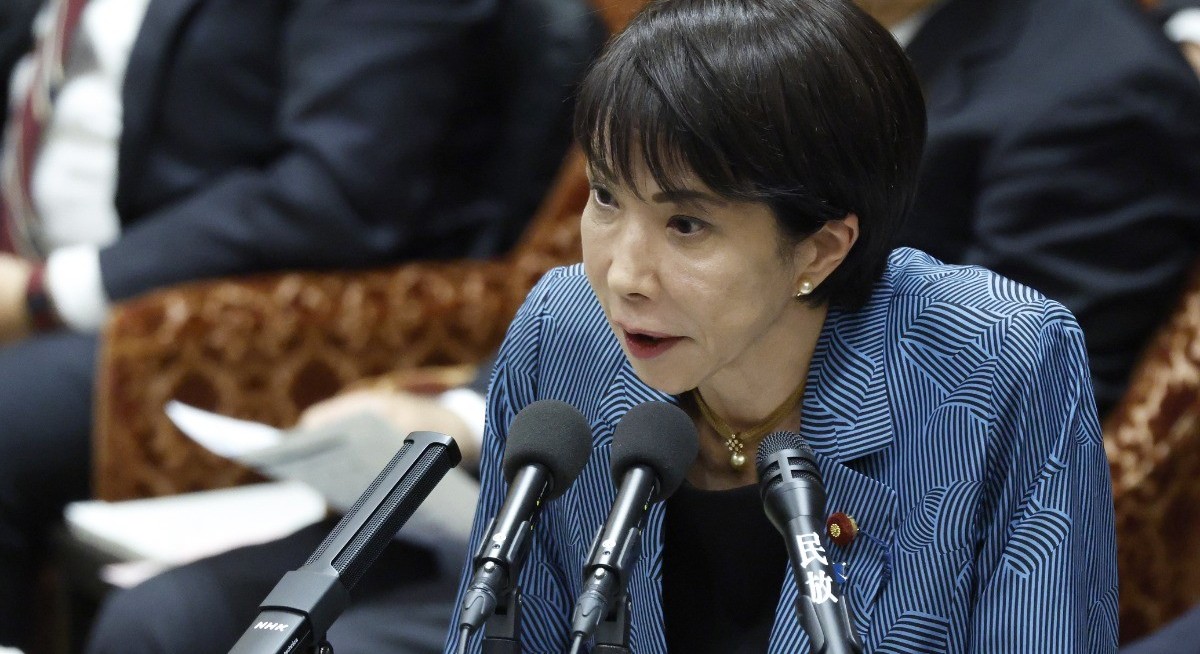


(Feb 12): Japanese Prime Minister Sanae Takaichi’s landslide election win saw a largely positive initial response from investors. But they remain wary of another market meltdown over her expansive spending plans.
In her first press briefing after a historic victory on Sunday, Takaichi acknowledged market concerns over how she’ll be able to cut the sales tax on food for two years while ramping up spending on defence and strategic industries. Worries that she would add to Japan’s mountain of public debt prompted yields to spike last month to the highest levels in decades.
Takaichi emphasised the prudence of her “responsible proactive fiscal policy” while insisting that Japan “must make a complete break from excessive austerity and chronic underinvestment for the future”.
Her bet is that continued inflation and faster nominal growth in the economy will cover any holes in the nation’s finances in the coming years. But investors want clarity on the specifics.
“With the public finances already extremely stretched, the threat of further spending and an increase in debt issuance will add to the risk premium and could trigger a fresh sell-off in bonds and a jump in yields,” said Matthew Ryan, the head of market strategy at financial services firm Ebury.
January’s flare-up saw investors frantically ditching bonds in a selloff that pushed up yields beyond 4% on the longest-dated Japanese government bonds, generating concerned comments from US Treasury Secretary Scott Bessent as the impact rippled through global financial markets.
See also: Japan’s biggest nuclear plant restarts second time after hiccup
Takaichi this week insisted the government wouldn’t sell new bonds to fill the spending gap, saying instead her administration would review subsidies, special tax measures and non-tax revenues to find funding that is “sustainable”.
“The concerns are simmering over how the measures would be funded and whether they will end up resorting to issuance of deficit-covering bonds,” said Naomi Muguruma, the chief bond strategist of Mitsubishi UFJ Morgan Stanley Securities. “A fundamental concern is the risk that the tax cut will last beyond two years.”
History shows those concerns are valid. The sales tax took around a decade to introduce and subsequent increments have triggered the economy to shrink on each occasion by as much as 11% in annualised terms. The last two increases were delayed in an indication of the political difficulty of raising the tax — fuelling doubts over how easy it would be to temporarily lower it.
See also: Japan defence stocks surge on Takaichi’s national security plans

In defence of the government’s spending plans, Finance Minister Satsuki Katayama has pointed out that for the annual budget for fiscal 2026, the issuance of new bonds has been kept below JPY30 trillion (US$195 billion or $248 billion) for a second straight year.
A two-year suspension of the sales tax on food would cost JPY5 trillion each year. One option to plug the gap is to draw on non-tax revenue sources such as money made from the Finance Ministry’s foreign exchange reserves, including gains stemming from currency intervention. The estimated surplus for the account this fiscal year was about JPY4.5 trillion — and 70% of it can be used for budget financing under a ministry guideline.
But other sources of funding would still be needed if the government is to reduce the sales tax without issuing more bonds.
“Her victory is too big to not proceed with cutting the sales tax,” said Ayako Fujita, the chief Japan economist of JPMorgan Securities. “Markets must stay on alert.”
Japan’s benchmark 10-year bond yield has been hovering around 2.2%, almost double the level from a year ago and higher than the 2% assumed rate for the budget for the fiscal year ending in March. This change translates into a significant cost for the government as it issues new bonds at higher rates to fund the purchase of older bonds that are coming due.
Those costs are likely to rise further as the Bank of Japan (BOJ) weighs more interest-rate hikes, putting upward pressure on yields.
To stay ahead of Singapore and the region’s corporate and economic trends, click here for Latest Section
Outlays for servicing Japan’s mountain of debt — more than twice the size of the economy — have grown by one third in the past decade and now make up a quarter of the annual budget.
“I hope that Takaichi administration is doing a decent and careful estimate for an increase of debt servicing costs,” Fujita added. “With the BOJ’s rate hikes, the reality is it will go up.”
Takaichi has tried to switch the focus away from balancing the budget on an annual basis to lowering the nation’s debt load in comparison with gross domestic product, now around 230%.
According to the International Monetary Fund’s projection in October, Japan’s overall budget deficit excluding net interest payments was 0.9% last year, the narrowest since 1992. The size of tax revenue has more than doubled since the aftermath of the global financial crisis in late 2000s.

Sovereign credit default swaps, a gauge of market views on the risk of default, are around 26 for Japan, similar to France and lower than for the US. Fitch told Bloomberg last month that it had no plan to downgrade Japan’s credit ratings for now as they had already expected Japan to shift to a more expansionary fiscal policy.
“If you look at the Japanese economy’s growth rate in nominal terms, this is a really big transformation we have seen in the last few years because we have got back to positive inflation,” Brian Coulton, the chief economist of Fitch Ratings, said on Bloomberg TV on Friday. “It’s actually meaning that the economy looks kind of healthier in a broad sense, and I think that’s easing some of the concerns about the potential fiscal dynamics.”
As inflation eases the pressure on Japan’s finances, the BOJ’s normalisation policy is increasing the vulnerability of long-term bonds.
Governor Kazuo Ueda scrapped the purchasing of bonds as a tool to control bond yields in March 2024, after which the BOJ has been downsizing its purchases. Even though the central bank continues to hold half of the outstanding bonds, it is no longer stepping into the market with extra purchases when yields rise.
What’s more, global investors who tend to move money in and out faster than long-term local holders now account for roughly 65% of monthly cash transactions in Japan’s government bond market.

The central bank has said it will take extra action in the case of extraordinary circumstances such as a global financial shock, but its lack of action during the January bond yield jitters indicates that such episodes are largely being viewed as the necessary growing pains of a policy shift. It remains to be seen if an emboldened Takaichi will pressure the BOJ to take action in the future.
Changes in regulations for life insurers and banks are also making it more difficult for them to fill the space left by the BOJ despite rising yields. New rules made it difficult for banks to hold longer-dated bonds, because their deposit liabilities are short-term in nature. Life insurers have little need to add such debt after already increasing holdings to match their long-term obligations to pay out policies under revised regulations.
With the election results on Monday, Takaichi said talks with opposition parties were needed on the sales tax, given the complexities of the issue, with initial conclusions to be reached by the summer. That may still leave wiggle room for an alternative solution that might be cheaper or avoid the challenges of a temporary reduction.
With opposition parties suffering a crushing defeat, “the system of checks and balances on a Takaichi administration has effectively weakened”, said Muguruma of Mitsubishi UFJ Morgan Stanley Securities. “That leaves financial markets as the only remaining force capable of exercising discipline.”
Uploaded by Tham Yek Lee




