


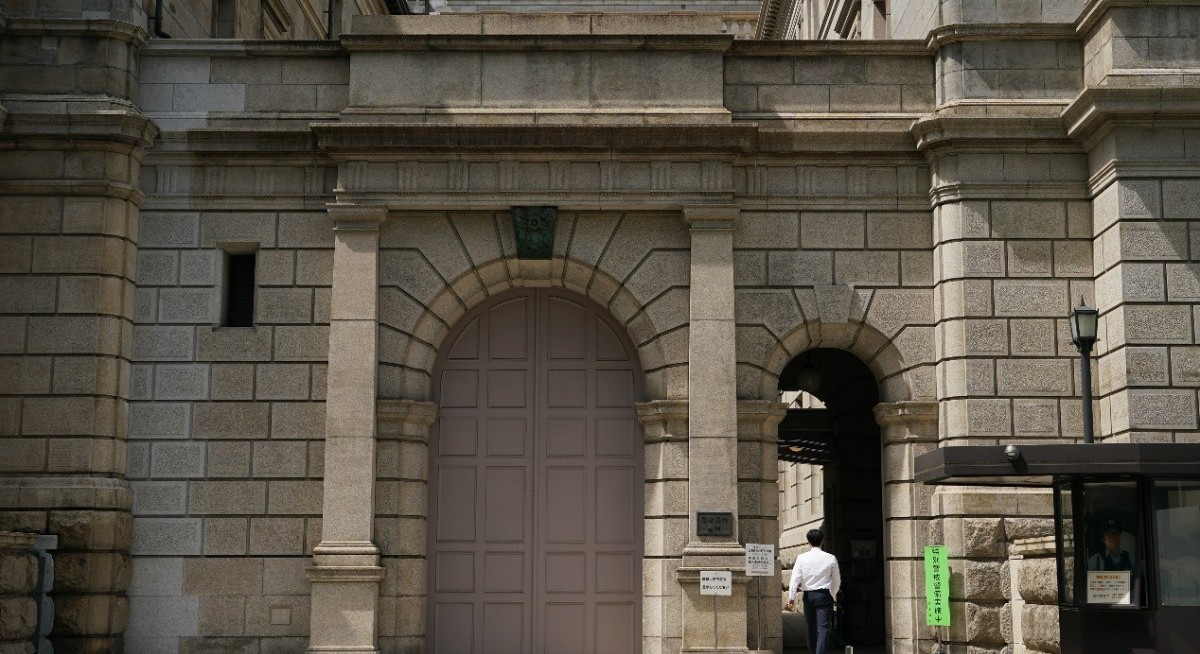


(June 10): Bank of Japan (BOJ) watchers are penciling in two hikes to the benchmark interest rate this year — with the first coming next week — as they increasingly see the war in Iran as likely to spark a sustained run of inflation.
Some 49 of 51 economists expect the BOJ will raise the key rate a quarter point to 1%, the highest since 1995, when the policy board concludes a two-day meeting on June 16, according to a survey by Bloomberg News. The poll also shows respondents seeing the rate rise to 1.25% by year-end, implying one more hike by then.
The survey comes as elevated oil prices prompt monetary authorities around the world to shift towards a hawkish bias. The European Central Bank is widely expected to raise borrowing costs this week for the first time since 2023 while several officials at the US Federal Reserve have pivoted lately to suggest the possibility of a rate hike by year-end.
Expectations for a rate increase in Japan gained momentum after governor Kazuo Ueda signaled last week he was more worried about the upside risks to prices than the potential economic impact stemming from turbulence in the Middle East.
“The focus of this meeting will be how far governor Ueda goes in discussing the possibility and necessity of accelerating the pace of rate hikes — in other words, whether he will suggest a shift toward being an ‘inflation fighter,’” Naomi Muguruma, chief bond strategist at Mitsubishi UFJ Morgan Stanley Securities, wrote in a survey response.
Ueda’s speech last week made a June hike either certain or highly likely, according to 94% of the survey respondents. The percentage of respondents who said there’s a rising risk of the BOJ falling behind the curve in fighting inflation reached 60%, the highest since the survey began posing the question last July.
See also: Renault reminds Nissan of its clout with ouster of key director
“If the BOJ refrains from raising rates, concerns that it is falling behind the curve could intensify, potentially triggering a sharp rise in longer-term interest rates,” said Kazuhiko Sano, chief bond strategist at Tokai Tokyo Securities.
Japan’s economy has so far held up relatively well despite geopolitical stress. Revised gross domestic product data released Monday showed the economy grew at an annualized pace of 1.8% at the start of the year, the second straight quarter of expansion.
With that economic resilience as a backdrop, authorities will mull a quarter percentage point increase to the benchmark next week and see the possibility of a further rate hike later this year, according to people familiar with the matter.
See also: BOJ governor Ueda to resume work next week after early discharge
About 71% of economists expect the BOJ to hike roughly once every six months, according to the survey. Economists including Yoshimasa Maruyama of SMBC Nikko Securities anticipates the next hike will come in October.
Prime Minister Sanae Takaichi is seen as complicating the BOJ’s drive to normalize monetary policy, as she has indicated her support for monetary easing in the past. If the BOJ skips a rate move this month, some 75% said it would deepen market perceptions that the premier is raising a high hurdle for hiking.
Another focus of the BOJ gathering will be an update on its plans for monthly bond purchases in the fiscal year starting in April 2027. Under an existing plan, the pace of BOJ bond purchases will have fallen to around 2.1 trillion yen per month by then.
An overwhelming majority of analysts predicted that the bank will slow down the speed at which it’s paring monthly bond purchases. Economists were divided over whether authorities will cease to cut back purchases or proceed at a slower pace.
Some 44% said the bank will stop paring its purchases, while 36% said they will slow the the pace of reductions. Another 18% said the pace of reductions will be maintained at 200 billion yen per quarter.
The debate over cutting bond purchases has become more complicated due to concerns that doing so might create the impression that the central bank is trying to help the Takaichi government, which has pledged responsible but aggressive fiscal spending, according to 52% of the economists.
“I expect the BOJ to pause its bond-purchase reductions,” said Naoya Hasegawa, chief bond strategist at Okasan Securities. “However, given concerns that such a move could be seen as bowing to political pressure and could weaken the yen or push up long-term yields, the central bank may opt to moderate the pace of tapering rather than stop it altogether.”
Uploaded by Isabelle Francis




