


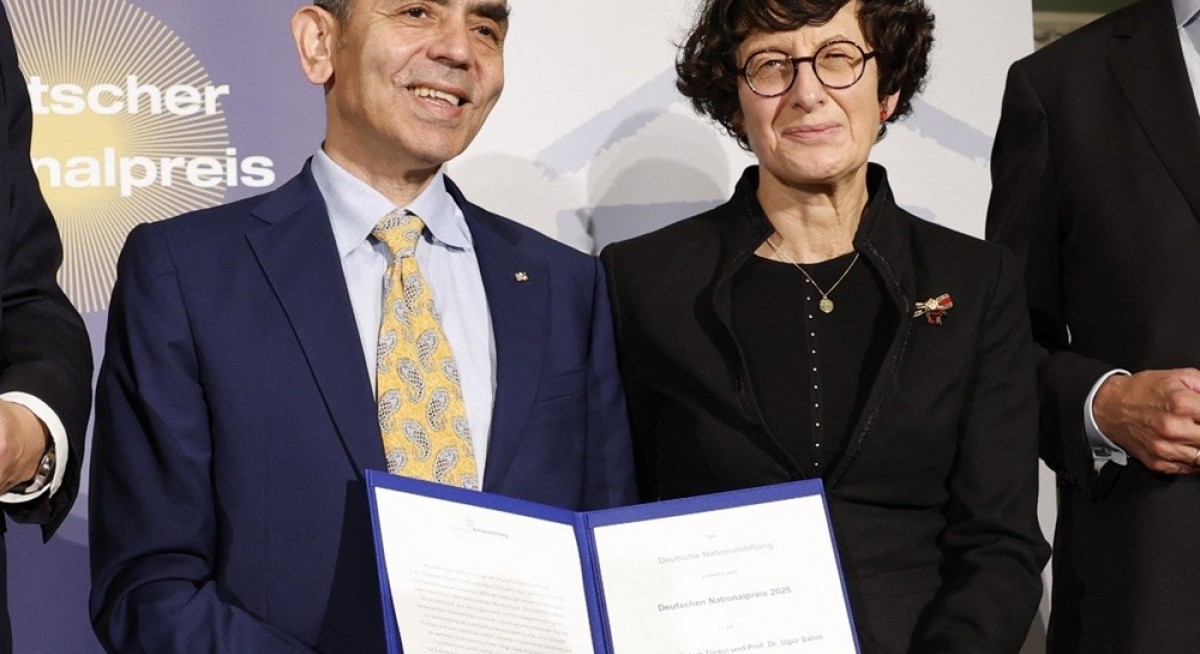


“The departure of the company’s founders is devastating news for the company and its shareholders” at a critical juncture, said Markus Manns, a portfolio manager at Union Investment and a BioNTech investor. “Both had been the heart and brain of the business.”
Sahin and Türeci, who are married, are scientists who’d rather devote their energy to pursuing innovation than manage a large biopharmaceutical company, he said in an interview. BioNTech long had an academic vibe, publishing original research, and Sahin is a common sight on the streets of its headquarters city of Mainz, riding a mountain bike to work.
“BioNTech is now coming into a trajectory that has more to do with speed, execution, commercialisation and so on, and industrialisation,” Sahin said. “This is something that takes time, and I think also there are managers that love to do that.”
The company has grown swiftly in recent years, reaching a market capitalisation of US$26 billion. While that’s well down from the heights reached during the pandemic, it’s still almost seven times the level of its stock market debut in 2019.
See also: Yara ups deliveries in 1Q as Iran war jolts fertiliser market
Under pressure
BioNTech plans to back the new venture by contributing some of its rights and mRNA technologies in exchange for a minority stake and future milestone and royalty payments.
The transition is the result of more than 18 months of discussions about next steps and different models for BioNTech’s leadership, according to Sahin.
See also: Hyundai Motor eyes increasing China’s share of global sales to about 9%
The decision to double down on mRNA comes at a delicate time, with the technology facing political pressure in the US, including cuts to federal funding for mRNA vaccine projects and a more cautious immunization strategy that have weighed on investor sentiment.
“The potential of mRNA is high, and we should not be driven by anything that happens outside of the science field,” Sahin said.
The new company will be the duo’s third biotech after Ganymed Pharmaceuticals in 2001 and BioNTech in 2008.
BioNTech pivoted towards vaccines during the pandemic in collaboration with Pfizer Inc. Now it’s using the billions in revenue made from selling the shots to bring its first cancer therapy to market. One promising drug, pumitamig, is undergoing tests for breast and lung tumors.
Unlike rival Moderna Inc, BioNTech used its vaccine billions to diversify beyond mRNA and looked to China for deal-making before others in the industry.
BioNTech on Tuesday reported a bigger-than-expected loss per share for 2025. For this year, the company expects sales to decline on lower revenue from Covid-19 vaccines in both Europe and the US.
The company will continue to work together with Sahin’s new firm on potential combination therapy approaches. The split will likely be finalised by mid-2026.
Uploaded by Felyx Teoh




