


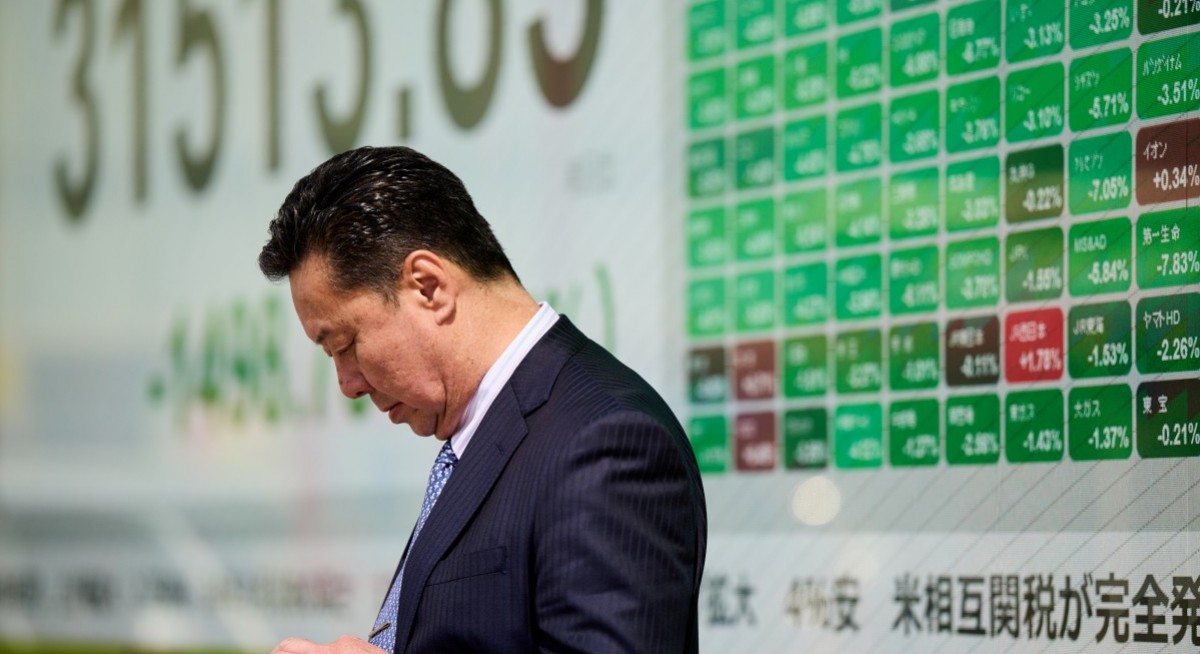


The yen traded around 155 per dollar after its strongest day in a week, as yields on the country’s government bonds surged. Bank of Japan Governor Kazuo Ueda sent the clearest hint yet that his board might increase interest rates soon, highlighting the possibility of a move at the BOJ’s December meeting.
Treasuries fell across the curve, leaving the US 10-year yield seven basis points higher at around 4.1%. The dollar wavered. Australia’s 10-year yield also climbed in early trading.
Nearly US$1 billion of leveraged crypto positions were liquidated during another sharp drop in prices that brought fresh momentum to a wide-ranging industry plunge. Bitcoin was steady in early Asia hours after trading around 5% lower late Monday to around US$86,400.
“There’s some risk aversion creeping into the markets to start the week,” said Kyle Rodda at Capital.com. “At the moment, it looks benign and without a fundamental impetus.”
See also: Asian stocks set to climb after US CPI lifts mood
In the US, Federal Reserve officials will get a dated reading on their preferred inflation gauge before next week’s rate decision. The report due Friday is expected to show that inflationary pressures are stable, but sticky. Yet the debate will largely center on the job market when policymakers meet Dec 9-10.
In Asia, data set for release includes inflation for South Korea, current account balance for Australia and consumer confidence in Japan. Later Tuesday the OECD will release its latest economic outlook for member countries and other major economies.
China Vanke Co, the distressed builder that surprised markets last week when it proposed an unspecified delay in paying a local bond, has now asked holders to wait a year to be made whole, as it faces mounting liquidity pressure amid waning state support.
See also: BofA says anything-but-dollar trade to lift international assets
US energy producer stocks rose Monday, tracking an advance in oil. Crude prices climbed as a key pipeline linking Kazakh fields to Russia’s Black Sea coast halted loading after one of its three moorings was damaged amid Ukrainian attacks in the region over the weekend.
US economy
Data Monday showed US factory activity shrank in November by the most in four months as orders weakened. In addition to Friday’s inflation data, other relevant economic data this week include ADP private employment figures for November and a preliminary reading of consumer confidence in December.
Still, key data like the jobs report won’t arrive until after the December rate decision, which “drastically dilutes this week’s ability to spring any material surprises in as far as rate cut expectations are concerned,” noted Fawad Razaqzada at Forex.com.
“We have highlighted that stocks historically performed best when the economy is not in recession and the Fed is cutting interest rates,” said Ulrike Hoffmann-Burchardi at UBS Global Wealth Management. “The latest available data suggest that the Fed is more likely to proceed with a 25-basis-point cut.”
She also noted that the current soft patch in the US economy is likely temporary, and global growth should accelerate in 2026.
“Robust earnings growth expectations should drive further equity gains,” said Hoffmann-Burchardi. “We also believe that earnings growth is a more important indicator of forward returns, and our earnings growth estimates for major markets in the coming year are in a solid range of 7% and 14%, supporting near-term upside.”
Uploaded by Isabelle Francis




