


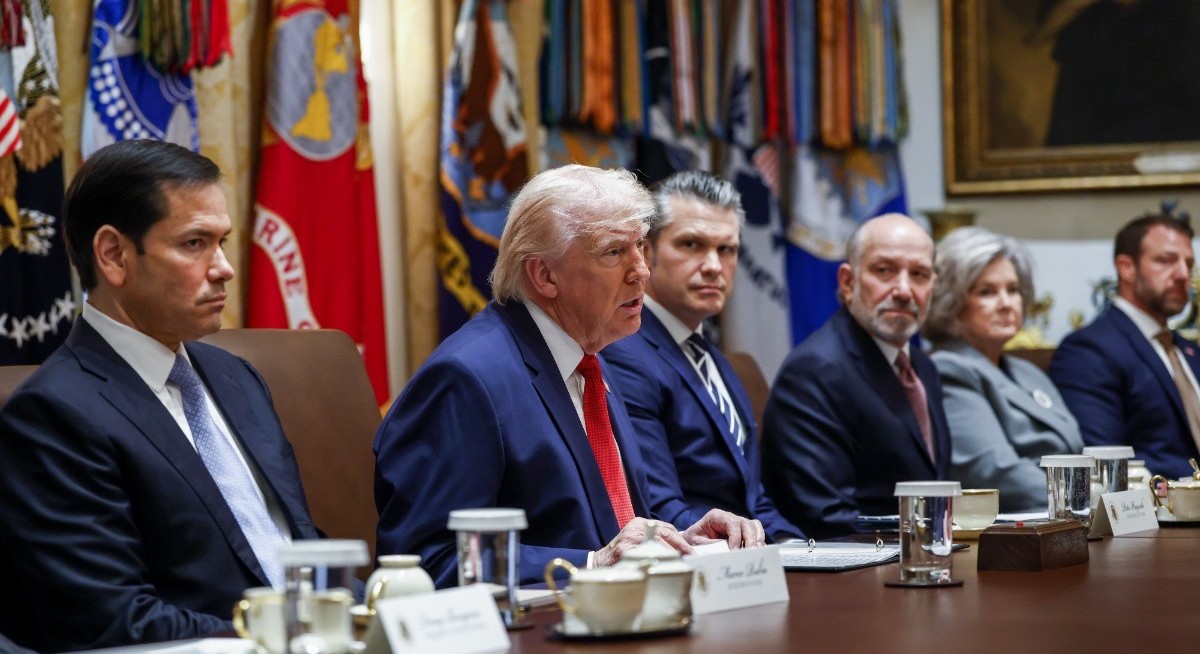


(April 10): US President Donald Trump has the authority to enact new Iran-related duties under an emergency law the Supreme Court previously ruled could not be used to impose tariffs, his top economic adviser said.
National Economic Council director Kevin Hassett said on Thursday the 1977 International Emergency Economic Powers Act (IEEPA) could be used because the US is “in a state of conflict”. Trump has threatened to apply 50% duties on goods from countries supplying Iran with weaponry. His power to do so was immediately called into question, given the court’s decision.
“This is clearly within the president’s tariff power,” Hassett said in a Fox Business interview. “If we are in a state of conflict, then you know, the IEEPA policy is exactly designed for that. And so countries really should be careful.”
If Trump follows through on his tariff threat by using the emergency law, the administration will face an uphill battle to convince the courts it is legal.
The administration is exploring all available tools to ensure Americans and the world are safe from any terror threats, said a White House official, who requested anonymity to elaborate on Hassett’s comments. The official named the IEEPA as one tool Trump has to safeguard national security, without specifically saying it would be used to implement tariffs to that effect.
In striking down Trump’s global tariffs on Feb. 20, the high court cast doubt on Hassett’s suggestion that the law gives the president authority to impose import taxes during wartime. The majority opinion said the IEEPA “does not authorise the president to impose tariffs”, without carving out an exception for military conflicts. Justice Neil Gorsuch said in a concurring opinion the IEEPA “is not a wartime statute”.
See also: Asia economic growth to slow even if oil stabilises, ADB warns
Trump potentially could argue that the US Constitution gives presidents power to impose tariffs during a war, even without explicit authorisation from Congress. The majority opinion said that regardless of what its cited precedents “might mean for the president’s inherent wartime authority, all agree that the president enjoys no inherent authority to impose tariffs during peacetime”.
Three dissenting justices said the president has that “inherent” authority, and Gorsuch said a “healthy debate” existed on the issue. But even with Gorsuch’s support, Trump would be a vote short on the nine-member court.
Uploaded by Tham Yek Lee




