


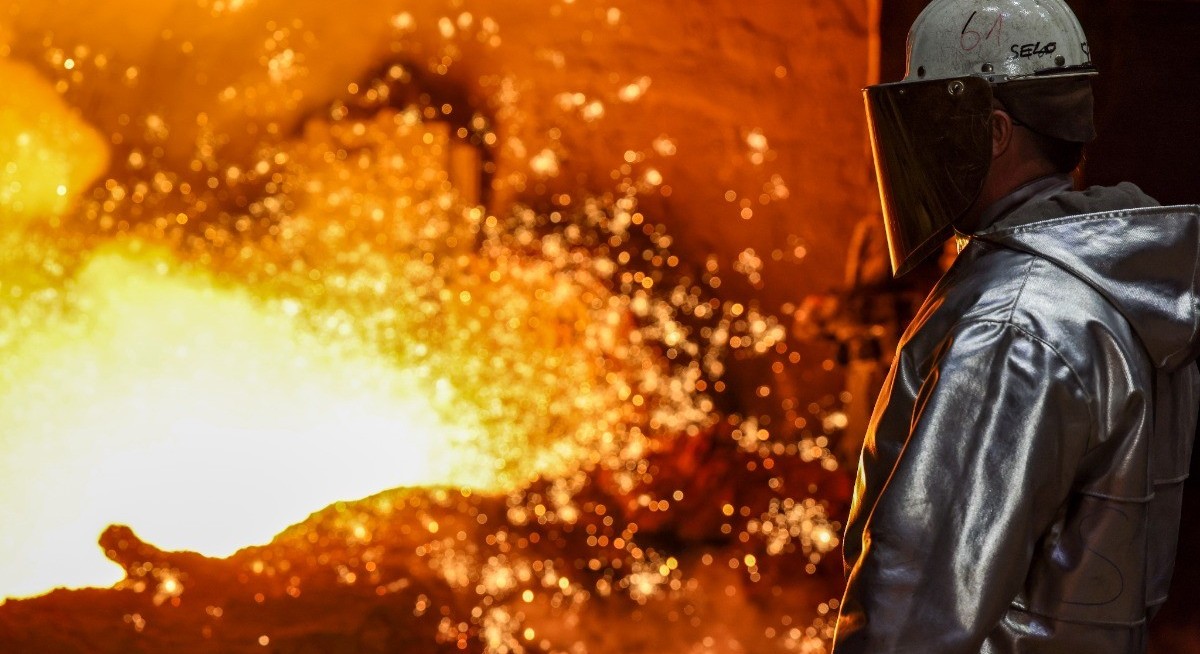


(April 9): German industrial production unexpectedly fell in February, casting doubt on a swift recovery in Europe’s largest economy even before the Iran war started.
Output dropped 0.3% from January, with construction and consumer goods driving the decline. Only three economists in a Bloomberg survey had predicted a contraction.
A separate report showed exports rose 3.6% in February and imports surged 4.7% — both exceeding economists’ estimates by far.
The figures offer little reassurance that Europe’s largest economy will deliver on expectations of a meaningful rebound. While a ceasefire in the Middle East is feeding hope that a further escalation of the crisis can be avoided, higher energy costs and uncertainty about longer-term solutions weigh on confidence and prospects for growth.

Germany’s leading research institutes forecast an expansion of just 0.6% this year, they said last week, less than half the pace expected just a few months ago.
See also: US asks allies for quick plans to secure Strait of Hormuz after ceasefire
“Recent surveys point to a slowdown in industrial activity in the second quarter amid heightened geopolitical uncertainty,” the Economy Ministry said in an emailed statement. “Future economic developments will therefore depend crucially on how the conflict in the Middle East unfolds.”
Chemical makers including BASF SE and Lanxess AG were among the first to warn about the implications of the war that kept a key route for oil and gas shipments — the Strait of Hormuz — closed for more than five weeks. Lufthansa flagged potential bottlenecks for jet fuel availability and readied plans that could involve grounding planes.
“Before the Iran war, we expected a modest upturn in the first half of the year, with higher government spending adding momentum in the second. Now, higher oil and gas prices are likely to weigh on energy-intensive sectors and indirectly affect autos and machinery manufacturing, derailing the industrial recovery,” says Martin Ademmer, economist at Bloomberg Economics.
See also: Hormuz stays blocked for now as hundreds of ships seek escape
Whether that will still be necessary will depend largely on the two-week truce agreed by the US and Iran holding and ultimately evolving into a more lasting peace.
German Chancellor Friedrich Merz welcomed the agreement on Tuesday, encouraged negotiations to prevent a “severe global energy crisis” and said the country is prepared to contribute to guaranteeing free passage through the strait.
A gauge measuring economic sentiment published on Tuesday highlighted the stakes. A Sentix index for Germany plunged in April, with expectations now at the lowest level in one-and-a-half years.
Some confidence still rests on an expansionary fiscal policy, with infrastructure and defense spending seen bolstering demand. In February, factory orders posted a weaker-than-anticipated 0.9% gain.
Uploaded by Felyx Teoh




