


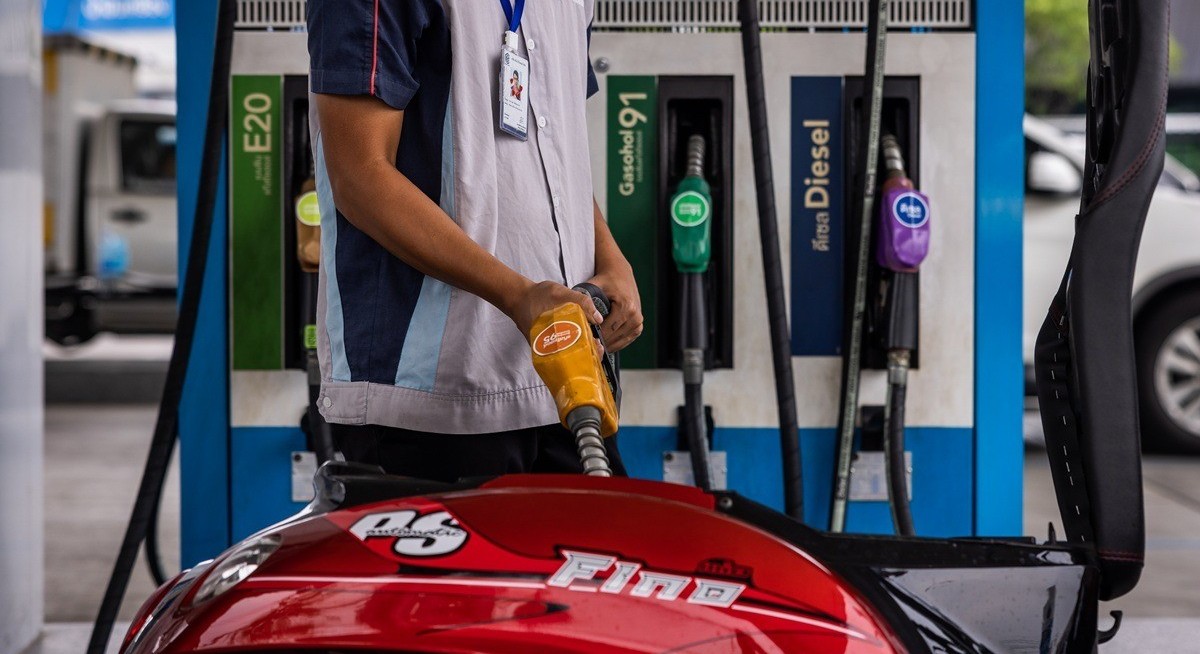


(May 18): Thailand’s top finance official said the government is preparing a package to address a looming cost-of-living crisis, even as economic growth handily beat estimates in the first quarter.
“We need to get ready for the storm that is building up,” Finance Minister Ekniti Nitithanprapas said, announcing that the Cabinet will on Tuesday consider a package to tackle both rising costs and falling demand, which may cost about THB200 billion (US$6.1 billion or $7.9 billion). “Fiscal policy needs to take the lead in helping the economy as monetary policy may have some limitations,” he said.
The Bank of Thailand held its key rate unchanged at 1% in April, when it warned that a cut would be difficult and flagged the risk of higher inflation.
Thailand’s economy proved unexpectedly resilient in the first quarter of 2026, with gross domestic product (GDP) rising 2.8% from a year earlier, the National Economic and Social Development Council (NESDC) said earlier on Monday. That exceeded the median estimate of 2.4% in a Bloomberg News survey, and the 2.5% expansion of the fourth quarter of last year.
The better-than-expected reading was driven by improved government spending, private investment and exports, while household consumption remained steady, the NESDC said in a statement. The agency boosted its inflation forecast while cutting estimates for tourism arrivals, warning of the broader impact of the US war on Iran for the Southeast Asian nation, which imports much of its energy from the Middle East.

See also: Thailand to pare 7,000 business rules to lure foreign investment
“The Middle East conflict will be the main risk this year weighing on the global economy and Thailand,” NESDC chief Danucha Pichayanan said in a briefing in Bangkok.
The baht was 0.2% weaker against the dollar, while Thai stocks were little changed after the GDP data.
Ekniti said the second quarter may see slower growth, but that government measures should help. Total public debt could rise to around 68% of GDP this year and peak at 69% in 2028, he added.
See also: Sea’s shares surge 13% after gains in Asian fight with Alibaba
The cost-of-living package is set to come from THB400 billion of planned emergency borrowing, though opposition parties are seeking to challenge the legality of the scheme in court. The borrowing is planned as a one-off-measure to both help with the green transition and fund cash handouts to individuals and small businesses in a nation that’s already struggling with some of the world’s highest household debt.
“The situation will get worse and may lead to lay-offs if we do nothing,” Ekniti said.
Fewer tourists
Only one full month of the first quarter overlapped with the Iran war, and the NESDC on Monday warned the headline inflation is set to average 2%-3% this year, a significant acceleration from the -0.3% to 0.7% earlier predicted. The council cut its forecast for foreign tourist arrivals to 32 million people from 35 million, meaning it expects fewer visitors for a second year running.
The council also cut the forecast for foreign tourist revenue to THB1.49 trillion from THB1.65 trillion, though the figure is still up from 2025 thanks to rising per-capita spending. The nominal decline in tourism numbers is bad news for a country which suffered a disappointing year for travel in 2025, due to the impact of an earthquake, political instability and concerns over tourist safety.
But Thailand’s strong first-quarter print is positive news for Prime Minister Anutin Charnvirakul, who won re-election in February with a vow to revive the economy, including through new investment. The government on Monday detailed plans to drastically cut red tape in a bid to woo more foreign investors.
The growth means that Thailand’s economy, a perennial laggard in the region, matched the first-quarter pace of the Philippines. It trails other Southeast Asian economies including Singapore, Vietnam, Malaysia and Indonesia.
To stay ahead of Singapore and the region’s corporate and economic trends, click here for Latest Section
The NESDC also maintained Thailand’s 2026 growth forecast in a range of 1.5%-2.5%. That forecast takes into account the impact of the war, as well as the additional THB400 billion of borrowing, Danucha said, adding that improved private investment and government spending will be main drivers of growth this year.
“Thailand has not seen this kind of private-sector investment growth in many years,” said Koraphat Vorachet, an investment strategist at Krungsri Securities Co, noting the Board of Investment had approved several large projects “which we expect will continue to support the Thai economy going forward”.
Growth is likely to soften as higher energy costs filter through and constrain households and businesses, Tamara Mast Henderson, an economist with Bloomberg Economics, wrote in a report. “Pressure on exporters from increased competition will also increase as US duties are restored and a bilateral trade deal is implemented. The government has limited policy space to offset external shocks.”
On a quarter-on-quarter basis, the economy expanded 0.7% from the previous three months, compared with the 0.3% estimate in the survey. The unemployment rate was 0.91%, higher than 0.7% in the fourth quarter.
Ekniti said the road ahead looks bumpy because of the Middle East war, which has already caused global crises in energy and costs.
“What we are doing is to prepare for the third crisis on the cost of living,” he said. “It will be a double crisis — a high cost of living and falling demand.”
Uploaded by Tham Yek Lee




