


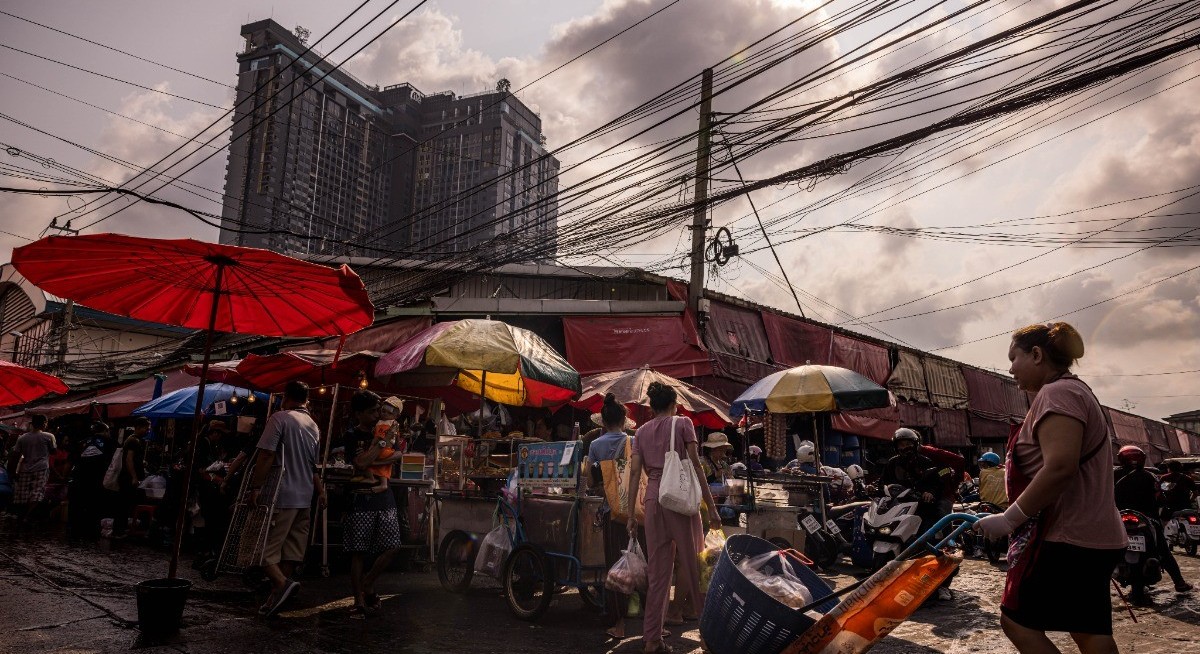


(May 11): Thailand’s main opposition parties are seeking a court ruling on the legality of Prime Minister Anutin Charnvirakul’s plan to borrow 400 billion baht (US$12 billion or $15.7 billion) to deal with the fallout of the Middle East conflict and ease the cost-of-living crisis.
An emergency decree issued over the weekend allows the Ministry of Finance to raise new debt as a one-off measure to fund a planned cash handout to about 30 million people and assist farmers, fisherfolk and small businesses hit by soaring energy costs. The government plans to set aside 200 billion baht of the new borrowing to accelerate Thailand’s transition from fossil fuels to renewable energy.
The People’s Party and Democrat Party, which together hold about 140 lawmakers in the 500-member House of Representatives, submitted a joint petition to speaker Sophon Zaram opposing the borrowing decree. They urged him to refer the petition to the Constitutional Court, which could result in the decree being suspended pending the court’s ruling.
The opposition parties say Thailand’s current economic conditions do not warrant such borrowing as the economy is still expanding and the country has limited fiscal space, with public debt to gross domestic product capped at 70%. They have especially questioned the bid to finance the energy transition through new debt.
The yield on 10-year government bonds, which had spiked about 40 basis points since the start of the Middle East conflict, was little changed at 2.16% on Monday.

See also: Ex-Thai PM Thaksin paroled to cheers from Red Shirt backers
Anutin, who has previously said the borrowing was to help prevent the economy from entering stagflation, on Monday disagreed with opposition claims that the move undermined fiscal discipline, saying it was only “seeking to address people’s problems”.
The global energy shocks triggered by the Middle East conflict have directly affected household incomes and the cost of living, and state spending from new debt will help alleviate the impact, Finance Minister Ekniti Nitithanprapas told reporters. The Bank of Thailand expects growth this year to slow to 1.5% from 2.4% last year.
“Thailand’s economy is currently facing a complex crisis with no clear end in sight, driven primarily by surging energy costs,” Ekniti said. “As a country heavily reliant on imported oil and natural gas, Thailand is particularly vulnerable.”
See also: Marcos faces crisis as fragile Philippines punished by oil shock
With Anutin’s government already raising retail fuel prices several times since the outbreak of the Iran war, inflation has spiked to near the top end of the 1%-3% official target. Headline inflation may reach as high as 5% in the coming months, Ekniti said, adding that price gains are being driven by higher production costs and more expensive food, pinching household incomes.
Anutin has already introduced measures to ease the burden of rising energy prices, including cash assistance for low-income households, subsidies for the transport sector, and low-interest loans for small and medium-sized enterprises.
Democrat leader Abhisit Vejjajiva said a reduction in excise tax on diesel and other fuels may be enough to tackle the energy shocks as Thailand’s exports and foreign investments have remained positive.
“We know the economy is bad, and we know it’s been impacted by the war, but we also know it is cost-pushed,” said Abhisit, a former premier. “The 200 billion baht borrowing for energy restructuring is hardly in line with the conditions for economic stability.”
The new borrowing won’t affect the country’s overall fiscal discipline as public debt remains below the existing voluntary cap of 70%, according to Ekniti. He says the government plans to raise new debt from the domestic market, which has ample liquidity.
Uploaded by Chng Shear Lane




