


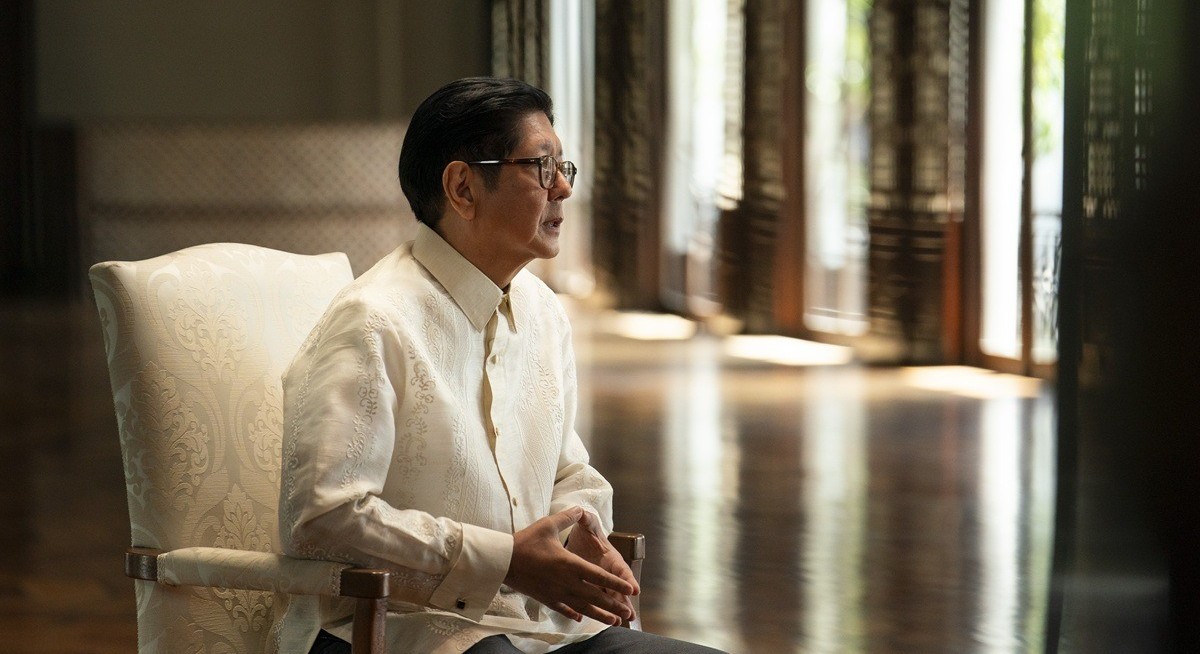


(March 24): Philippine President Ferdinand Marcos Jr signalled that his government will tolerate weakness in the peso, saying there is a limit to their defence of the currency as market forces drive up the dollar.
“I think it would be even futile to try to spend all our foreign reserves on defending the peso,” he said in an exclusive interview with Bloomberg Television’s Haslinda Amin in Manila on Tuesday. “We also recognise that there’s only so much you can do because the dollar’s going to move the way it does.”
The peso is among Asia’s hardest-hit currencies, having weakened through the psychologically important level of 60-per-dollar for the first time in history last week. High oil prices are driving up the cost of imports for an economy that sources almost 100% of its oil from the Middle East.
Marcos said his government is having to spend money to cushion lower- and middle-income families from the impact of the US and Israeli war on Iran, which has driven oil prices to above US$110 a barrel. Asked if the Philippines could reach a pace of 8% growth by the end of his single six-year term in 2028, Marcos said that would be “tough,” and that even near-term goals need to be rethought.
“With the war in the Middle East, those have to be redrawn — everything has to be redrawn,” Marcos said of the forecasts, adding that the recent spike in energy prices came after oil had been “fairly steady at US$72 per barrel”.
Even if the war stopped today, crude oil won’t immediately sink back to around US$70 per barrel, Marcos said, with the crisis having created uncertainty and risk factors that will linger.
See also: Goldman axes Indonesia rate-cut forecasts, flags India hikes
“The impact of the war is really on middle-income and lower-middle-income countries,” he said.
Investors have been pulling money from emerging markets like the Philippines, whose benchmark stock index is down more than 10% since the US attacked Iran.
Still, foreign-exchange reserves hit a record-high US$112.7 billion last month, giving authorities a degree of firepower to support the peso that has been under pressure along with other Asian currencies.
See also: AI, oil, private equity and the next crisis
The government is seeking to diversify energy supplies and has ordered the transport agency to delay hiking ticket prices for consumers, though a prolonged war and energy crisis could hurt businesses and consumers alike.
Growth had already been under pressure. After Marcos announced a probe into a massive public works scandal in July, the Philippines’ once high-flying economy stuttered as protests and slowing state spending hit consumer and investor confidence. The economy expanded just 3% in the fourth quarter of 2025, well below the pace of neighbours China, Indonesia, Malaysia and Vietnam.
In January, well before the war on Iran, the Philippines cut this year’s growth target to 5% to 6% from a previous goal of 6% to 7%.
But the president is confident the economy will be expanding by 6% by the end of his time in office, pointing to investment and a young and increasingly upskilled workforce. He cited the increasing value of semiconductors, which are packaged and exported from the Philippines.
“We have moved up the value chain from pure fabrication to design, which has put us in a good position for the advent of data centres and AI,” Marcos said. “We have restructured our tax incentives for investors, worked hard on the ease of doing business, brought down transportation costs, and digitalisation is key.”
Uploaded by Liza Shireen Koshy




