


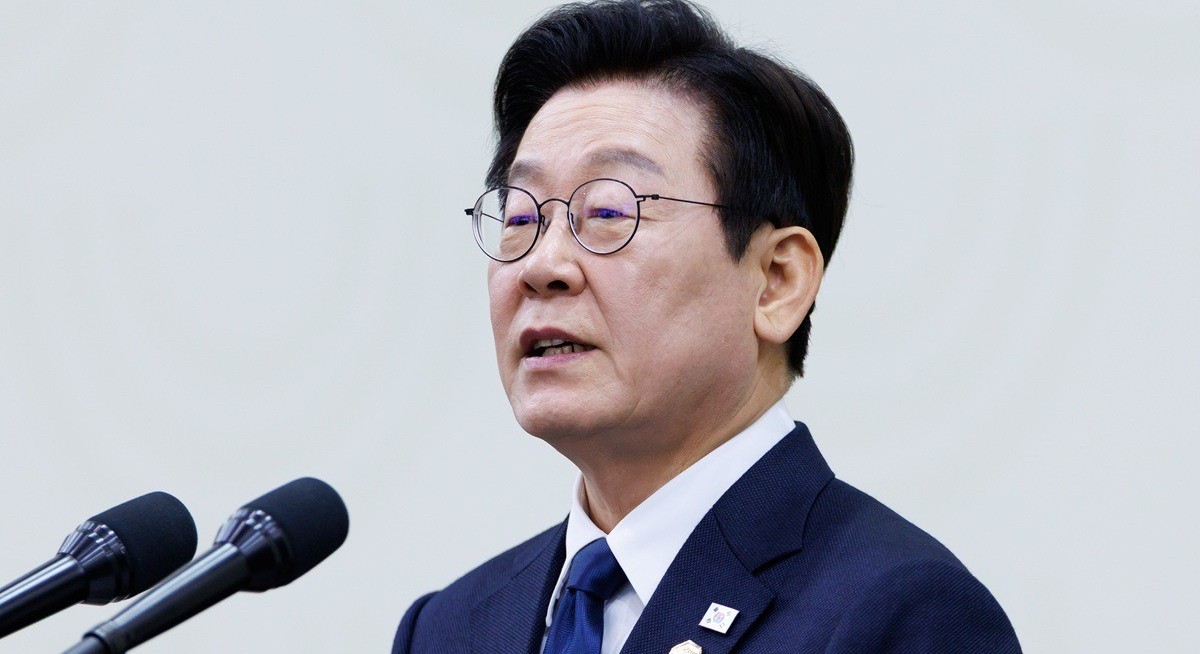


(March 26): South Korean President Lee Jae Myung called on the public to pare back power usage and ride public transport rather than driving cars, as his government mounts a national effort to avoid energy shortages should the Iran conflict drag on.
“We ask for your cooperation in reducing and conserving electricity use,” Lee said at the government’s latest emergency economic meeting in response to the Middle East crisis.
Lee said that if electricity rates remain at current levels, public losses and deficits could widen significantly, as power in South Korea is supplied by the state-run Korea Electric Power Corp (Kepco). He added that keeping prices at current levels without raising them could drive higher electricity consumption — for example, by prompting some to substitute electric power in place of fuel — which would exponentially increase Kepco’s financial burden.
“This could lead not only to government fiscal losses but also to excessive energy consumption or a lack of conservation,” Lee said.
Kepco, which provides about 70% of Korea’s electricity supply, has been mired in a yearslong impasse with roughly 200 trillion won (US$133 billion) in debt, as it has often refrained from raising power rates despite surging fuel input costs in an effort to shield consumers from inflation.
The request comes just a day after Prime Minister Kim Min-seok warned that the nation must prepare for worst-case scenarios. Lee also said it’s more urgent than ever for the nation to come together and share the burden.
See also: Philippines keeps key rate steady at 4.25% in off-cycle meeting
Authorities have also stepped up warnings over broader financial risks. The country’s central bank said escalating Middle East tensions and structural vulnerabilities could amplify risks across markets. The potential for heightened volatility in foreign exchange and financial markets as geopolitical tensions in the Middle East could trigger asset price corrections and cross-border capital shifts, the Bank of Korea said on Thursday.
“The crisis in the Middle East has continued for nearly a month, but it remains difficult to predict how the situation will unfold going forward,” Lee said. “It’s almost impossible to pinpoint exactly where the risks lie and how far their impact will spread amid a global supply chain that’s far more complex and intertwined than in the past.”
Lee’s comments point to rising concerns in South Korea that the knock-on effects of prolonged hostilities in Iran have the potential to disrupt an economy heavily dependent on energy from the Middle East. Policymakers throughout Asia face a similar risk that short-term measures might send the wrong signals to consumers and lead to ballooning costs if the conflict is prolonged.
Uploaded by Liza Shireen Koshy




