


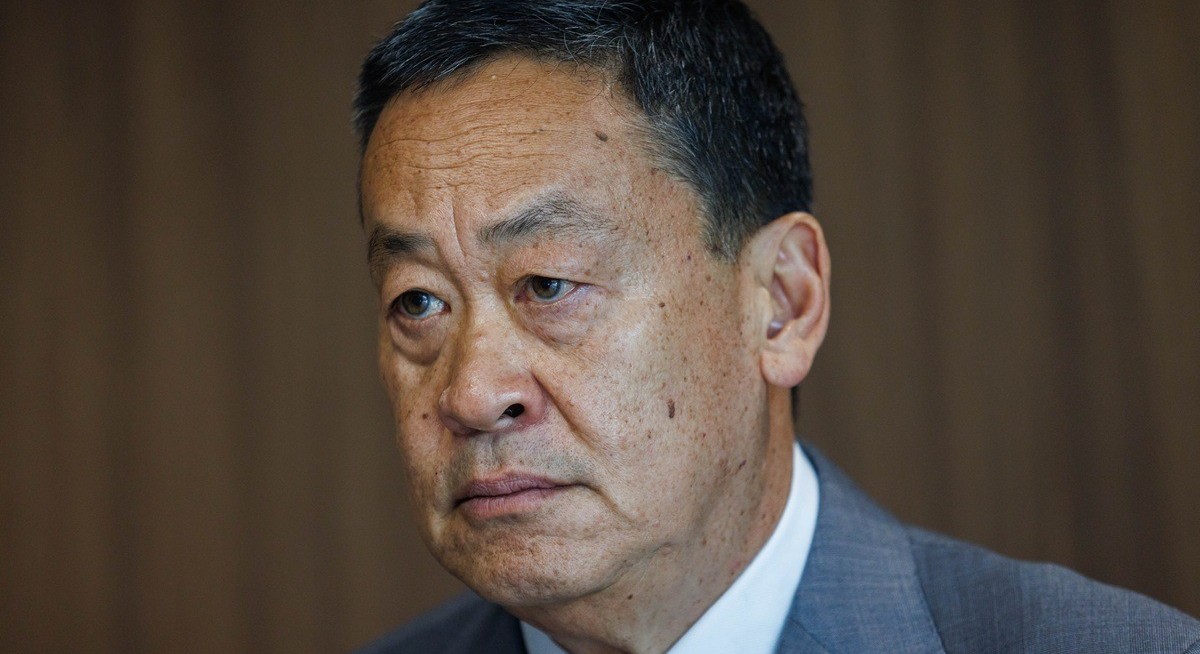


(March 26): Former Thai Prime Minister Srettha Thavisin called for a rise in the public debt ceiling to both cushion against the effects of the Middle East conflict and revive long-term growth.
Lifting the ratio of public debt to gross domestic product (GDP) to 80% from a self-imposed 70% limit will open up roughly two trillion baht (US$61 billion) of fiscal space, Srettha said in an interview on Wednesday. If funds go to infrastructure like airports, highways or flood-mitigation works, and not to populist handouts, such a move would be acceptable to the public and rating companies, he said.
Prime Minister Anutin Charnvirakul’s administration has so far resisted calls to ease the borrowing cap after Moody’s Ratings and Fitch Ratings last year cut the nation’s sovereign-credit outlook to negative from stable, citing weakening public finances. But the need to shield the US$570 billion economy from ballooning energy costs has sparked calls to free up borrowing space.
Rating agencies “don’t run the country. We run the country,” said Srettha, 64, speaking out following his recent recovery from a serious illness. “As long as you are confident that the money that is going to be borrowed is going to be used wisely, then you bite the bullet.”

Thailand has been careful with its borrowing since the devaluation of the baht in 1997 triggered the Asian financial crisis, when it needed an International Monetary Fund (IMF) bailout. It raised the debt cap from 60% to 70% in 2021 to fund pandemic-era stimulus.
See also: Iran drafting law to introduce tolls for Strait of Hormuz transit
But the energy crisis resulting from the war in the Middle East is pressuring governments worldwide to support growth. Indonesia, which was also bailed out by the IMF, has said it’s prepared to breach its budget deficit cap in an emergency.
Thai Finance Minister Ekniti Nitithanprapas, who couldn’t immediately be reached for comment, has said he wants fiscal prudence and to keep the debt ceiling. Thailand abandoned its price cap on diesel on Thursday and is mulling raising power tariffs to avoid bloating the government’s subsidy bill.
Former real estate tycoon Srettha led Thailand from 2023 to 2024, when he became the first of two successive leaders to be ousted by court rulings. While in office, he pushed for handouts for cash-strapped Thais and interest rate cuts to help debt-laden households and small businesses. While he said he’s done with politics, Srettha said he wants to offer his thoughts to help the slow-growing country.
See also: Singapore says China can play bigger role in Asia’s stability
Thailand’s fourth-quarter growth of 2.5% was almost twice analyst estimates, but trailed that of neighbouring Indonesia, Malaysia and the Philippines, and was less than a third the pace of Vietnam, which expanded 8.46%.
“There’s no reason why we should be hovering around 2% to 3%,” Srettha said. “You don’t live in the world of your own, you are competing against Vietnam.”
While the economy was forecast to expand 1.5% to 2.5% this year before US and Israel attacked Iran, the subsequent hit to exports and tourism has prompted some economists to trim their estimates to just above 1%. Srettha questioned Ekniti’s pre-war assessment that Thailand’s economy is “out of the ICU” — a hospital’s intensive care unit — especially in light of surging energy costs.
“We’re probably out of the coma, but not the ICU yet,” Srettha said. “We still need some more stimulus packages on all fronts, but we need to focus on our strength. We have been doing well in terms of attracting foreign direct investments and need to keep doing that.”
Economists say challenges include chronically low productivity, an ageing population and insufficient investment in education.
A hike in the debt ceiling wouldn’t automatically mean a rating cut, and in any case Thailand won’t have difficulties selling bonds, Srettha said, noting the Southeast Asian nation’s securities are usually quickly snapped up by the public and local funds.
About 700 billion baht of fresh borrowing should go to tackling a cycle of devastating flooding and droughts, which hurt the livelihood of about 25 million people living in households dependent on farming, Srettha said.
To stay ahead of Singapore and the region’s corporate and economic trends, click here for Latest Section
“We should look at a ‘no flood, no drought’ programme and heavy investment into what we can do to help the farmers grow what they want and get the right productivity,” Srettha said. “Make sure you have enough clean energy, enough electricity, and sufficient water for the new industries. Data centres need plenty of water.”
Prime Minister Anutin’s decisive election win last month and his sway over key institutions put him in a “super prime position” to undertake much-needed reforms after years of political turbulence dented investor confidence and weighed on financial markets, according to Srettha, who said the two men still meet for dinner from time to time.
Anutin’s cabinet, set to take office in the coming weeks, should fast-track what Srettha called a “massive tsunami of money” into data centres and cloud services from companies such as Microsoft Corp, Amazon.com Inc, Alphabet Inc’s Google, ByteDance Ltd’s TikTok, and Alibaba Group Holding Ltd.
“This is a time when Thailand has the strongest political stability in recent memory. This is a golden opportunity,” Srettha said. “He should use that to do something really courageous.”
Uploaded by Liza Shireen Koshy




