


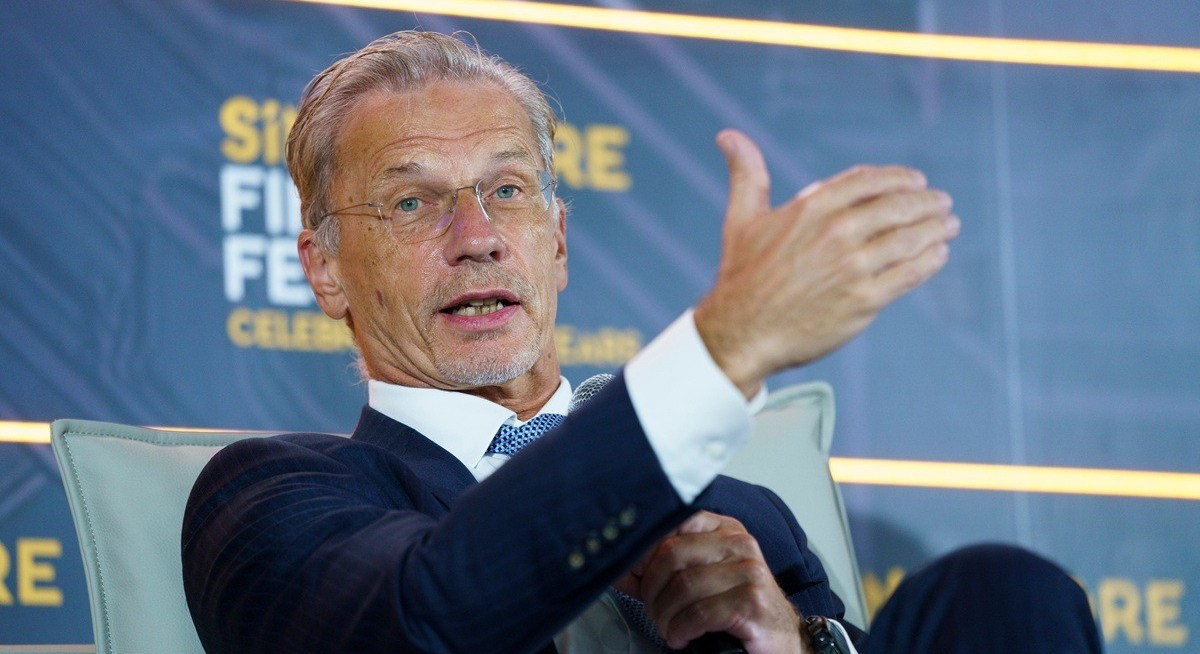


(March 24): The European Central Bank (ECB) must be “very agile and vigilant” to keep prices in check as the Iran war brings stagflation risks closer, Governing Council member Boris Vujcic said.
Vujcic — who’ll become ECB vice-president in June — said officials are likely to know soon whether fallout from the fighting will require higher interest rates. He warned, though, that recent developments point to increasing dangers of elevated consumer-price growth accompanied by weak economic expansion.
“We do not see stagflation but the risk is moving into the direction of stagflation,” the Croatian central bank chief said in an interview in Zagreb. “How far we’ll get in that direction is very difficult to predict.”
Policymakers including Bundesbank president Joachim Nagel have indicated that the ECB will need to consider raising borrowing costs at next month’s rate meeting, as soaring energy costs start feeding into inflation. Vujcic is keeping an open mind.


See also: Marcos won’t spend all reserves on peso, sees 6% growth by 2028
“It’s a long time in today’s world until April,” he said. “There’ll be a lot of new data and news” and “in such situations, everything is live.”
New ECB projections have consumer prices up 2.6% in the euro area this year in a baseline scenario — far more than previously thought. In an extreme outcome where disruptions to oil and natural gas supplies persist, inflation would hit 6.3%.
While “the option value of waiting a bit is high” right now, Vujcic said “we’re already departing from the baseline scenario towards worst-case scenarios.”
See also: Goldman axes Indonesia rate-cut forecasts, flags India hikes
He sees two options if the ECB decides higher borrowing costs are needed: Begin early and make successive small hikes, or begin a bit later and raise in larger increments.
“It’s better to start with a smaller move and then follow what’s going on,” Vujcic said. “For the time being, I would say it’s too early to say, but we will soon know whether we will have to act or not,” he said.
Markets foresee as many as three quarter-point increases in the deposit rate this year from its current level of 2%. Economists are coming around to the idea that tightening is inevitable, forecasting a first of two moves in April or June.
“I don’t think that one or two hikes would do much harm to the economy,” Vujcic said. “But you have to ask yourself whether they’re needed or not, because some would also argue that one or two cuts wouldn’t do too much good to the economy.”
Traders’ views almost certainly assume some permanent damage to energy infrastructure in the Gulf and a longer closure of the Strait of Hormuz, even after US President Donald Trump on Monday postponed threatened strikes against Iranian power plants for five days, pending the outcome of talks.
“A de-escalation of the conflict, an opening of the Strait of Hormuz would be excellent news which would definitely lower the pressure on inflation and therefore the possibility of interest-rate hike,” Vujcic said.
If the ECB was confronted with higher prices and lower growth due to a lengthier war, however, the focus should be obvious, he cautioned.
To stay ahead of Singapore and the region’s corporate and economic trends, click here for Latest Section
“Our mandate is very clear — it’s a single mandate of price stability,” he said. Even though slower growth typically weighs on prices, “we’ll have to deliver policy to keep inflation down at 2%.”
Vujcic said the current situation is different from 2022, when Russia’s invasion of Ukraine sent inflation to a record 10.6%. But while the chances of second-round effects are smaller now, the ECB is on alert.
“We have learned our lessons from 2022,” he said. “In our 2025 updated monetary-policy strategy, we clearly say that these types of supply shocks also warrant a monetary-policy response if they’re not short-lived. And I think we will soon have a better idea about that.”
Uploaded by Liza Shireen Koshy




