


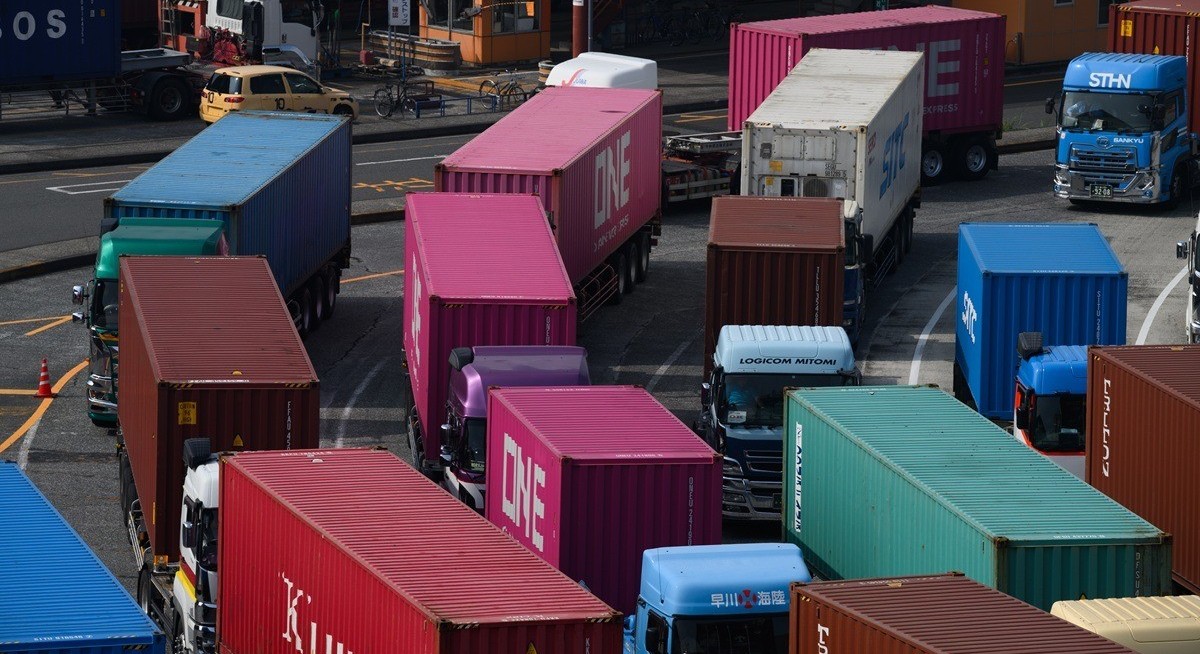


(Jan 22): Japan’s exports managed to rise last year despite the first fall in shipments to the US since the pandemic, in a year that was roiled by tariffs from President Donald Trump.
Overall exports gained 3.1% in 2025 from the previous year, led by electronic parts and food, the Finance Ministry reported Thursday. While exports to Europe and Asia excluding China remained solid, shipments to the US fell 4.1% led by cars and chip-making machinery, marking the worst decline since 2016 excluding the impact from the pandemic. Shipments to China declined 0.4%.
On a monthly basis, Japan’s exports rose for a fourth consecutive month in December as Chinese demand held steady despite an ongoing diplomatic dispute that began last year. But shipments to the US dropped, led by cars.
“Exports are growing overall, led by semiconductors, but I believe this growth may not be sustainable,” said Takeshi Minami, chief economist at Norinchukin Research Institute. “Geopolitical risks are increasing, and US consumption is also expected to slow.”


See also: BYD joins wave of firms challenging Trump’s tariffs in US court
While Thursday’s trade data painted a mixed picture pointing to risks ahead, it will likely keep the central bank on its gradual path of further rate hikes. The Bank of Japan is widely expected to stand pat on Friday after raising the benchmark interest rate in December. The central bank has signalled that it will keep raising rates as long as prices and growth develop in line with its projections.
Japan also maintained a trade surplus with the US in 2025 despite Trump’s campaign to rebalance the gap with tariffs. Tokyo recorded a ¥7.52 trillion (US$47.5 billion) surplus with the US — 12.6% smaller than the surplus in 2024.
Last year Japan secured a cut in US car tariffs through months of trade negotiations and avoided the threat of steeper levies on other goods by promising to boost investment in the US. Trump retains the authority to raise tariffs again should Japan fail to fund investment projects of his choosing.
See also: Saudis plan revised strategy for US$2 trillion economic agenda
“The possibility remains that Trump could impose new tariff policies or exchange rate policies against Japan” given the persisting trade balance gap, said Minami.

Global merchandise trade slowed in the three months through September as the boost seen earlier in 2025 from front-loading of orders ahead of US tariffs faded, the World Trade Organization (WTO) said in November. The WTO’s goods barometer dropped to 101.8 in September from 102.2 for June.
“Exports to the US were strong in October and November, but I think this was a recovery in the wake of tariff policies, and that effect has now run its course,” said Minami. “After all, auto sales in the US are not strong.”
Including trade with other nations, Japan’s overall trade balance last year was in the red with a ¥2.65 trillion deficit, largely due to Japan’s trade with China. The country was Japan’s biggest trading partner followed by the US, and Tokyo ran a ¥7.91 trillion deficit with Beijing.
Whether Japan’s trade with China holds up has been a key question since a diplomatic dispute began last year following Prime Minister Sanae Takaichi’s controversial remarks on Taiwan in November. In January, China announced fresh export curbs on dual-use items and an anti-dumping probe into a key chipmaking material. A government travel warning has led to a slide in the number of Chinese visitors to Japan.
Overall exports gained 5.1% in December from a year earlier sustained by demand from Europe and Asia including China, according to the Finance Ministry. That missed the median analyst forecast of a 6.1% rise, with shipments to the US falling 11.1%.
“I don’t think China can afford to destroy ties with Japan. Doing so would worsen employment conditions domestically and heighten criticism of the Chinese government,” said Minami.
Uploaded by Liza Shireen Koshy




