




(Feb 18): Japan plans to invest US$36 billion in US oil, gas and critical mineral projects, the first tranche of its US$550 billion commitment under the trade agreement it struck with US President Donald Trump.
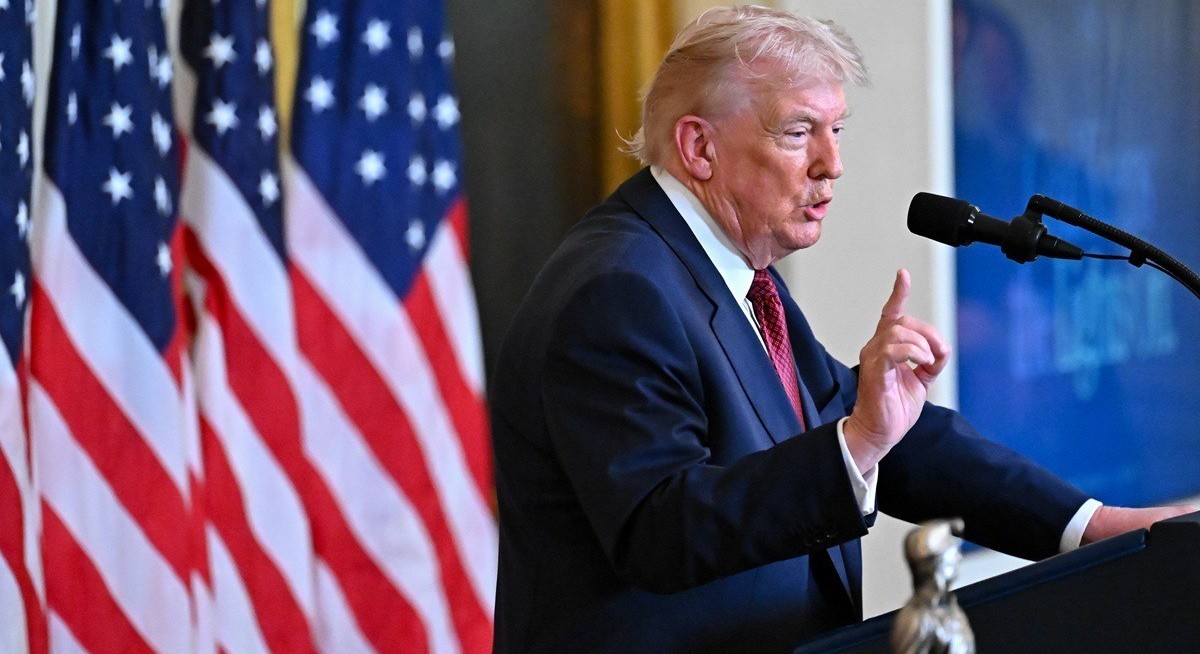
“Our MASSIVE Trade Deal with Japan has just launched!” Trump posted Tuesday on social media. “The scale of these projects are so large, and could not be done without one very special word, TARIFFS.”
Japanese Prime Minister Sanae Takaichi said the projects were designed to build resilient supply chains through cooperation in areas crucial for economic security, including critical minerals, energy and artificial intelligence (AI).
“We believe this initiative is fully aligned with its core objectives: promoting mutual benefits between Japan and the United States, ensuring economic security, and fostering economic growth,” she wrote.
The most significant investment is a natural gas facility in Ohio that’s expected to generate 9.2 gigawatts of power, according to a statement from US Commerce Secretary Howard Lutnick, a massive project which Trump described as “the largest in History”.
Japan is expected to invest US$33 billion in the gas plant, which will be led by SoftBank Group Corp subsidiary SB Energy, according a Trump administration official.
See also: Trump says Rubio in talks with Cuba as it faces economic crisis
If the plant operates at full capacity, it would be the equivalent of nine nuclear reactors or roughly the amount of power consumed by about 7.4 million homes on the largest US grid operated by PJM Interconnection LLC.
The second project is a deepwater crude export facility in the Gulf of Mexico, according to Lutnick. The US$2.1 billion investment into the Texas GulfLink export terminal will be operated by Sentinel Midstream and is expected to generate as much as US$30 billion in annual US crude exports when operating at full capacity, the administration official said.
Trump’s initial social media post about the project sowed some confusion, describing the investment as a liquefied natural gas facility.
See also: Indian stocks face fresh pressure after central bank action
Japan is also expected to invest in a synthetic industrial diamond manufacturing facility, which Trump’s post indicated would be located in Georgia. The diamonds are a “critical input for advanced industrial and technological production,” Lutnick said. The project will receive a US$600 million investment and involves Element Six, a subsidiary of De Beers, according to the administration official.
“Both governments will continue to work closely together to fine-tune the details and ensure the speedy start of these projects,” Japanese Chief Cabinet Secretary Minoru Kihara said in a press briefing Wednesday where he confirmed the projects.
The long-awaited announcement marks a step forward for the trade and economic pact that Trump announced with Japan last year. It comes weeks before Takaichi is set to meet with Trump in Washington.
The selection comes after a joint panel first met in December to consider projects, which are ultimately selected by Trump himself based on recommendations from an investment committee he established, along with input from Japanese officials.
The fund is meant to spur a wave of Japanese investment in key US industries and was a central pillar of the tariff deal, under which the US president agreed to set levies at 15% on Japanese products and lower the duty for automobiles, a critical driver for Japan’s economy.
Implementation of the agreement is likely to be a top agenda item during the meeting between Trump and Takaichi in Washington, expected to take place March 19.
Lutnick and Japanese Trade Minister Ryosei Akazawa met in Washington last week to hash out the details of the first tranche of investments. Akazawa said he doesn’t expect projects backed by the US$550 billion fund to be high-risk, high-return, signalling the Japanese are seeking initiatives with safe returns, rather than less-certain investments.
To stay ahead of Singapore and the region’s corporate and economic trends, click here for Latest Section
“Japan is providing the capital. The infrastructure is being built in the United States. The proceeds are structured so Japan earns its return, and America gains strategic assets, expanded industrial capacity, and strengthened energy dominance,” Lutnick said in his Tuesday statement.
The initial investment in a power generation facility is timely. Soaring demand from new data centres, especially to chase the AI boom, has raised the cost of ensuring adequate energy supplies.
The two nations identified potential projects ranging from US$350 million to as much as US$100 billion during Trump’s visit to Japan last year. That framework included energy, AI and critical minerals investments involving SoftBank, Westinghouse, and Toshiba Corp, among other companies.
The government-owned Japan Bank for International Cooperation and Nippon Export and Investment Insurance are expected to play leading roles in financing the projects. It’s not yet clear how much money will be committed in the form of direct investment. Akazawa said last year that only 1%-2% of the US$550 billion mechanism would consist of cash investments, with the majority coming from loans and loan guarantees.
After a selection is made, Japan has 45 business days to fund the effort, according to an agreement between the countries.
If Japan elects not to fund a project, the US could claw back certain revenues or reimpose tariffs, according to the agreement. That could risk significantly higher duties on Japanese imports into the US. Trump threatened to raise tariffs to 25%, then scaled that back to 15% after Japan agreed to boost investment in the US through the US$550 billion fund.
Trump has grumbled about the pace of implementation of a similar deal with South Korea, a key competitor with Japan on auto manufacturing, and threatened to hike tariffs once again. That saga underscores the link between the investment pledges and the tariff changes that accompanied them.
The announcement follows a historic electoral victory for Takaichi earlier this month and comes as parliament prepares to formally re-elect her as premier later on Wednesday. She has vowed to prioritise strong ties with the US. Trump has praised Takaichi, wishing her “great success” in her “Conservative, Peace Through Strength Agenda.”
William Chou, a senior follow at the Hudson Institute, said that the three projects reflect shared US and Japanese priorities in the energy, AI, and semiconductor sectors, and were a good match for Japanese industry’s skillsets and understanding of the US industrial landscape.
“This announcement ensures political momentum ahead of PM Takaichi’s trip to Washington next month, and demonstrates that Japan is an ally that follows through on its promises,” Chou said.
Uploaded by Liza Shireen Koshy




