


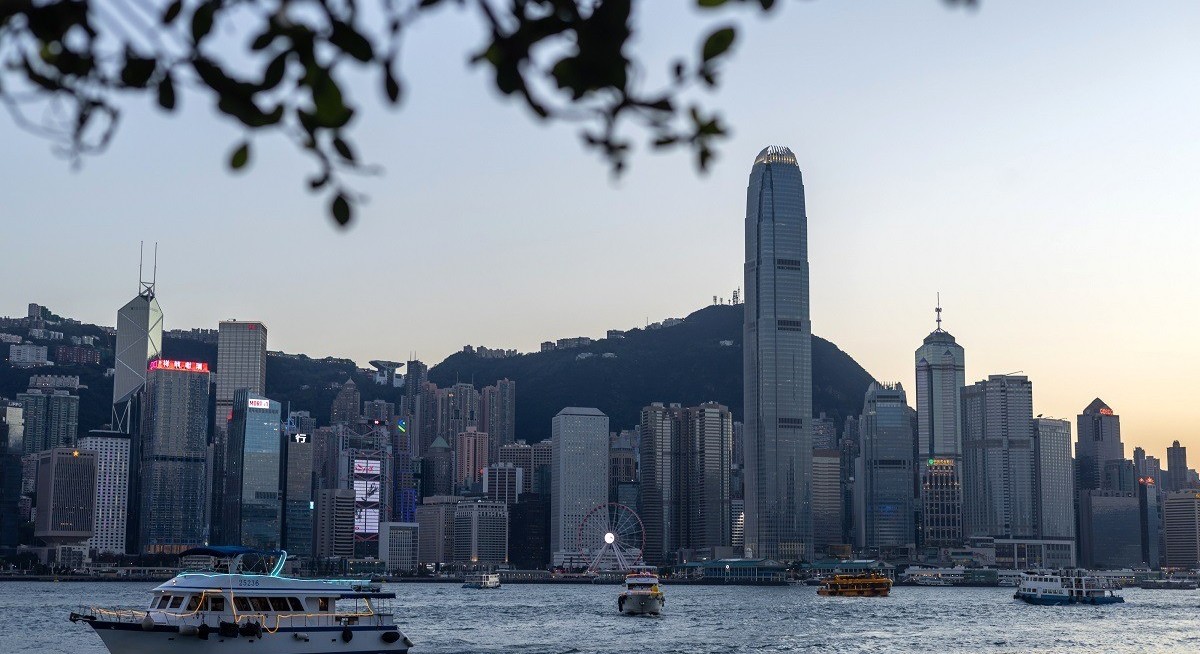


(April 29): Hong Kong ran its widest trade deficit in at least 74 years as imports surged, a likely spillover from the disruptions caused by the war in the Middle East and a global investment boom in artificial intelligence that’s driving demand for tech products.
Government data this week showed a surge in exports and purchases from abroad in March, with imports up more than 41% from the same period in 2025 — their biggest increase in over three decades. That left a deficit of HK$89.1 billion (US$11.4 billion or $14.6 billion), the highest in records dating back to 1952, when Hong Kong was a British colony.
The transshipment hub is a gateway for many goods headed to mainland China, which saw a surge in imports of high-tech products in March as companies stockpiled semiconductors and other supplies. Hong Kong also imports nearly all of its energy and relies on fossil fuels for power generation, making it vulnerable to the oil shock triggered by the Iran war.
“The AI boom and war-related stockpiling are boosting imports,” said Bloomberg economist Eric Zhu. “The price rally may also inflate import figures in value terms, as costs of AI chips, memory chips and commodities have kept rising in recent months.”
As investors pour hundreds of billions of dollars into AI infrastructure and building data centres, a spike in chip prices is leading to explosive export growth across Asia.
The spending bonanza is also propelling trade in China, which was the world’s largest supplier of AI-related goods last year. Taiwan and South Korea, where China sources most of its AI-related imports, both reported surging exports to their neighbour in recent months.
See also: Xi has US$1.2 tril rare earths leverage ahead of Trump visit
The mainland is Hong Kong’s largest trading partner, accounting for more than half of the city’s merchandise trade last year. Volumes swelled further in 2026, with imports from and exports to China jumping 42% and 35%, respectively compared with the first quarter last year.
In total, imports reached HK$707.5 billion in March, roughly equivalent to a fifth of Hong Kong’s entire gross domestic product. Exports shot up to HK$618.4 billion, a jump of almost 36%, with shipments to the US growing 81%, according to figures published by the Hong Kong government on Tuesday.
The figures for growth in imports and exports in March were more than double the pace predicted by economists surveyed by Bloomberg.
See also: World Bank sees commodity prices hitting four-year high in 2026
The surge in trade is “not surprising” for Hong Kong given many of the foreign goods it buys are re-exported to China and other parts of Asia, said Zhu of Bloomberg Economics.
The value of imports of electrical machinery and parts rose 50% on year, while telecommunications equipment rose 93%, according to government data.
Purchases of petroleum and related products jumped 81% in value terms from a year earlier, while non-ferrous metals saw a 404% surge.
Gary Wan, principal economist and strategist at Dah Sing Financial Group, said a re-routing of trade flows from the Middle East to Asia, along with proactive stockpiling by firms to mitigate higher costs, are the main drivers behind the sharp expansion in Hong Kong’s exports and imports.
A survey of purchasing managers by S&P Global for March showed a major build-up of inventories by firms in Hong Kong, with purchasing activity rising at the fastest pace in over three years. Some participants linked their buying of more inputs with anticipated price hikes by suppliers, according to S&P Global.
A Hong Kong government spokesperson warned in a statement that tensions in the Middle East and higher energy costs pose “downside risk to the near-term global economic outlook, with potential disruptions to global trade flows and supply chains.”
Still, “global demand for AI-related electronic products remains robust and should provide staunch support to the performance of Hong Kong’s merchandise exports,” according to the statement.
Uploaded by Magessan Varatharaja




