




Beijing’s move marks the latest escalation in a dispute over remarks on Taiwan by Japanese Prime Minister Sanae Takaichi that has been dragging on since early November. A day earlier, Beijing announced export controls on items destined for Japan that could have military uses. Concerns over potential impacts to Japan’s key industries have brought down automaker shares while boosting rare-earth related stocks, though how China will actually implement its controls remains unclear.
Japan’s Foreign Ministry issued a formal protest to Chinese Deputy Chief of Mission Shi Yong over Beijing’s export controls. Broad estimates show that dual-use items Japan imports from China total ¥10.7 trillion (US$68.4 billion or $87.6 billion), roughly 42% of Japan’s total goods imports from China in 2024, according to Takahide Kiuchi, executive economist at the Nomura Research Institute.
“The measures target only our country and deviate significantly from international practice,” Japan’s Chief Cabinet Secretary Minoru Kihara told reporters, adding that the steps were unacceptable. “We intend to carefully examine and analyse the details and consider necessary responses,” he said.
On Tuesday, China’s Ministry of Commerce said that all dual-use items with military as well as commercial uses were banned from being exported to Japan if it could enhance Japan’s military capabilities, effective immediately. Details remain vague but the action could be significant for Japan’s imports from China — its largest trading partner. Asked whether the measures will impact Japan’s rare earth commerce with China, Kihara said the government is still assessing details.
See also: BYD joins wave of firms challenging Trump’s tariffs in US court

State-run China Daily reported that Beijing is considering tighter export license reviews for certain medium and heavy rare earth–related items. In addition to being an important raw material for batteries and commercial electronics, rare earth elements are widely utilised in military equipment, including in high-strength magnets used in missile guidance systems and fighter jet motors.
Restricting rare earths supplies has long been raised as one potential avenue for Beijing to pile pressure on Tokyo, especially after China used its dominance of the industry last year to stare down US tariffs.
See also: Saudis plan revised strategy for US$2 trillion economic agenda
Supply chain disruptions like this, as seen in the US-China tensions of 2021-22, remind manufacturers of the need to diversify away from China, said Kohei Onishi, senior investment strategist at Mitsubishi UFJ Morgan Stanley. Rare-earth-related company Toyo Engineering Corp rose as much as 20% Tuesday, while Toyota Motor Corp fell as much as 3%, the most since early November.
Japan relied on China for around 70% of its rare earth imports as of 2024, according to the Japan Organization for Metals and Energy Security. That was more than a decade after China had wielded the materials as a weapon against Tokyo during a 2010 territorial dispute. At that time, the Chinese move wreaked havoc across Japan’s manufacturing industry.
Nomura’s Kiuchi wrote that if the new controls were to apply to rare earths, Japan would take a significant hit. If rare-earth export restrictions were to last three months, the resulting economic loss would amount to about ¥660 billion, cutting Japan’s economic output by 0.11%, he estimated.
The latest move may extend well beyond rare earth supplies. China’s dual-use export control list features more than 800 items, ranging from chemicals, electronics and sensors to equipment and technologies used in shipping and aerospace.
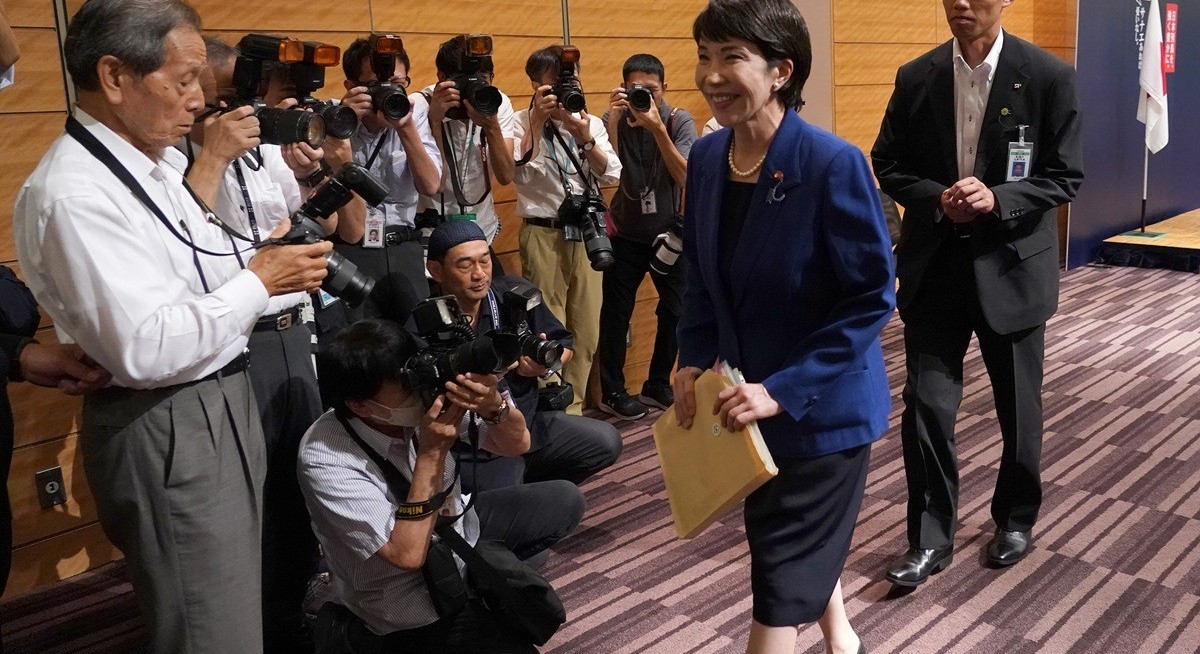
The trade action comes amid a diplomatic standoff following remarks made by Japanese Prime Minister Sanae Takaichi in early November that suggested Tokyo could deploy its military if China uses force to try and seize Taiwan. Beijing responded angrily and demanded Takaichi withdraw her remarks. She has refused, saying Japan’s position over Taiwan remains unchanged.
The ambiguity of China’s action may be intentional. “By triggering concern in Japan about the ongoing availability of critical Chinese industrial inputs, the announcement puts immediate pressure on Takaichi to offer concessions,” Teneo analysts James Brady and Gabriel Wildau wrote in a research note.
Since the dispute began, China has restricted tourism to Japan, made protests at the United Nations and stepped up military maneuvers, among other measures.
To stay ahead of Singapore and the region’s corporate and economic trends, click here for Latest Section
In announcing the export controls, a Chinese Ministry of Commerce spokesman explicitly linked them to the dispute over Takaichi’s comments.
“Japan’s leader recently made erroneous remarks on Taiwan, hinting at the possibility of military intervention in the Taiwan Strait,” the ministry spokesperson said in a statement on Tuesday. Those comments were of “malicious nature with profoundly detrimental consequences,” according to the spokesperson.
China’s military newspaper reiterated that the move demonstrates China’s commitment to regional security.
“This move not only safeguards national security and interests but also helps curb the trend of military buildup in the Asia-Pacific region, injecting certainty into the promotion of regional peace and stability,” the People’s Liberation Army Daily wrote in a commentary Tuesday.
So far, the US has given limited public support to its ally over the standoff with China. In a call on Wednesday, Kanai spoke with Assistant Secretary of State for East Asian and Pacific Affairs Michael DeSombre, according to Japan’s Foreign Ministry. The two officials “exchanged views on the current regional situation and reconfirmed close coordination between Japan and the US,” according to the statement.
Uploaded by Magessan Varatharaja




