


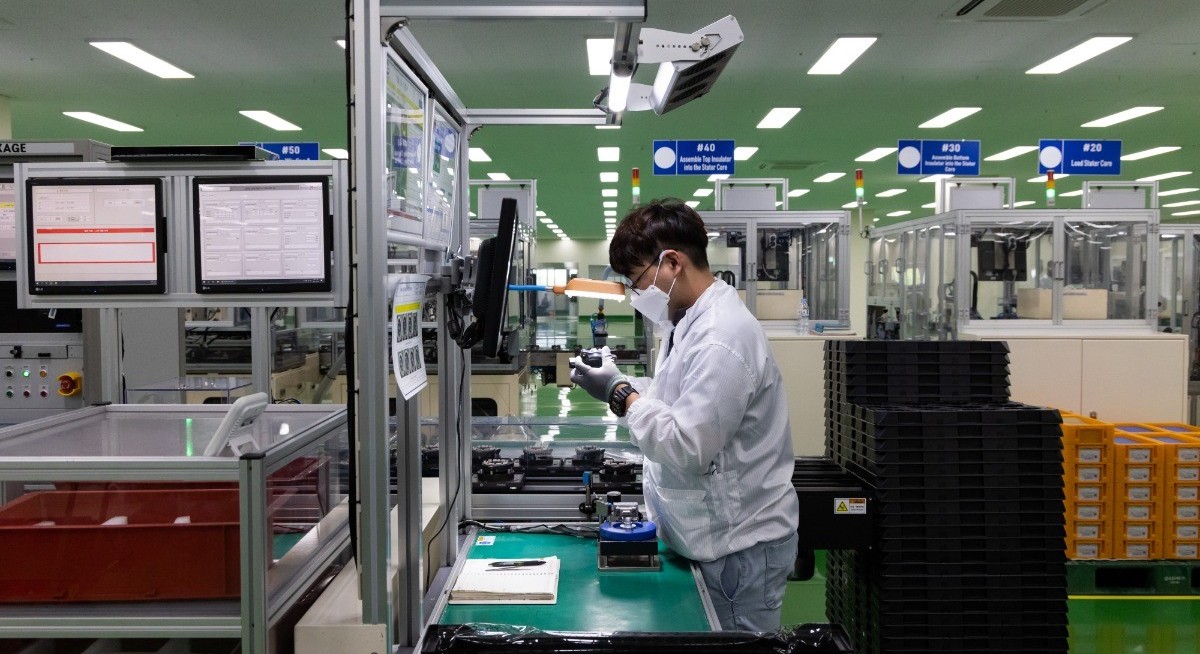


The latest data could assuage concerns about the impact of US tariffs on the world’s manufacturing floor. While the artificial intelligence boom has lifted electronics trade in the region, other merchandise goods had taken a hit during much of 2025 because of the higher levies.
Taiwan’s PMI jumped to 50.9 in December, while South Korea’s gauge rose to 50.1, both climbing above the threshold of 50 that separates expansion and contraction for the first time in months.
Vietnam saw the region’s best PMI at 53 — although slipping from the previous month — while the Philippines, Malaysia and Indonesia also reported above-50 readings.

See also: Indian stocks face fresh pressure after central bank action
Taiwanese firms reported improved demand conditions and consumer spending, while South Korean factories said they saw better business in key markets across Europe, the Americas and mainland China, according to S&P Global.
In both export-reliant economies, manufacturers grew more confident of a recovery in the new year and ramped up their purchasing.
China earlier this week also reported a similar rebound in December, with both official and private gauges showing an expansion in manufacturing activity. President Xi Jinping declared that China is set to hit its 5% growth goal for 2025.
See also: Thailand beats growth estimates in boost to new government
In Southeast Asia, Singapore reported economic growth of 4.8% for 2025 on Friday, its fastest pace in four years, as pharmaceutical and electronic manufacturers powered the trade-reliant nation last month through the disruption of US tariffs.
Uploaded by Tham Yek Lee




