


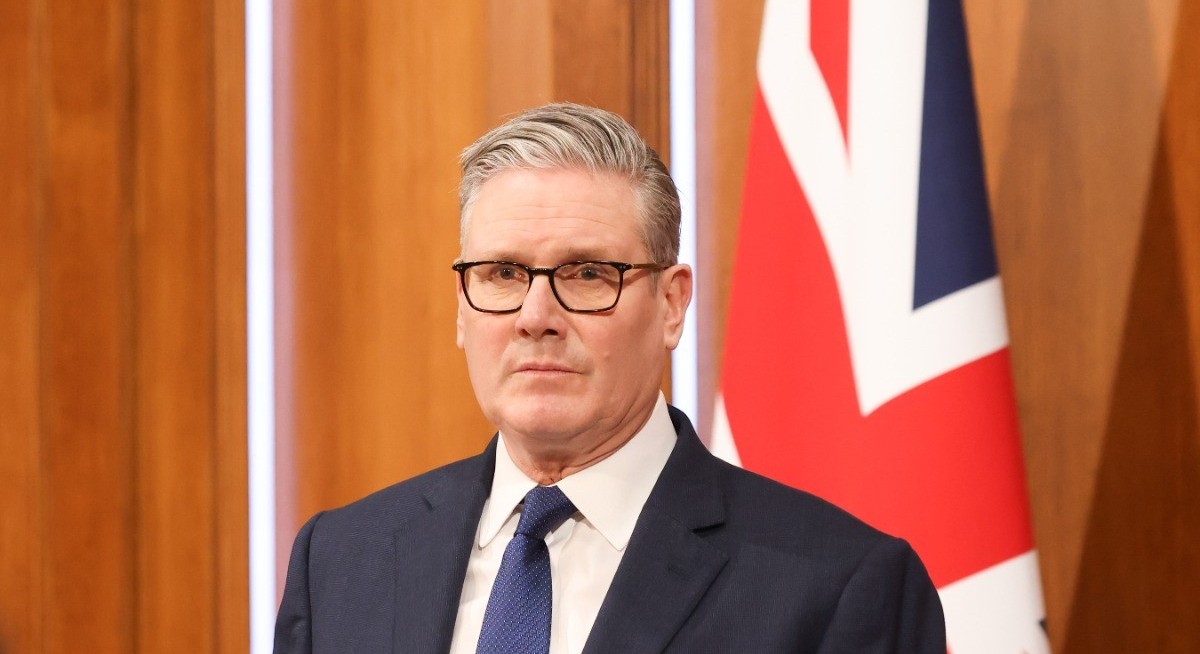


(April 13): The UK will not take part in the proposed US blockade of the Strait of Hormuz, setting up yet another point of contention between President Donald Trump and Prime Minister Keir Starmer over the conflict in Iran.
“We are not supporting the blockade,” Starmer told BBC Radio 5 Live on Monday. He said Britain’s diplomatic and political efforts, as well as its military capability — are all “focused from our point of view on getting the straits fully open”.
Starmer’s remarks highlight the latest policy rift between his Labour government in the UK and Trump’s US administration. His decision not to allow US bombers to use British bases in the initial attack on Iran — and to allow permit limited use subsequently — has attracted Trump’s ire, who has said the UK prime minister is no Winston Churchill.
The British government said in a statement on Sunday that it continued to call for freedom of navigation and the opening of the strait, following Trump’s announcement that the US would begin a full naval blockade of the strategic waterway that’s essential for global energy supplies.
“Effective immediately, the US Navy, the finest in the world, will begin the process of blockading any and all ships trying to enter, or leave, the Strait of Hormuz,” Trump posted on Truth Social on Sunday. “Any Iranian who fires at us, or at peaceful vessels, will be blown to hell.”
Discussing his plan to blockade the strait on Fox News, Trump said he understands that “the UK and a couple of other countries are sending minesweepers”.
See also: South Korea, Poland agree to keep boosting defence ties
The UK has discussed deploying autonomous mine-hunting drones in the strait if a viable plan emerges in conjunction with other allies to reopen it, with Starmer previously saying those systems were “in the region”. However, that is a separate proposal to Trump’s threat to blockade Hormuz.
On Monday, Starmer refused to be drawn on “operational matters”, but when discussing UK efforts to open the strait did acknowledge the UK’s mine-sweeping capability.
Representatives of Britain and a coalition of other countries will take part in another meeting in the coming days to discuss a plan to open the waterway. Nonetheless, many of the countries taking part in those talks are unwilling to commit naval assets until a lasting peace agreement is reached. Most do not see opening the strait by military means as a workable option.
See also: Trump blockade of Iran ports risks widening war to high seas
Trump used his Fox interview to renew his criticism of Starmer, again comparing him to Neville Chamberlain, the British wartime leader whose name is synonymous with the appeasement of Adolf Hitler. He also criticised the prime minister for offering to send military equipment after the war is over.
“You need the equipment before the war starts or during the war,” the president said, calling Starmer’s position a “Neville Chamberlain-type statement”.
After initially barring the US use of its bases for the war against Iran, the UK has since permitted use of its bases for American assets taking part in what it calls “defensive” operations targeting Iranian missile launchers. Still, Starmer has insisted the conflict is “not our war”.
“My decision has been very clearly that whatever the pressure, and there’s been some considerable pressure, we are not getting dragged into the war,” Starmer said. “We must hold on to British values and British principles.”
Uploaded by Tham Yek Lee




