


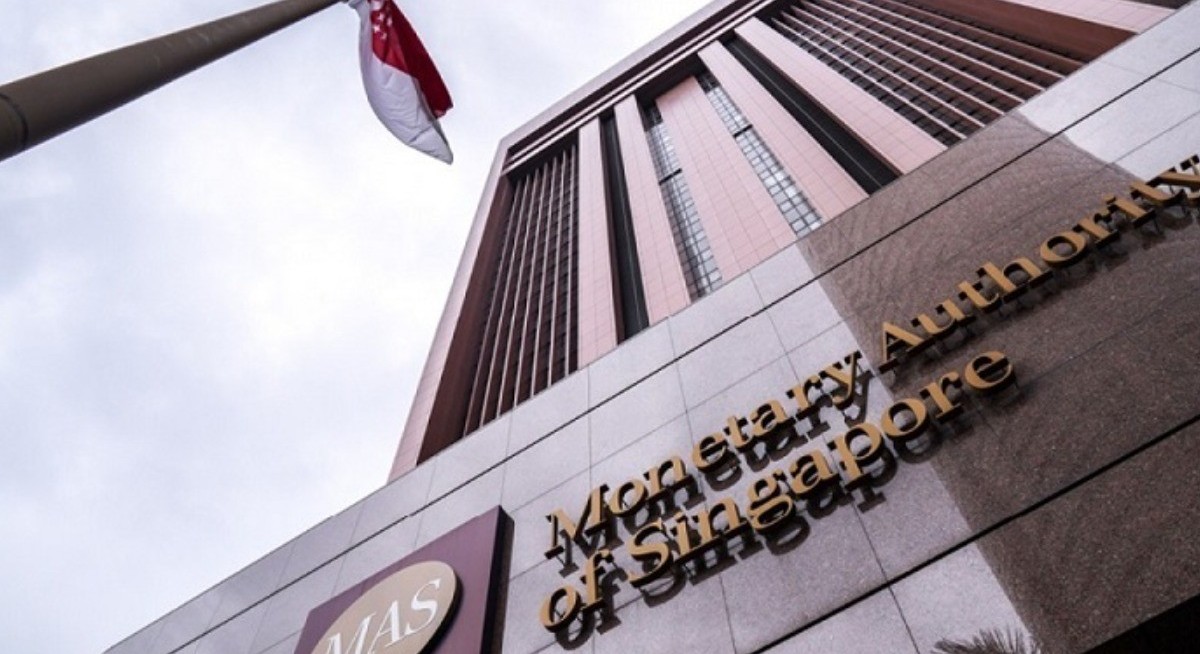


(April 14): Singapore tightened its monetary policy settings in a widely expected move, becoming the first in Asia to respond to rising inflation risks stemming from a surge in energy prices linked to the Middle East conflict.
The Monetary Authority of Singapore (MAS), which uses the exchange rate as its main policy tool rather than interest rates, said on Tuesday it would increase the slope of its policy band, as predicted by 15 of 18 economists in a Bloomberg survey. It left the width and the level at which the band is centred unchanged.
“Singapore’s imported energy costs have already risen,” the central bank said in a statement, noting that oil prices will likely remain elevated for some time even if supplies from the Middle East are restored. “As higher energy costs pass through supply chains worldwide, a broader range of Singapore’s import costs will increase.”
The local dollar was steady at 1.2734 versus the greenback after paring slight gains following the announcement. The Singapore dollar is the top-performing currency in Southeast Asia versus the US dollar since the outbreak of the Iran War.

With the latest move, Singapore has emerged as the first in Asia to tighten monetary policy in response to the Iran war, while regional peers have largely stayed on hold as they assess the economic fallout from the conflict. Last week, the Reserve Bank of India and the Bank of Korea kept interest rates unchanged as they monitor the impact of surging oil prices on the economy. Indonesia, the Philippines and Thailand — all due to decide on monetary policy in the coming weeks — and are also expected to leave rates on hold.
See also: Singapore's Q1 GDP up 4.6% y-o-y but down 0.3% q-o-q; Middle East fight to weigh on growth ahead
Singapore’s central bank on Tuesday also raised its outlook for core inflation to 1.5%-2.5%, from 1%-2% previously, adding that price hikes could erode real incomes and crimp demand over the next few quarters.
A separate release from the Ministry of Trade and Industry (MTI) showed the city state’s gross domestic product (GDP) contracted in the first three months of the year from the fourth quarter, but on year-on-year terms it still expanded a handsome 4.6%.
“The MAS appears to be leaving the door open for another move in the July meeting, depending on how inflation and growth evolves,” according to Chua Hak Bin, a regional co-head of macro research at Maybank. “We think the Iran war will have a disproportionately larger impact on inflation than growth, and cannot rule out another tightening move at the July meeting.”
See also: MAS may tighten monetary policy as oil shock lifts prices

In its statement, the MAS also said that it stood “ready to curb excessive volatility in the S$NEER.” The last time it used a similar phrase was in March 2020, according to Australia and New Zealand Banking Group’s head of Asia research Khoon Goh who expects another round of tightening in July.
“Given that they will have to intervene anyway when the S$NEER is at the upper bound, that comment suggests that they will not want to see the S$NEER weaken too much suggesting they may provide a floor should the Singapore dollar weaken due to geopolitical factors.”
According to estimates from MUFG Bank Ltd, the S$NEER — the central bank’s trade-weighted measure of the currency against a basket of its trading partners — is now sitting about 0.5%-0.6% below the top of its policy band.
The MAS, which holds four policy reviews per year, had loosened its settings twice in 2025 — January and April — to help support growth, then stood pat through the rest of last year as the trade-reliant nation largely shrugged off the impact of US President Donald Trump’s tariff onslaught.
The Middle East conflict will likely send global inflation up to 2.7% this year, jumping from 1.8% last year, while global growth could be much slower than expected, according to the monetary authority’s macroeconomic review published on Tuesday.
A more severe energy shock would dim the outlook further, the report said. Tighter financial conditions could induce disorderly corrections in asset prices, while a supply crunch would disrupt the artificial intelligence (AI)-led growth momentum.
To stay ahead of Singapore and the region’s corporate and economic trends, click here for Latest Section
Singapore’s GDP shrank 0.3% in the first three months of the year compared to revised figures for the fourth quarter of 2025, according to an advance estimate from the MTI on Tuesday.
The manufacturing sector saw a sharp 4.9% quarterly drop, a pullback from the 4.5% expansion in the October-December period when Singapore’s factories enjoyed a boost from the AI boom.
Still, GDP expanded 4.6% year-on-year in the first quarter. The ministry had raised its 2026 growth forecast to 2%-4% in February, from an initial estimate of 1%-3%. An update to that will be provided in May.
“While GDP growth remained resilient in the first quarter of 2026, the US-Israel-Iran conflict that began in end-February may weigh on economic activity in the coming quarters,” the ministry said in a statement.
Uploaded by Tham Yek Lee




