




(Feb 20): US President Donald Trump’s warning to Iran — that it has just 10 to 15 days to avert potential military action — suggests matters could come to a head when the United Nations nuclear watchdog next meets to decide whether to further censure the Islamic Republic.
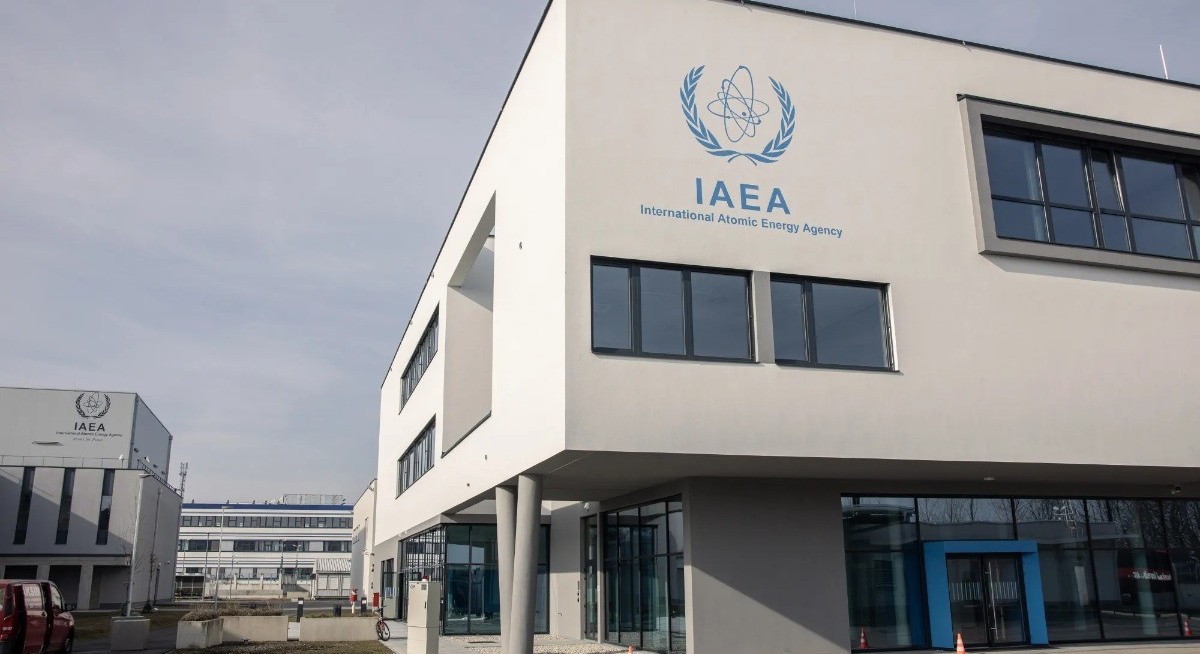
The International Atomic Energy Agency’s (IAEA) board is scheduled to hold a five-day meeting in Vienna starting on March 2, or 10 days from now. Diplomats are expected to weigh a new resolution censuring Iran for its nuclear programme and could refer it to the UN Security Council for further action.
That sets up a potential repeat of the timetable that played out in June, when Israel began strikes within 24 hours of the IAEA board’s decision to censure Iran over its lack of cooperation with monitors. That finding was cited by US officials, who at the time suggested it provided the legal justification for military intervention.
“It potentially gives the administration the hook it needs to attack Iran in an attempt to affect regime change,” said Tariq Rauf, the former head of nuclear-verification policy at the IAEA.
As the US amasses forces in the Middle East for a potential attack against Iran, Trump told reporters on Thursday that “we’re either going to get a deal, or it’s going to be unfortunate for them.”
The prospect of a war between the US and Iran has triggered a rise in oil prices, with Brent trading above US$71 a barrel — near six-month highs — and on course for a 5% gain across the week.
See also: US poses greater security threat than China, Canadians say in poll
The dollar is on track to post its best week since November as geopolitical tensions boost its appeal as a safe haven, alongside a slew of stronger US economic data.
The most recent round of talks on Iran’s atomic activities took place on Tuesday in Geneva. At the heart is the issue of uranium enrichment — the tightly-guarded process of separating uranium isotopes which can be used to fuel nuclear reactors or bombs. Israel and the US have said they want Iran to cease all enrichment activity and dismantle plants. Iran insists on retaining some fuelmaking capacity for peaceful purposes.
Iran’s government hasn’t offered to suspend enrichment and the US side hasn’t demanded a complete cessation, Tehran’s Foreign Minister Abbas Araghchi said on Friday on MS NOW, adding both sides are talking about a “fast deal”.
See also: India to formally join US-led pact Pax Silica on supply chain security
Chinese, Russian and Iranian officials published on X a picture of a rare joint meeting with IAEA director-general Rafael Mariano Grossi. They discussed concerns over the potential use of force against Iran, according to Beijing’s envoy Li Song.
“There is not much time but we are working on something concrete,” Grossi said on Thursday in an interview with Bloomberg TV. IAEA inspectors haven’t verified the status of Iran’s near-bomb-grade uranium stockpile in more than eight months.
“It’s not impossible,” Grossi said a day earlier, referring to the prospect of a deal. “There are certain things that Iran understands cannot be pursued. We have to provide the watertight verification there is no deviation.”
Uploaded by Evelyn Chan




