


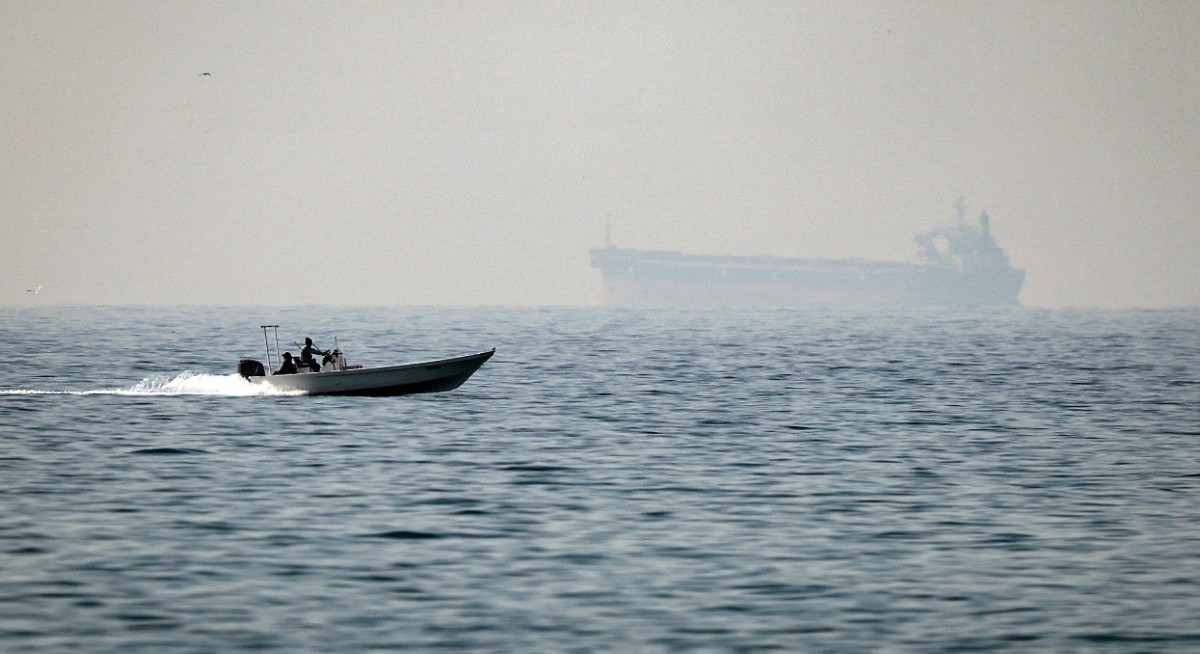


(March 4): Traders were on Wednesday awaiting further details of President Donald Trump’s plan to guarantee the free flow of energy shipments through the Persian Gulf, as the shipping industry warned the proposal may struggle to restore confidence after attacks effectively shut the Strait of Hormuz.
The disruption threatens to sever seaborne energy trade between some of the world’s largest producers and key consuming nations, heightening risks for global markets. Brent crude was little changed after jumping more than 10% this week, while European gas prices slipped following the biggest rally in four years.
Trump said on Tuesday the US would offer insurance backstops and naval escorts for commercial vessels transiting the region, seeking to reassure markets rattled by a spiralling conflict involving Iran. Multiple attacks on vessels in recent days have choked off traffic through the narrow waterway.
The world’s largest shipping industry association said it was seeking clarification on how the US-led convoy system would operate, warning that protecting every tanker in the region would be “unrealistic”. Officials at two major commodity trading houses said they doubted the measures would materially reduce the danger of attack, even with military escorts in place.
“Nothing is sure and we need immediate clarity,” said Khalid Hashim, managing director of Precious Shipping PCL, a Thai firm that owns bulk carriers. “Lives are at risk, cargoes are at risk, ships are at risk. We need immediate cover that protects us from all this,” he said.

See also: Small container ship struck while transiting Hormuz strait, UK says
The company currently has some ships in the Persian Gulf, and has been struggling to secure war-risk cover before they sail from the region, he said.
Two shipowners said on Wednesday they would be open to joining escorted convoys, while two people involved in the insurance market said that escorts would help them to feel more comfortable than they currently are about covering the risks, asking not to be identified discussing private deliberations.
With ships unable or unwilling to transit the strait, producers cannot export, supertanker costs are skyrocketing, and storage at many Persian Gulf refineries is filling up fast. Insurers have largely withdrawn cover for transiting the Strait of Hormuz, though policies are available for ships stuck in the Gulf, as long as vessels don’t transit.
See also: Chinese banks halt Abu Dhabi loan as creditors cut Mideast risk
“The core thing shipowners are thinking about is the real risk of loss,” said Karnan Thirupathy, partner at Kennedys Law LLP, who specialises in the commodities, shipping and insurance sectors. “No one goes into the trade if the risk of loss is simply too high.”
The knock-on effects of the halt have been swift. Iraq, the biggest Middle Eastern oil producer after Saudi Arabia, has already begun deep cuts to output and faces even deeper reductions, in the clearest sign yet of stress on suppliers in the region.
Trump’s solution involves tapping the US International Development Finance Corporation — an institution that typically supports private-sector investment in developing countries — which will in turn support charterers, shipowners and key maritime insurers.
“While President Trump’s comments about insurance and tanker escorts caused a pullback in oil prices, we question how much planning has been done on the insurance backstop thus far and think there could be a number of challenges in executing this plan quickly,” RBC Capital Markets LLC analysts said in a note.
There is international precedent. In November 2023, a facility was set up by partners including Lloyd’s insurers and the Ukrainian government to provide affordable war risk insurance for ships underpinning Ukraine’s maritime exports, particularly grain cargoes. And the DFC has provided some assistance with war risk reinsurance, something it could repeat.
Still, an updated US-organised version to cover oil, gas and fuels across the Persian Gulf would be on a far larger scale, and more complex, given the number of producers and consumers involved. Several shipowners said they would also be wary of tying their fortunes to a volatile US administration.
Oil prices did pare some of their gains after Trump’s announcement on Tuesday before resuming their advance. With limited details on hand, shipowners say they were cautious about both the insurance provision and the cost.
To stay ahead of Singapore and the region’s corporate and economic trends, click here for Latest Section
Some owners with ships in the region said they were yet to hear from the US. They asked not to be named as they are not authorized to speak to the media.
Several also said an issue of confidence could not easily be solved with the US navy, given Iran’s continued strikes and limited capacity for what could be tight escorts, especially as many tankers are neither US-owned nor US-flagged.
“Providing protection for all tankers operating in areas currently threatened by Iran is unrealistic as this would require a very high number of warships and other military assets,” said Jakob Larsen, chief safety and security officer at Bimco.
Houthi attacks in the Red Sea have also continued despite intervention, shipowners pointed out.
A limited solution to get some traffic moving would also take time to put in place — something neither producers nor consumers necessarily have.
“This is welcome news, but clearly it won’t happen overnight,” said Warren Patterson, head of commodities strategy at ING Groep NV. “Naval escorts would be helpful, but again, this effort will take time. Naval escorts will be sitting ducks to Iranian attacks.”
Uploaded by Felyx Teoh




