


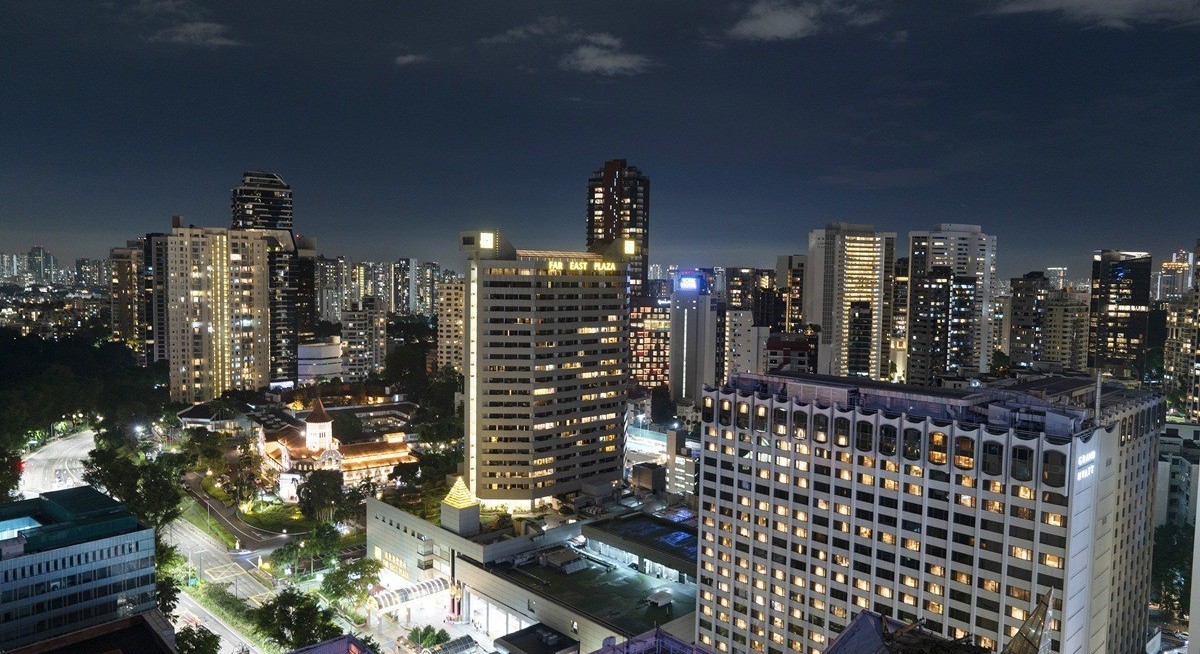


(March 4): The conflict in the Middle East sent a chill through one of Singapore’s marquee real estate conferences even before the event started.
High-profile panelists from sovereign wealth funds like the Qatar Investment Authority and Mubadala Investment Co pulled out of this week’s PERE Asia Summit 2026 due to airspace disruptions following the US and Israeli strikes on Iran. On stage, speakers noted the war was already having an impact on sentiment, even as many said it was too early to judge the long-term ramifications.
“Clients are very scared,” said Hamish MacDonald, the head of Asia-Pacific real estate at BlackRock Inc. He said political risk is now front and centre, although adding that Asia is still relatively safe. “Nothing is locked in on the capital raising or deal front.”
Canadian pension fund La Caisse was starting to look at Middle East real estate but it is now likely to “pause and see what happens,” said Josephine Yip, the firm’s managing director for Asia-Pacific real estate, during a panel on Wednesday.
Off-stage, fund managers were even more candid. Some of the participants said their major worry is that a prolonged war will drive up inflation and borrowing costs, which will not just dent returns but may also weaken investor appetite for new deals.
The prospect of a prolonged conflict is already fuelling talk of a wave of global inflation, which would put pressure on interest rates. Kevin Warsh, the incoming chairman of the Federal Reserve, has voiced support for lower rates in the US but Fed officials said this week that the Iran conflict had added another dose of uncertainty.
See also: Goldman’s Solomon surprised by ‘benign’ markets on war
US interest rate changes are closely watched across global markets, in part because of the widespread ownership of Treasuries, but they can have an outsized impact on Asia’s real estate markets. Hong Kong follows US rate moves to maintain its peg. Singapore’s currency-focused monetary policy means local borrowing costs can be sensitive to swings in the US.
The conference was due to end on Wednesday, a day when stock markets across Asia were plummeting as surging oil prices added to broader anxiety around artificial intelligence. Korea’s benchmark Kospi Index was on course for its biggest two-day decline since 2008. A Bloomberg gauge of Asian developed market real estate stocks was down around 4%.
Some attendees to the PERE event also expressed pessimism about returning to mainland China, where a property slump has lasted more than four years.
See also: Russian central bank sues EU in Luxembourg on frozen assets
“Mainland China is still completely uninvestible,” said Sonny Kalsi, co-chief executive officer of Miami-headquartered real estate investor BGO.
On top of the real estate crisis, “people don’t want to invest in China because of a strategic discount,” said Francois Trausch, the CEO of PIMCO Prime Real Estate, pointing to the continuing geopolitical tensions.
Uploaded by Liza Shireen Koshy




