


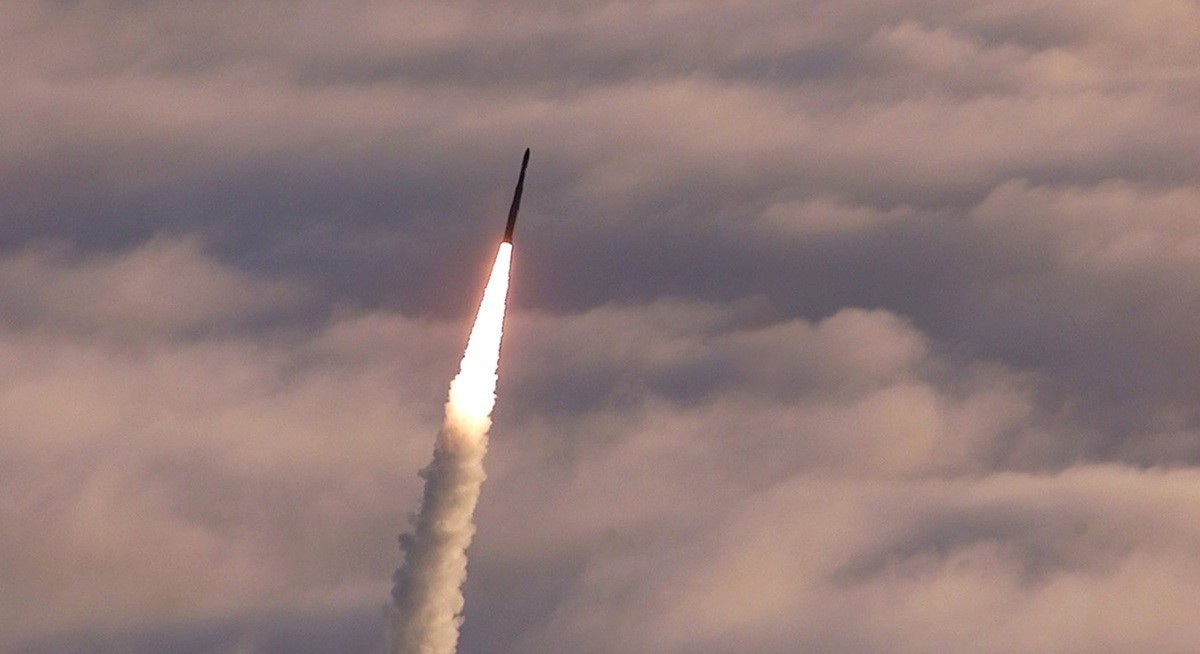


The document’s release follows US President Donald Trump’s pledge to match adversaries in testing nuclear weapons, after Russia recently announced trials of a nuclear-powered underwater drone and a nuclear-capable cruise missile. He added the US would conduct such tests “pretty soon”.
It’s unclear whether Trump meant detonating nuclear warheads — which would reverse decades of US policy and violate a de facto global ban — or simply expanding tests of delivery systems, such as intercontinental ballistic missiles that can carry nuclear warheads.
The only country known to have tested nuclear bomb designs this century is North Korea, which last detonated an atomic device in 2017.
In 2019, the US withdrew from a Cold War-era nuclear disarmament treaty with Russia, saying Moscow had violated it by producing banned missiles. Trump argued that the accord was flawed because it didn’t include China, a rising nuclear power.
See also: Tankers speed through Hormuz chokepoint on US-Iran tensions
While China has a smaller arsenal of nuclear warheads than the US and Russia, it’s rapidly increasing and modernising its inventory, according to US government assessments. China last tested a nuclear bomb in 1996, but it continues to test nuclear-capable missiles, including an ICBM last year, and hypersonic warheads that use high speeds and maneuverability to avoid interception.
In the white paper, Beijing reiterated that it has followed an “extremely restrained” approach on developing atomic weapons, and it would never engage in a nuclear arms race. The Chinese ruling party’s top body said in October that it plans to “expand strategic deterrence capabilities” — a military term that includes nuclear forces — over the next five years.
The white paper also criticised “certain countries” for pushing missile defence systems such as Trump’s envisioned Golden Dome, which aims to shield the US homeland not only from limited attacks by rogue states, but also from large-scale barrages by the likes of Russia and China. Critics have said the Golden Dome is virtually impossible to accomplish technically.
See also: Iran signals US negotiations won’t lead to quick resolution
Washington and Seoul are also in private negotiations to jointly build nuclear-powered submarines for both navies, Bloomberg News reported. Admiral Daryl Caudle, chief of US naval operations, said the subs could help counter China’s rapidly expanding fleet.
Uploaded by Liza Shireen Koshy




