


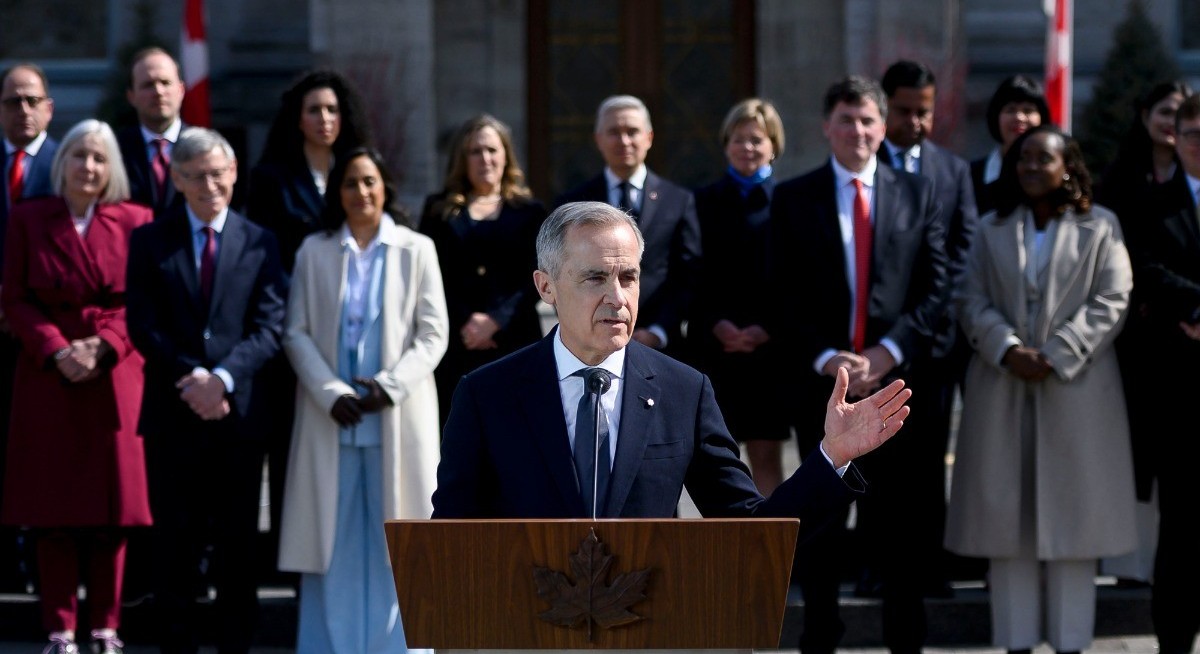


The vote allows the government to proceed with implementing a budget that pledged tens of billions in additional spending for trade infrastructure, defence and housing, while promising to shrink the public sector.
In April’s election, Carney’s Liberal Party came up just short of winning a majority of the 343 seats in the House of Commons, meaning the government needs help from some opposition lawmakers to pass legislation. Certain votes — including on the budget — are considered confidence measures, which usually trigger the resignation of the government and an election if they fail.
Going into Monday, the government was still looking for two opposition votes. Then Carney won the support of the sole Green Party lawmaker in Parliament, Elizabeth May, who has led the party for most of the past two decades.
May told reporters she had decided to back the budget after Carney promised her that he’s committed to the Paris Agreement targets on carbon emissions. “I am going to vote yes — for the country, for the planet, and for my hope in the future,” she said.
See also: Russia and Ukraine envoys set for new US-led talks in Geneva
In the lead-up to the vote, the Liberals had been trying to attract opposition lawmakers to change sides — to “cross the floor” as it’s known in Canada’s parliamentary system. Chris d’Entremont, who was elected as a Conservative in the province of Nova Scotia, joined the Liberals in early November. A second Conservative, Matt Jeneroux, had discussions about floor-crossing but chose to announce his resignation from Parliament instead.
In the end, four opposition members of the House didn’t vote — two Conservatives, including Jeneroux, and two members of the left-wing New Democratic Party (NDP). The House Speaker only votes in the event of a tie.
Don Davies, the interim leader of the NDP, said his party opposes the budget due to its cuts to the public sector and approach to climate change. But he said Canadians do not want an election now.
See also: Trump privately weighed quitting trade pact he signed with Canada, Mexico — Bloomberg
“The consequence of defeating this budget would not be to improve it or to help Canadians. It would be to plunge the country into an election only months after the last one, and while we still face an existential threat from the Trump administration,” Davies said in a statement, referring to the US president’s high tariffs and remarks about making Canada an American state.
Carney’s budget foresees an extra C$167.3 billion in total deficits over five years, fuelled by heavy spending on capital projects, but also by a softer outlook for tax revenue. That’s because of an earlier income tax cut and weaker economic growth as Canada’s export-driven economy copes with tariffs from the US and China.
Uploaded by Tham Yek Lee




