


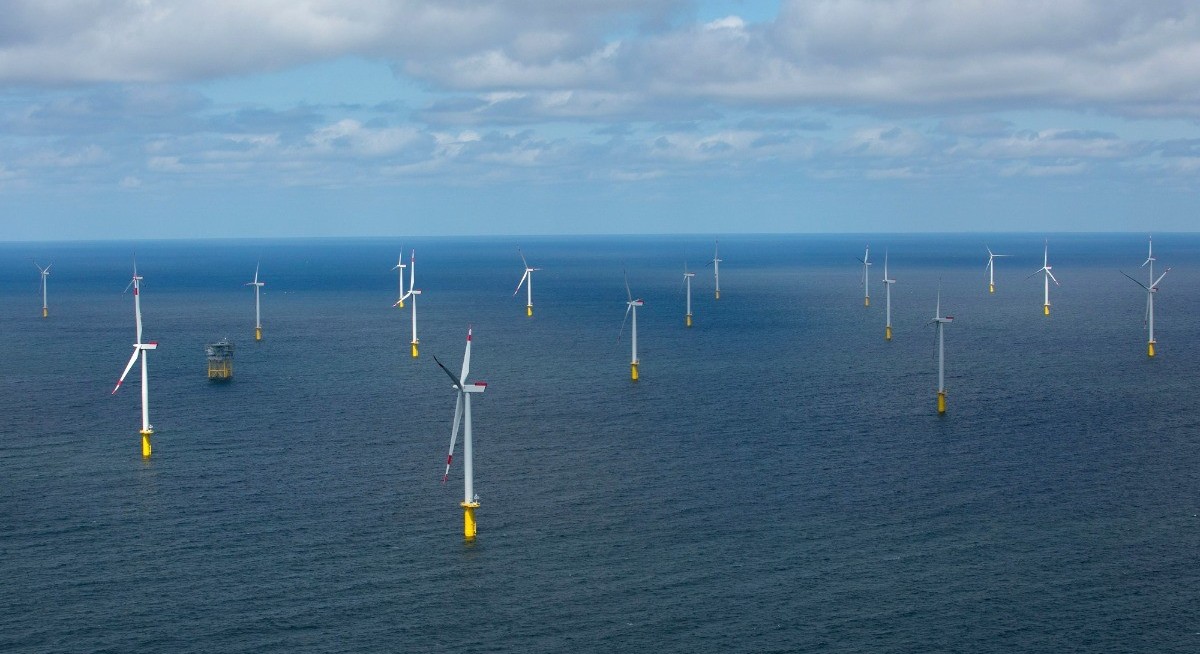


(Jan 26): European countries including the UK, Germany and Norway have pledged €9.5 billion to expand offshore wind capacity in the North Sea by the end of the decade, in a bid to turn one of the most famous oil basins into “the world’s largest clean energy reservoir”.
Leaders and energy ministers from nine nations will meet in Hamburg on Monday to sign the declaration, which will mobilise €1 trillion of capital in Europe, create 91,000 jobs and reduce power production costs by 30% by 2040, according to industry group WindEurope.
The commitment underscores Europe’s continued support for the technology, despite recent criticism by US President Donald Trump, who has labelled Europeans that install windmills as “losers”. This week’s North Sea conference is a “nice answer” to Trump’s statements at the World Economic Forum in Davos, Germany’s economy minister, Katherina Reiche, told reporters.
The nations aim to jointly develop 100 gigawatts (GW) of offshore wind capacity by 2050 — the bloc’s climate-neutrality target — while strengthening protections for energy infrastructure, Bloomberg News reported on Friday. That effort includes wind farms linked to multiple countries.
“Today’s investment pact provides reliable perspectives for the offshore sector, secures creation of value in Europe and brings future-proof jobs,” Reiche added. Ed Miliband, the UK’s energy secretary, said clean energy could get the nation “off the fossil fuel rollercoaster and give us energy sovereignty and abundance”.
The governments also pledged to bolster the clean power push with their own initiatives. While the UK has stepped up support for the technology — resulting in a record wind auction earlier this month — Germany’s most recent zero-subsidy tender attracted no bidders, and upcoming rounds also risk failure.
See also: Casino creditors offer to take over ailing supermarket chain
“In this respect, we will adjust the tender design and areas so that we can offer a good investment framework,” said Reiche, adding that the changes will be paired with so-called contracts for difference, which provide a minimum subsidy and an upper cap.
The North Sea summit follows two similar gatherings since 2022, at which coastal states set out plans to install 300GW of capacity — up from about 35GW currently — in response to the energy crisis triggered by Russia’s invasion of Ukraine. The North Atlantic Treaty Organization and the European Commission are also taking part, with Iceland joining despite not being a North Sea nation.
Oil and gas extraction in the North Sea accounts for more than 9% of historical global greenhouse gas emissions, said climate non-profit 350.org, citing calculations by Oil Change International. “Transforming the North Sea into a renewable energy hub would not erase that damage, but it could begin to correct it,” said Clémence Dubois, the group’s campaign manager.
See also: Distressed Paris office towers set to be sold at discounted price by lenders
Closer cooperation between countries might also help protect conservation areas, according to Felix Schmidt, policy advisor for WWF Germany.
“At the moment, biodiversity doesn’t have the priority in marine-protected areas in the North Sea, given the numerous economic uses that continue to take place within these areas,” he said.
Uploaded by Felyx Teoh




