


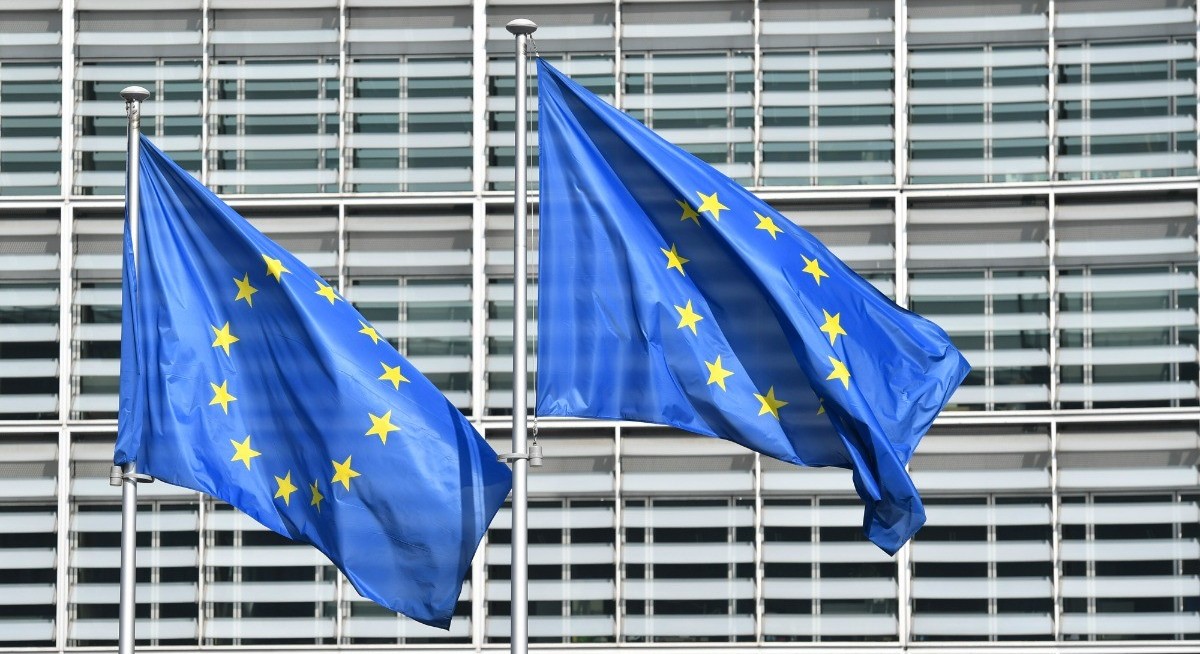


(April 30): The European Union (EU) announced plans to revamp its merger rules, lifting some of the barriers to creating big local firms capable of competing with US and Chinese giants.
In its first major overhaul to M&A policy in two decades, the bloc’s executive arm said “the global geopolitical and trade context has changed” and “industrial scale and global competitiveness have become increasingly important”.
The EU’s proposed new approach underlines a shift in thinking as the invasion of Ukraine and the Iran provokes tough questions about the bloc’s strategic autonomy and its ability to create the wealth for growing defence and welfare bills. Brussels has a history of blocking deals between Europe’s biggest companies such as a tie-up of rail assets between Germany’s Siemens AG and France’s Alstom SA, which some argue has hampered competition with foreign rivals.
Thursday’s announcement nods to a 2024 report by former European Central Bank president Mario Draghi, which set out a blueprint for reforms, including changes to dealmaking rules long criticised as a barrier to the creation of powerful local players in industries such as telecommunications.
“This is an ambitious approach to our competition policy — so we can meet the realities of the fiercely competitive global economy and boost our competitiveness,” European Commission President Ursula von der Leyen said in a statement. EU antitrust chief Teresa Ribera cautioned, however, that Thursday’s guidelines do not signal a merger free-for-all, noting that the purpose of the new approach remains the same, “protecting strong, competitive markets without allowing an accumulation of power that can be abused”.
As part of the fresh guidelines, the commission — the lead merger authority in the 27-nation EU — will give companies the chance to make the case for their planned buyouts by citing efficiency benefits that cover innovation, sustainability and resilience. That would allow firms to tout the advantages of their deals ahead of investigations that can drag on for months in the most contentious cases.
See also: Lagarde sees euro-stablecoin risks for banking, monetary policy
While not a carte blanche, mergers may be cleared if demonstrable efficiencies would deliver lasting benefits that at least offset harm to competition.
“The assessment of mergers should therefore give adequate weight to scale, innovation, investment and resilience as pro-competitive factors that can benefit from a degree of consolidation,” the commission added, highlighting the benefits to the internal market from firms able to grow and scale as a result of buyouts.
The commission, which opened a public consultation on the plans until June 26, cautioned that the relaxed approach won’t be subject to all firms seeking to consolidate.
See also: Euro-zone wage growth to quicken in second half of this year
It warned that Big Tech firms won’t benefit from being allowed to make pro-innovation arguments about their acquisitions of startups working particularly in research and development.
While the new guidelines don’t explicitly discriminate against companies from outside the EU buying smaller European firms, future merger reviews will analyse how a deal benefits the resilience of the EU’s prized internal market — a clear signal that foreigners snapping up European companies could face a more difficult regulatory process.
Boardroom plans for broader consolidation in mobile telephony have historically been undermined by fears of EU intervention. But the industry is increasingly buoyed by Brussels signals for more flexible merger reviews — including plans from Bouygues Telecom, Iliad SA and Orange SA to buy billionaire Patrick Drahi’s SFR for €20.4 billion (US$23.9 billion or $30.44 billion).
Upcoming cases likely to test the EU’s new approach include a joint venture between Airbus SE, Leonardo SpA and Thales SA to merge their satellite operations and create a European behemoth able to compete with Elon Musk’s SpaceX, as well as Deutsche Boerse AG’s acquisition of European fund distribution platform Allfunds Group plc for about €5.3 billion.
The new guidance “will give companies the much-needed confidence to pursue consolidation”, said Eliana Paredis, a competition lawyer at A&O Shearman in Brussels. Dealmakers should “be ready to convincingly substantiate and quantify claimed benefits resulting from their transactions”.
Uploaded by Chng Shear Lane




