


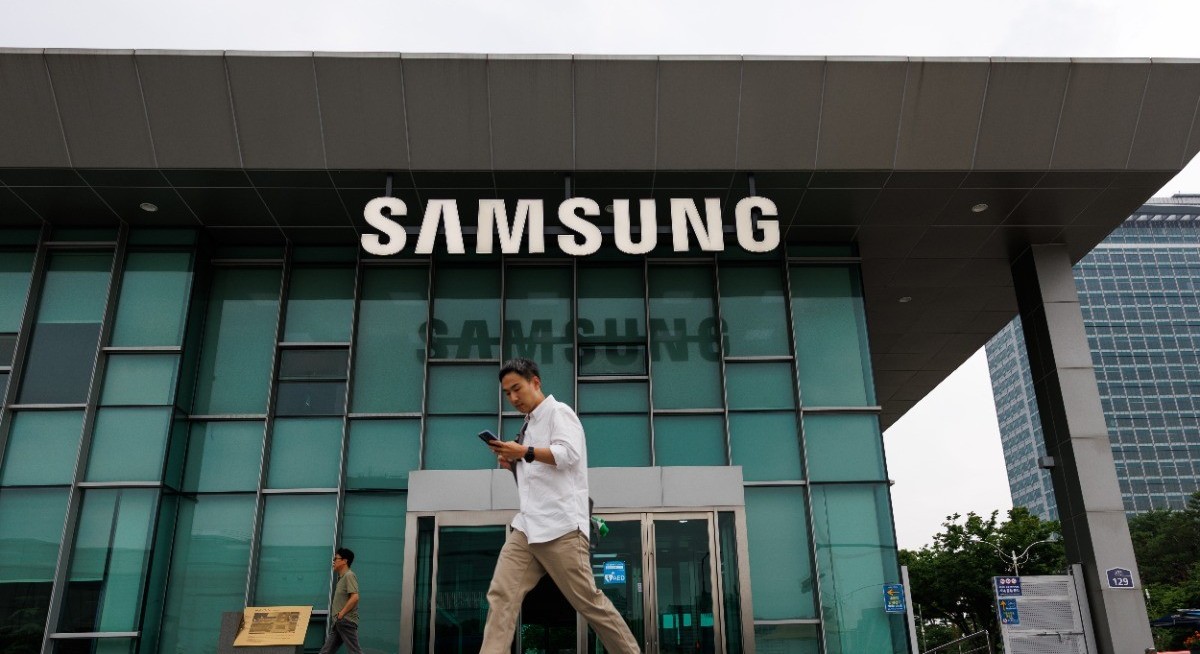


(March 26): South Korea’s biggest conglomerates, led by Samsung and SK, have rolled out a series of energy-saving steps, from turning off office lights to limiting when employees can drive to work as part of nationwide efforts to respond to the fallout from the Iran war.
Samsung Electronics Co and its affiliates said they will implement a 10-day system under which access to staff parking will be restricted on dates that match the final number of vehicle licence plates. For example, drivers with plates ending in ‘7’ won’t be able to drive to work on the 7th, 17th and 27th of the month. The move follows a government-imposed fuve-day rule for the public sector, where plates ending in a 1 or 6 will be banned from the roads on Monday, 2 or 7 on a Tuesday and so on.
SK will also launch a five-day rotation next week, turn off building lights during lunch and after hours, and reduce elevator operations. LG will enforce a 10-day vehicle rotation system starting Friday, while encouraging employees to use company shuttle buses to commute.
The moves come as South Korea steps up contingency planning for a worst-case Middle East scenario as a scarcity of crude oil and surging prices of fuel and byproducts threaten to disrupt everyday life. South Korea is particularly susceptible because the nation imports about 70% of its oil needs from the Middle East.
The measures highlight the growing sense of urgency across the manufacturing industry, partly driven by a looming supply crisis for naphtha. The petroleum derivative is essential for making everything from plastic packaging and construction materials to textiles and appliances, as well as for processing gasoline.
In the aviation sector, South Korean carriers are facing refueling restrictions in some countries. The government is exploring whether to divert export-bound jet fuel to the local market, the latest sign of regional hoarding.
See also: South Korea shifts to crisis mode as Iran oil shock intensifies
“There are growing concerns that the deteriorating petrochemical supply chain will trigger a chain reaction of production disruptions in downstream sectors from auto, home appliances and shipbuilding to construction and even food,” Kim Kimyung, an analyst at Korea Investment & Securities Co, wrote in a note.
The Korea International Trade Association said member companies have filed nearly 470 complaints about Middle East logistics disruptions, with more than half involving shipping delays and unexpected surcharges.
Samsung will grant exceptions from its driving restrictions to electric and hydrogen-powered vehicles, as well as to pregnant women, people with disabilities or those traveling with infants. Other measures include reducing lighting by half in non-essential areas and closing some parking lots on holidays.
Uploaded by Tham Yek Lee




