


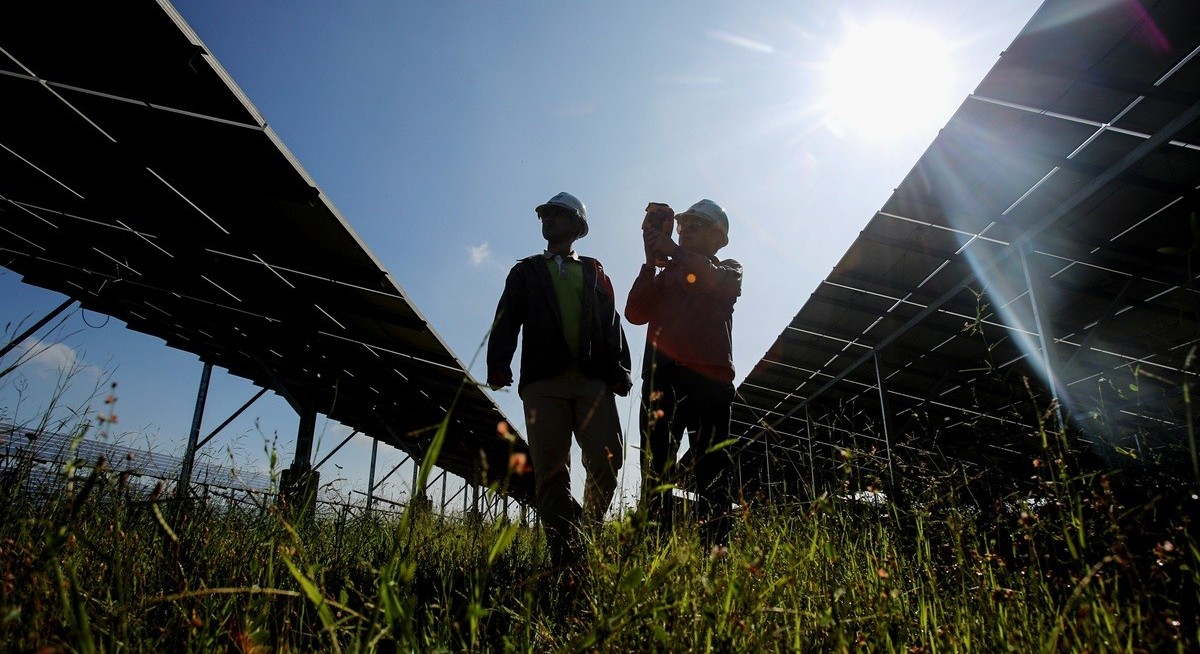


Every year, Ecosperity Week brings together global leaders from the private and public sectors, academia and civil society to exchange views, share best practices and advance sustainable development with a strong focus on the Asia-Pacific region (Apac).
At this year’s event, the energy transition was a heavily discussed topic. Coming on the back of a world grappling with an oil shortage, with countries and businesses impacted by higher costs and supply chain challenges, the discussions took on additional significance.
Southeast Asia has not been spared from the oil disruption, with Asean governments having to take short-term measures to prevent energy shortages. These include reactivating coal-fired power plants and banning fuel exports.
The economic impact on the region has been quantified with the Asian Development Bank lowering its growth forecast for Asean (ex-Singapore) from 4.7% to 4.2%, revealing how economically dependent the region is on fossil fuels.
As such, conversations at Ecosperity were not just about decarbonising energy for environmental purposes; they became multidimensional, encompassing the economy, energy security and the convergence of resilience and climate concerns.
“For Asean, the energy transition is no longer just about climate; it has become a discourse about economic competitiveness, business resilience and energy security,” says Gilbert Ng, head of banking, corporate and institutional banking, HSBC Singapore.
See also: China says Iran crisis shows nations must speed up energy shift
Southeast Asia energy demand in the age of AI
Demand for energy in Southeast Asia has been accelerating due to economic growth, industrialisation and urbanisation. Electricity demand grew more than 7% in 2024 (vs 4% globally) and is expected to more than double by 2050 under current policies, according to the International Energy Agency (IEA). This demand has accelerated in recent years as new data centres supporting power-intensive AI applications come online to meet the burgeoning demand for the technology.
In Southeast Asia, data centres are sprouting up rapidly to support the region’s growing digital economy, cloud computing and AI ecosystems. Energy think tank Ember forecasts that Apac will account for 34% of global operational capacity by 2028, with Asean accounting for 51% of the pipeline in key Apac markets.
See also: European power prices jump as record heat wave intensifies
Ember adds that the six major economies in Asean — Indonesia, Malaysia, the Philippines, Singapore, Thailand and Vietnam — have a pipeline of around 2.9 gigawatts (GW) of total capacity.
In total, the IEA estimates that new data centres in Southeast Asia will more than double the region’s electricity demand by 2030. As the region’s data centre industry grows, a reliable energy supply is required to meet 24/7 demand.
Currently, the power grids supplying most of these data centres are powered largely by fossil fuels, hindering data centre owners from meeting their renewable energy goals. Ember states that with data centres expected to account for 2%–30% of national electricity demand by 2030 across all of Asean’s major economies (excluding Vietnam), the projected rise in emissions will pose hurdles to energy decarbonisation.
Hence, meeting the jump in electricity demand requires new power generation capacity to come online not just rapidly, but also sustainably. At the same time, the situation also underscores the need to prioritise energy efficiency and pace of delivery.
Advancing energy decarbonisation in Southeast Asia
Although deployment of renewables is accelerating, it is not fast enough to meet climate targets while supporting inclusive and resilient development. Challenges to decarbonising energy include fragmented grid systems, limited cross-border interconnections, and high financing costs, according to the IEA.
“To achieve energy sustainability and resilience, Asean would need to boost renewables deployment, which requires collaboration, coordination and financing,” says Ng. “Capital needs to move at pace to support the infrastructure and technologies that make the transition possible.”
To stay ahead of Singapore and the region’s corporate and economic trends, click here for Latest Section
Significant investment and capital flows are required for rapid deployment. According to its estimates, the IEA believes that Southeast Asia needs to boost clean energy investment fivefold from current levels to US$190 billion ($244 billion) by 2035 to integrate renewable energy at scale. Meanwhile, Ember estimates that powering new data centres with clean energy will require US$45 billion to US$75 billion in solar and wind investment by 2030.
The way Ng sees it, to meet clients’ increasing needs, infrastructure finance presents a significant opportunity for HSBC. Rising energy and data demand — driven by electrification, digitalisation and population growth — is accelerating investment across power, grids and transition assets.
“Clients increasingly require a bank with global reach and structuring expertise as they navigate uncertainty, regulatory complexity and evolving capital needs,” says Ng, who adds that financial institutions will play a critical role in financing projects which advance Southeast Asia’s energy transition.
Asean’s demand growth, coupled with the investment gap, creates a sizeable opportunity to deploy integrated clean power, storage, grids, electric vehicle (EV) and data-centre solutions.
HSBC believes it can help anchor the transition for its clients as a “super-connector” into and across Asean with Singapore as the hub, linking innovation to commercial deployment and helping scale bankable projects and their ecosystems.
Advancing its aspiration to finance the energy transition, HSBC recently launched a US$4 billion sustainability and transition credit facility that provides financing to clean energy and low-carbon industries in Mainland China to expand internationally and support decarbonisation across the value chain, including in Asean.
Through bringing together its infrastructure finance, export finance, strategic finance partnerships and sustainable finance teams with its debt and project finance capabilities, HSBC achieves synergies that increase its capacity to realise opportunities in the transition.
“Our international reach across global value chains and trade corridors, coupled with deep roots in Asia and expertise in infrastructure and project finance, means that we can play a prominent role in financing the transition where it matters most,” says Ng.
Supporting digital infrastructure scale-up across Southeast Asia
Among HSBC’s recent projects is raising US$856 million in total green loan facilities for Princeton Digital Group (PDG), a leading developer and operator of hyperscale data centre infrastructure across Asia.
Borrowers use a green loan to finance eligible projects with clear environmental benefits, such as energy efficiency, pollution prevention, and others.
Comprising a fully underwritten US$456 million syndicated facility, plus a US$400 million accordion, the loan facilities support the build-out of PDG’s 120-megawatt (MW) JC3 AI-ready hyperscale data centre campus in Greenland International Industrial Centre, Bekasi Regency, Greater Jakarta.
The campus will harness next-generation liquid cooling, enabling high-density workloads while enhancing energy efficiency and environmental performance.
HSBC acted as an underwriter and green loan coordinator for this transaction. Beyond data infrastructure, HSBC is also helping Asean markets develop the assets and ecosystems needed for clean power, supporting the region’s transition to a lower-carbon economy.
“HSBC’s strong presence in Asean and deep expertise in structuring tailored debt solutions for our clients allowed us to support and secure the financing for PDG,” says Remi Degelcke, head of infrastructure finance, Southeast Asia, HSBC.
He adds that as hyperscalers scale in Indonesia, developers need partners who can deliver speed, certainty and global expertise while advancing renewable energy procurement and sustainability outcomes.
This transaction also highlights how green loans can help unlock the next wave of sustainability-ambitious digital infrastructure across the region.
Niall Hannigan, group CFO, Princeton Digital Group, adds: “Delivering hyperscale infrastructure at speed and scale requires not only disciplined execution, but also access to capital and the confidence of long-term partners like HSBC.”
HSBC believes this deal illustrates its focus on supporting clients through the transition and enabling innovation, growth and opportunity.
“In addition to infrastructure and sustainable financing, HSBC also has one of the largest global export finance teams across major Export Credit Agency (ECA) centres in the world. This allows us to be a strategic transition partner for all our clients, enabling investment in innovation and opportunity across sectors and their value chain,” says Degelcke.
“The greatest contribution we can make to real-world emission reductions is to deploy our strengths in support of our customers’ transition. We welcome like-minded partners to advance Asean’s energy transition.”




