


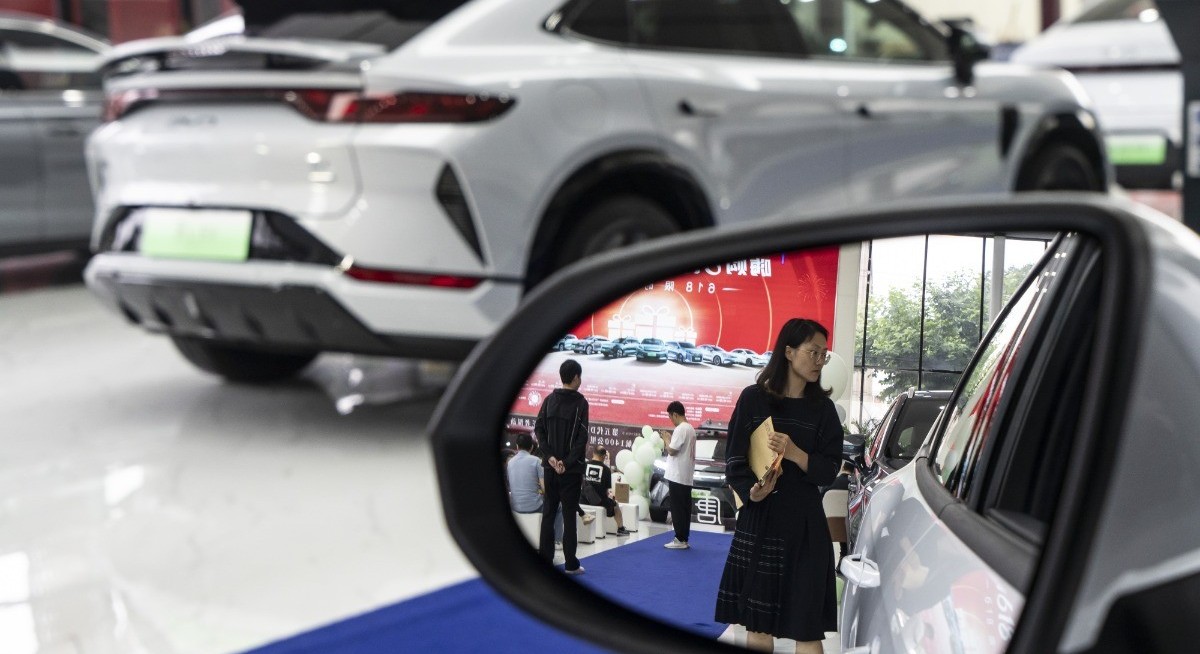


(March 27): BYD Co’s profit tumbled more than analysts anticipated as relentless competition and tighter regulation in China ramped up pressure on the world’s biggest electric vehicle (EV) maker to reignite stalling momentum.
Fourth-quarter net income fell 38% to 9.3 billion yuan, while revenue fell about 14% to 237.7 billion yuan, according to figures derived from annual numbers reported on Friday. Both profit and sales missed average analyst estimates compiled by Bloomberg.
The figures capped a forgettable year for chairman Wang Chuanfu — the company saw its first annual profit drop in four years and its smallest revenue growth in six — as aggressive discounting, which boosted deliveries enough for BYD to outsell Tesla Inc, took its toll. But the auto giant’s ascent to global dominance is facing a reality check as it struggles with slowing sales at home, forcing the industry bellwether to spend heavily to keep up with tech-centric models being rolled out by the likes of newcomer Xiaomi Corp.
Competition “has reached a fever pitch, and is undergoing a brutal ‘knockout stage’,” Wang wrote in his annual letter to shareholders. “The global landscape evolved at an accelerated pace, the century-long transformation of the global automotive industry entered a critical phase.”
It’s the third quarter in a row BYD’s profits have fallen short of estimates, according to data compiled by Bloomberg.
This year hasn’t been much better. Sales have slumped in the first two months of this year, and after dominating the Chinese market for years, BYD has now ceded the top spot to Geely Automobile Holdings Ltd.
See also: Honda, Sony drop Afeela EV project, reassess partnership
That’s pushed BYD to increasingly look abroad, where demand for its models is booming and the carmaker generates more profit for each vehicle it sells.
Exports have held up so far in 2026, in contrast to the slump in domestic sales, and BYD is looking to sell 1.3 million cars outside China in 2026. Still, it’s an expensive and high-stakes endeavor for the EV brand, which is pouring money into building factories overseas to circumvent tariffs and other trade barriers.
Besides increased competition, some of BYD’s woes have been self-inflicted.
See also: China EV maker Voyah drops 13% in HK debut without fresh funds
Some Chinese customers have taken to social media with complaints about God’s Eye, the highly touted sophisticated system that’s designed to spot dangers on the road and practically let the car drive itself.
Amid great fanfare, BYD last year announced God’s Eye would not only go into its premium vehicles, but become a standard feature across its lineup — even for cheap hatchbacks. The move was designed to cement BYD’s dominance in the world’s largest auto market by offering advanced tech that its rivals charge a premium for, but at no extra cost.
But the issues the company has faced surrounding God’s Eye have highlighted the limits of some of BYD’s technology and illustrates a potential downside to adding advanced systems to cars before all their kinks are worked out.
Amid criticism for lagging behind software-centric rivals like Huawei Technologies Co and Xiaomi Corp, BYD is showing signs of betting more pragmatically on offering solutions to driving range concerns, rather than flashy smart driving features.
Earlier this month, it unveiled its latest generation of so-called “blade batteries” and ultra-fast flash charging architecture, which is capable of refilling the newest batteries from 10% to 70% in five minutes, and close to fully charged in nine minutes.
Still, BYD shares are on track for their best month in over a year, as surging oil prices due to the Iran war brighten the outlook for electric vehicle sales.
Its Hong Kong-listed stock is up nearly 12% in March, one of the top performers on the Hang Seng Tech Index along with EV peers Nio Inc and Zhejiang Leapmotor Technologies Ltd. The sector had slumped in recent months on worries over sluggish demand and tough price competition in China.
To stay ahead of Singapore and the region’s corporate and economic trends, click here for Latest Section
Investors had been looking out for BYD’s guidance for the current year on the chances for an export-led recovery.
Though automakers have yet to report their sales figures for March, the first full month since the Persian Gulf conflict began, early signs point to BYD and other Chinese EV makers benefiting from the resulting surge in crude oil prices.
But sustaining this spike in consumer interest in EVs will require the industry to make massive infrastructure investments to bridge the current shortfall in charging stations, according to Bloomberg Intelligence analyst Joanna Chen.
Even before the Iran war’s oil shock, EV penetration rates had been rising across Asia — with a few notable exceptions such as Japan. In China, EVs and plug-in hybrids account for more than half of all auto sales, thanks to the government’s push to promote the growth of a home-grown, alternative-energy-based industry. Southeast Asian countries have EV adoption rates of around 40%, exceeding levels in the UK and Europe, and making them among the most electric-friendly in the world, according to UK-based think tank Ember.
China is set to reap most of the gains from a surge in EV demand as the world’s top producer of EVs. Overseas shipments of electric cars and plug-in gas-electric hybrids in the first two months of this year — before the war began — had already more than doubled from a year ago, according to data from the China Association of Automobile Manufacturers.
But in 2025, BYD’s profit fell 19% to 32.6 billion yuan as revenue inched up 3.5% to 804 billion yuan. Its closely watched gross margin shrank to a three-year low of 17.7%, down from 19.4% in 2024.
Uploaded by Felyx Teoh




