


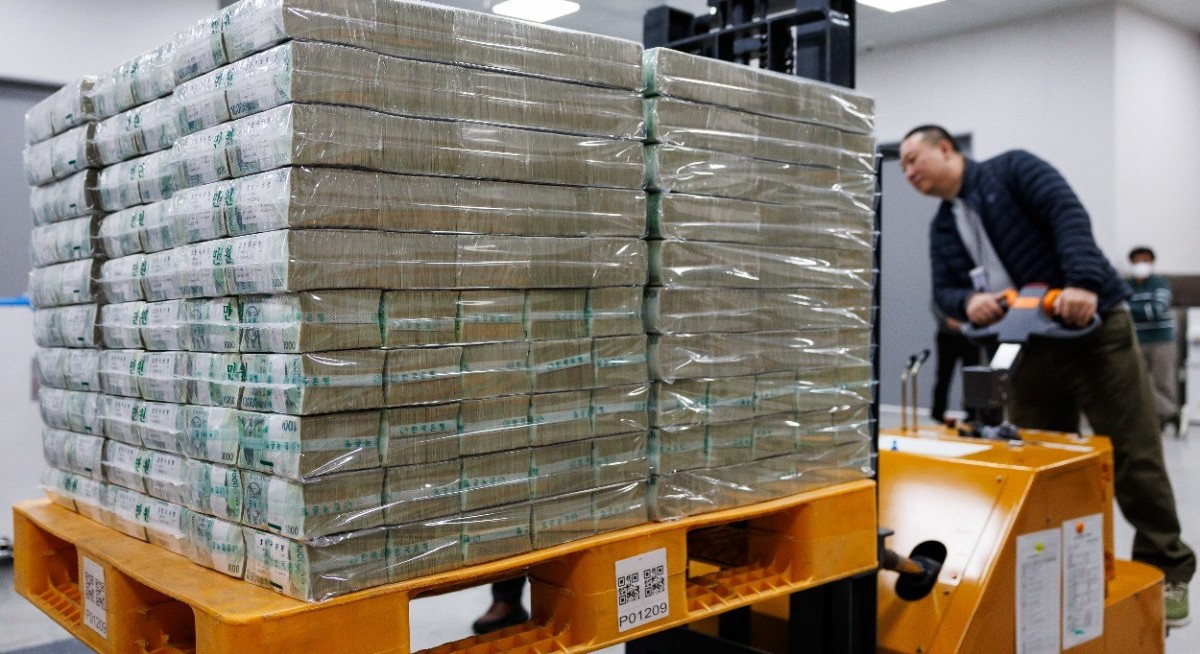


(June 8): South Korea’s won bounced back from its recent losses after the authorities said they would take tougher action against speculative trading and market activities that led to higher volatility.
The government will step up its oversight of offshore currency derivatives, boost inspections into suspected market misconduct and probe potentially illegal foreign-exchange transactions, the finance ministry said on Sunday. The steps followed an emergency meeting between the heads of the Bank of Korea and financial regulators after the currency slid to the lowest since 2009 last week.
The won strengthened as much as 2% to 1,529.60 per dollar after tumbling to 1,562.20 on Friday, the weakest level since the global financial crisis in 2009.
The plan “appears to have temporarily cooled overheated long-dollar sentiment", said Gyeong-won Min, an economist at Woori Bank in Seoul. “Whether that continues is uncertain. Taking into account moves in oil and US Treasuries, the 1,600 dollar-won level remains open for now.”

South Korea won’t tolerate excessive foreign-exchange volatility or one-way market positioning that’s out of line with economic fundamentals and will take strong action against such moves, officials at the finance ministry and central bank said in a joint text message sent on Monday, backing up Sunday’s pledge.
See also: Digital euro clears key hurdle to rollout in EU Parliament
The won has dropped more than 10% over the past year, weighed down by uncertainty over whether the country can reach a trade deal with the US and also by persistent equity outflows from global funds. Higher energy costs due to the Iran conflict have added to the strain, leaving the currency among Asia’s worst performers.
South Korea’s state-run pension fund activated foreign-exchange hedging on its overseas investment amid the won weakness, SBS Biz reported Monday, citing the country’s FX authorities. The National Pension Service is selling dollars in the forwards market, the report also said. A spokesperson at the pension service declined to comment when contacted by Bloomberg.
The authorities met with executives from local banks and local branches of global banks to examine the latest won moves, according to another joint statement published Monday. The government asked banks to help shift trading of offshore non-deliverable forwards into the onshore market while warning against any speculative trading seeking to capitalise on the won’s weakness.
See also: Euro hits August low as Lagarde’s rates talk diverges from Fed
The Bank of Korea and the Financial Supervisory Service will conduct inspections to assess whether speculative trading or suspected manipulation contributed to the won’s weakness, warning of strict action if violations were found, according to Sunday’s statement. Regulators will also examine whether exporters and importers accelerated payments or delayed receipts to profit from the currency’s slide.
South Korean President Lee Jae Myung also weighed in, saying the won’s current weakness is likely to be temporary.
Korea is among a growing number of Asian countries taking efforts to stabilise their currencies. The latest measures build on earlier steps, including allowing the NPS to expand FX hedging and easing rules to improve dollar liquidity.
A sustained recovery in the won will depend on whether officials “back up their words with actual action", said Stephen Lee, an economist at Meritz Securities in Seoul. “If authorities want to avoid the perception that they’re simply sitting on their hands, they’ll need to do more than just talk. This is ultimately a situation that requires effective expectation management.”
Uploaded by Arion Yeow




