


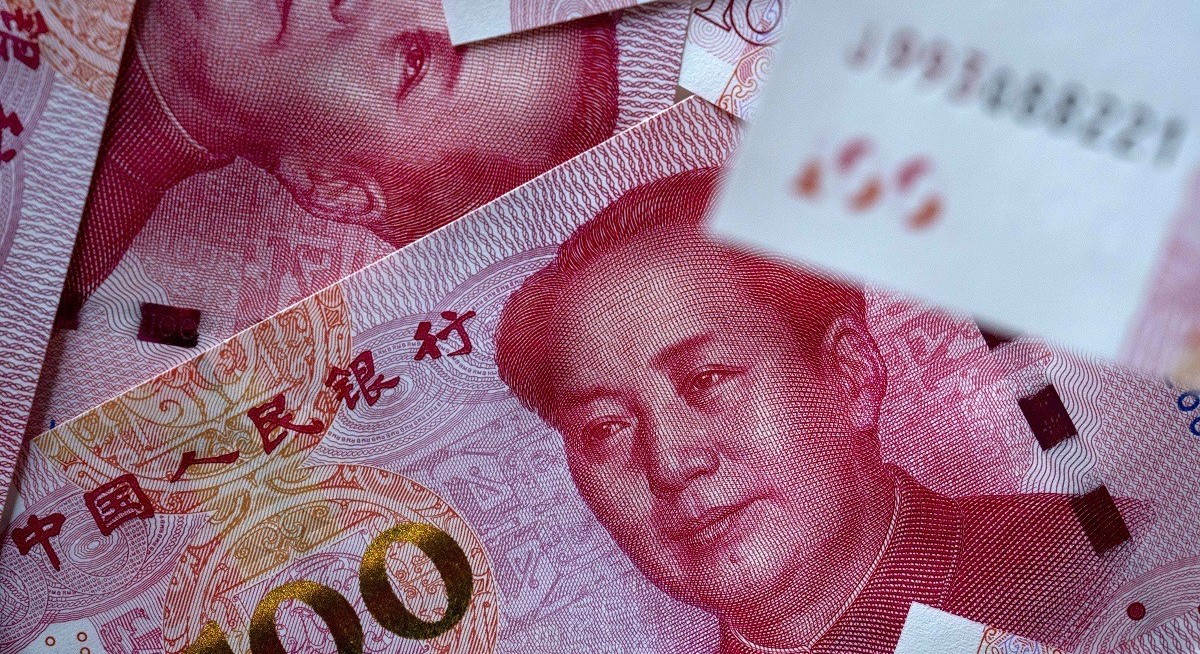


(Feb 4): Bank of America Corp boosted its forecast for the yuan, joining other Wall Street banks in raising their estimates on bets that China’s central bank will tolerate further gains in the currency.
The onshore yuan will likely end the third quarter at 6.7 per dollar rather than 6.8 as previously expected, Claudio Piron, BofA Global Research’s head of Asia rates and currency strategy, wrote in a note on Wednesday. Goldman Sachs Group Inc, Morgan Stanley and Australia & New Zealand Banking Group also recently raised their forecasts for the Chinese currency as its advance gathered pace.
“Recent yuan appreciation momentum — backed by robust exports and firmer policy signals — leads us to revise the forecasts,” Piron wrote. “The yuan’s strength is spilling into broader emerging-market FX gains.”
While the yuan has been bolstered by a surge in capital inflows since last year, the gains have quickened as the dollar declined on bets the US may favor a weaker greenback, and as the Chinese central bank boosted its daily fixings. President Xi Jinping’s ambition for a “powerful currency,” detailed in a state media article over the weekend, also strengthened confidence in the yuan.

On Wednesday, the People’s Bank of China boosted its daily reference rate to a level last seen in May 2023, after raising the so-called fixing by the most in more than a year last month. In the spot market, the currency touched the strongest in nearly three years in both onshore and overseas trading this week.
See also: US calls on China to strengthen ‘substantially undervalued’ yuan
Goldman expects the yuan to advance to 6.80 and 6.70 per dollar in six and 12 months respectively, supported by greater tolerance for gains from policymakers and record capital inflows.
In a report on Wednesday, Nomura said it has raised its conviction for the trade of shorting the dollar against the yuan to the highest level, targeting a move in the Chinese currency to 6.7 by mid-April. The yuan will be supported by the PBOC’s tendency to green-light gains, official rhetoric supporting a strong exchange rate and rising pressure from the US Treasury for Beijing to allow appreciation.
“The Chinese authorities look to be allowing the dollar-yuan fixing to shift lower at a faster pace,” analysts led by Craig Chan wrote in a note. “Yuan appreciation may also encourage continued corporate FX remittances. We see evidence that onshore corporates are increasingly willing to repatriate more dollars onshore.”
See also: Ringgit owes its surge to forces well beyond US dollar’s weakness
Despite the the bullishness, analysts expect the PBOC to maintain a managed and orderly pace of appreciation, as too rapid an advance may hurt China’s mighty export engine and lead to hot-money inflows.
The PBOC is expected to adjust “structural FX parameters” if there is a sudden appreciation in the yuan, according to TD Securities. Such measures may include the removal of risk reserves on FX forwards sales as well as boosting the reserve requirements on foreign-exchange, strategists led by Alex Loo wrote in a note.
Uploaded by Magessan Varatharaja




