




Over the years, the company has been contracted to carry out fit-out works for Marina Bay Sands, UE Square Shopping Mall and, more recently, the Skywater Residences showflat, which will be the tallest residential building in Singapore upon completion.
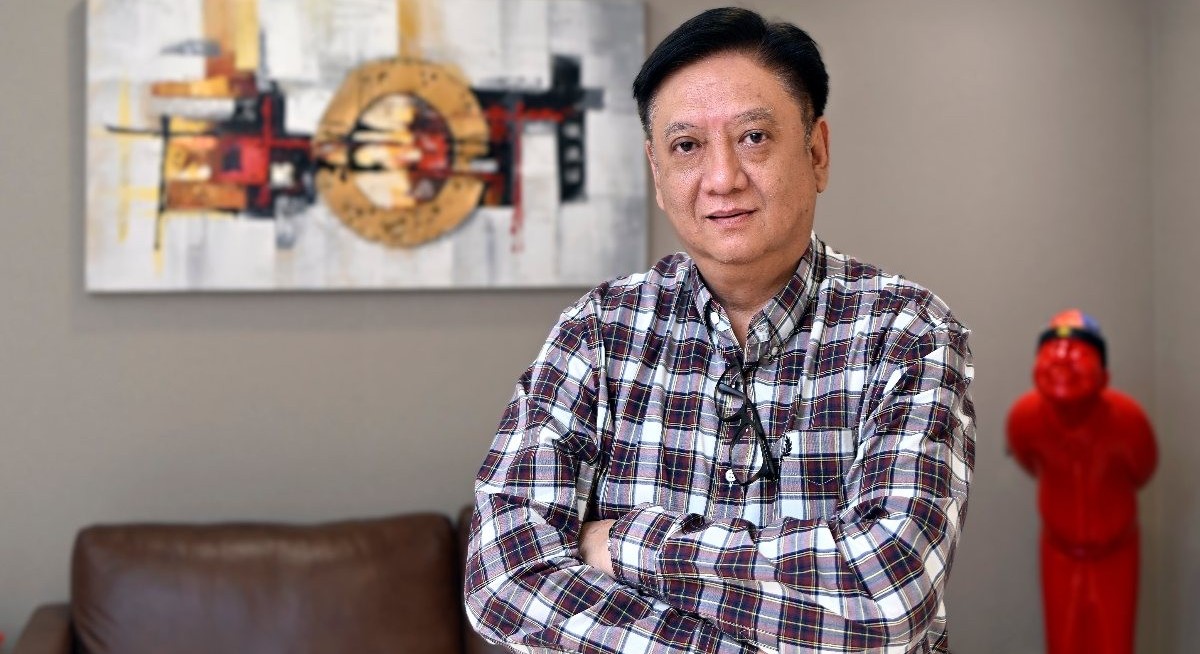
Speaking with The Edge Singapore about Lincotrade’s growth and transformation, co-founder and CEO Jackie Soh said that in the early stages, the company was mainly focused on projects led by Japanese main contractors.
“During the early 1990s, many Japanese main contractors came to Singapore and by working with them, we learned to focus on providing quality work and services,” says Soh.
Soh mentioned that during the 1990s, many electronics firms, in particular, only allowed fit-out contractors to proceed with the relevant work after 8pm or 9pm. As a result, Soh and his team were left to work through the night for their clients.
See also: MetaOptics stays focused on unicorn ambition with new CEO
“Gradually, we improved and upgraded our scope of work to include carpentry works and further extended our reach to become interior design contractors today,” Soh adds.
Beyond the current headcount, Soh says Lincotrade has many subcontractors on hand, which can bring in another 300 to 400 workers to assist with the relevant projects.
Standing out from the competition
See also: Thomson Medical Group, Johor Bay and its Southeast Asian ambitions
Most companies choose the standard route of listing via an IPO; however, Lincotrade took the less-travelled route of listing through a reverse takeover (RTO).
Fabchem China, based in Shandong, China, was previously known for producing explosive devices, industrial detonators and fuses. Upon the disposal of its principal subsidiary, Shandong Yinguang Technology, the company ceased to have any operating business and was deemed a shell company under the listing rules of the Singapore Exchange (SGX).
Following that, Fabchem China completed an RTO of Lincotrade, issuing 113.6 million shares at 22 cents each in August 2022, valuing the deal at $25 million.
Soh admitted that he and his team were very focused on Lincotrade’s business operations and were not “very knowledgeable” about the financial market.
“The opportunity came upon us and after much consideration and discussion with Fabchem China, we feel that we have a kind of chemistry with them,” Soh recalls.
“We also sought professional advice and they said it was easier and faster to get listed through an RTO and hence we proceeded with the plan. Of course, the chemistry with Fabchem was very important as well,” Soh adds.
Following its listing, Lincotrade’s share price has risen more than 34%, reaching 29.5 cents on March 18, valuing the company at around $53.7 million.
To stay ahead of Singapore and the region’s corporate and economic trends, click here for Latest Section
Between 2024 and 2025, a handful of other interior fit-out contractors debuted on SGX, including Attika Group, Lum Chang Creation and Dezign Format.
How then does Lincotrade differentiate itself from the competition? Soh notes that the company operates across multiple sectors, unlike its competitors, which focus on just a single sector.
“Many competitors specialise only in a particular sector. Some focus only on hotel renovations, while others are fully focused on office renovations and fit-out. We have the capability and knowledge to do all these and therefore our business operations are now in the commercial, residential and showflat sectors,” says Soh.
He points out that the management team has regular discussions to review local market trends and what the government is building.
“We will place more emphasis on whatever sector has the potential for more jobs and we pitch for them. That is the key difference between our competitors and us,” Soh adds.
Eye on HDB sector and new HQ
Looking ahead, Soh and his team plan to expand into the HDB flat renovation sector.
“Currently, we hold the HDB licence to conduct renovation work. But, we are doing it only for our regular clients, through referral and on a private basis,” says Soh.
Soh believes that the current HDB renovation market is big enough for Lincotrade to consider venturing into. According to a Jan 8 press release from HDB, the public housing authority plans to launch 19,600 Build-To-Order (BTO) flats in 2026.
“If we are talking about an average renovation budget of just around $30,000 per BTO flat, the market size could easily be around $600 million on an annual basis,” says Soh.
In a Feb 24 press release, Lincotrade announced that it received the Temporary Occupancy Permit (TOP) for its headquarters located at 5 Tuas Avenue 12.
The new headquarters will help support Lincotrade’s expanding business activities and future growth plans.
Within its new headquarters, Lincotrade has a 204-bed ancillary workers’ dormitory. Soh explains that the dorm will help the company save on recurring accommodation costs for its workers, given the sharp rise in bed rental in recent years.
“We will be using about half of the total capacity, which will help bring down overall operating costs. In addition, the unused beds could be rented out for a steady stream of recurring income,” says Soh.
To further reduce energy consumption and place more emphasis on sustainability, Linoctrade has installed solar panels at its new Tuas headquarters.
“While all these initiatives are in place, we will also be keeping a lookout on our overhead costs to ensure that they won’t go too high,” Soh adds.
Data centre and government projects
Regarding the order book and potential projects, Soh mentions that the company is currently in the tendering process for at least five data centres in Singapore, two data centre projects in Malaysia, and two hotel projects in Singapore.
Soh is hesitant to share more details, particularly about the data centre projects, due to a non-disclosure agreement.
When asked on the margins, Soh admits that data centre contracts right now command the best margins.
“Data centres are precise and demanding in their specifications and requirements. Therefore, contractors need to have the technical know-how and expertise to execute these contracts. Therefore, we need to have a better margin to work on it,” Soh comments.
As at Dec 31, 2025, Lincotrade’s order book stood at a record $117.2 million, driven by a growing contribution from data centre projects.
While Soh did not commit towards any target for Lincotrade’s order book, he feels that his current workforce can comfortably handle $150 million per annum in terms of order book execution.
Apart from the lucrative data centre projects, Soh says that contracts from the various government ministries in Singapore are also generating good returns for Lincotrade.
“At the beginning, it was definitely going to be a price war during the bidding process. However, as time goes by, they will not just award the contract solely based on the pricing aspect, they will also take into consideration other factors, including quality, safety and track record,” says Soh.
“Furthermore, once the respective ministries get to know you better and build up our track record, they are going to be more confident in us and then we can try to bring our price up slightly as well.”
“More importantly, they are good pay masters and always pay on time, which is beneficial for our cash flow,” he adds.
RTO placement and plans
Following Lincontrade’s RTO in August 2022, the company tapped the market for additional funds via a placement in November 2025. The company sold 10 million placement shares at 22 cents each, raising gross proceeds of $2.2 million.
Prominent institutional funds that subscribed for the shares included Lion Global Investors Limited, ICH Synergrowth Fund and Ginko-AGT Global Growth Fund.
Lincotrade says the placement proceeds will be used to further strengthen its financial position and finance the ongoing projects.
Typically, placement shares are priced at a discount to incentivise investors to take them up. However, this placement is priced at a premium of 3.14% to the volume weighted average price of 21.33 cents per share.
“We are not financially trained people, but we think that it was a fair value and we explained to the investors our business and plans to try and convince them to accept the premium,” says Soh.
He is pleased that, following the expansion plans over the past two years and the associated costs, Lincotrade is now at an inflexion point where costs have normalised and it possesses the economies of scale.
This was reflected in their latest financial results for 1HFY2026 when revenue increased 58.2% y-o-y to $53.3 million, driven by strong performance in both the commercial and residential segments.
Net profit after tax jumped 438.5% y-o-y to $3.9 million, on the back of higher revenue and an improvement in gross profit.
Following the results improvement, Lincotrade also announced an interim dividend of 0.88 cents per share, representing a payout ratio of around 41% of net profit in 1HFY2026.
Meanwhile, Soh is heartened to see that many of his staff have remained with Lincotrade these years.
“We have a strong team with a very low turnover rate. A lot of them have been with us since their 20s, and now they are mostly in their 40s and 50s. I really appreciate their being with Lincotrade for the past 35 years and their support over that time. They are the greatest contributor to the company,” Soh comments.
Looking ahead, Soh says Lincotrade will continue to focus on the commercial sector, including data centres and office renovations.
“Also, not to forget that there are still some hotel renovations that could come up as well, given that hotel operators tend to undergo renewal works once every seven years,” Soh adds.
Apart from hotel refurbishment, Soh expects more hotels to spring up locally, particularly at Marina Bay Sands and Resort World Sentosa.
“We are currently following up with the two respective integrated resort operators and hopefully we will be able to secure the contracts,” says Soh.




