




A public consultation seeking feedback for amendments to the Securities and Futures Act (SFA) was conducted from Jan 9 to Feb 8.
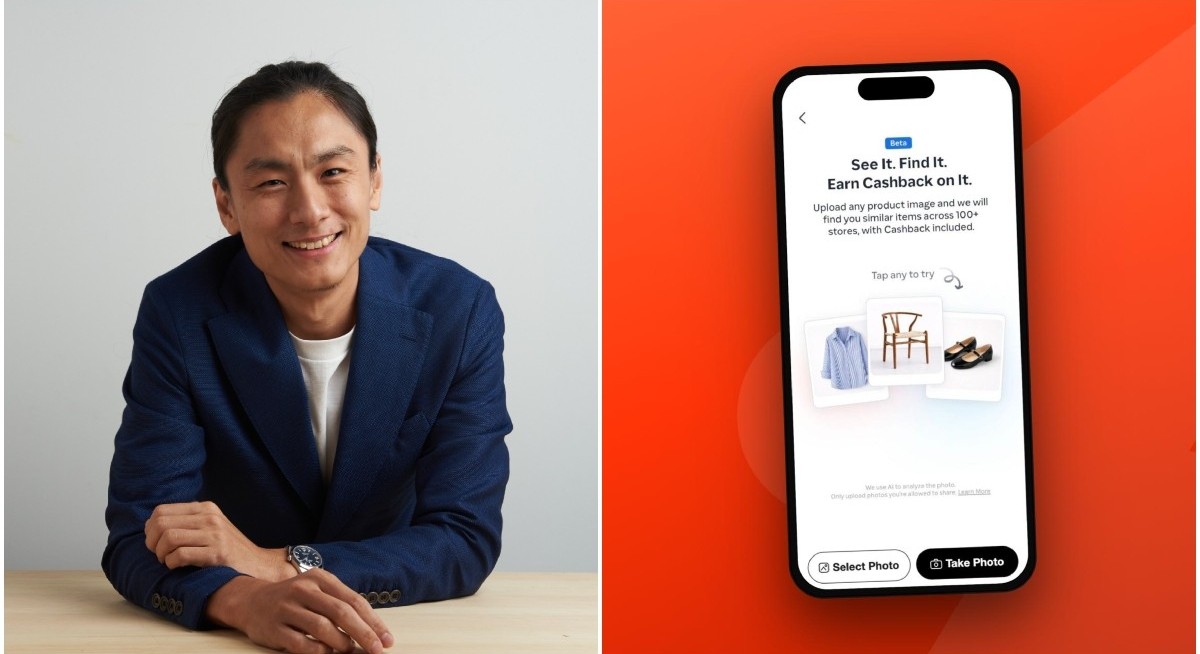
“Dual listing can offer strategic flexibility, including access to deeper capital pools and a more diversified investor base,” says Huanmin Huang, ShopBack’s acting CFO and chief of staff in response to queries from The Edge Singapore. “However, this needs to be weighed against higher ongoing and compliance and execution costs.”
“The key question is whether similar access to capital and liquidity can be achieved through a single listing venue, without the added complexity of maintaining two,” he adds. “A dual listing in itself does not guarantee a valuation premium. Valuation outcomes depend on fundamentals: growth, execution, governance, and whether the investor base understands the business.”
While Huang acknowledged that the proposals should help reduce “time, cost and complexity” of dual listings in principle, the near-term impact may be constrained by factors including the framework limiting listings to just the SGX and Nasdaq. The limitations automatically exclude companies that may be considering dual-listing on other major exchanges such as Hong Kong, London, Tokyo or Australia. The $2 billion market capitalisation may also limit listings to a “relatively small group of companies” which also means “excluding some that might benefit most from broader international investor access”.
See also: It’s steady-drip growth for this instant coffee maker
“Much will depend on execution and how the frameworks work in practice, but directionally, the intent to reduce friction is constructive,” he adds.
ShopBack, which has 65 Equity Partners — established by Temasek Holdings in October 2021 — as one of its shareholders, has raised some US$355 million ($453.2 million) so far. The platform’s last fund-raising raised US$200 million or $270.1 million in an oversubscribed Series F round in December 2022.
In a release dated Dec 8, 2022, the group said the raise will help with its growth efforts across Asia Pacific (Apac) as it “gears up” for the public markets. According to its corporate site, ShopBack is currently in 13 markets — 11 of them in Apac and the other two in Germany and the US. North America, says Huang, is something the group views as a “significant long-term opportunity”.
See also: Hong Lai Huat maintains property focus despite marble mining bonanza in Cambodia
‘Agnostic’ on liquidity options
When The Edge Singapore last met Huang at the inaugural SGX x Jefferies Spotlight on High-Growth Disruptors Conference in May 2025, he said the group was “definitely looking” at opportunities for its shareholders and employees to realise liquidity in their stock options or investments. He added that an IPO was something the company was considering then, although it was “fairly agnostic” in terms of liquidity options, including both a public listing and trade sale.
On GLB’s retail tranche requirement — where IPO candidates have to allocate at least 5% in value or $50 million to retail brokers — Huang says retail participation plays an “important role” in a healthy market, as it contributes to both liquidity and price discovery.
“For a consumer-facing business like ShopBack, a retail offering would be a natural part of any listing,” he notes. “Retail investors are often more familiar with the brand and we would also love for the opportunity for retail investors to participate in the company’s growth.”
Local governance requirements such as having a Singapore resident independent director on the board is not “particularly onerous” given that the group’s founders and several existing directors are Singapore residents. Strong local governance has also always “been an important consideration,” Huang adds.
When asked about listing considerations, Huang says the decision to list depends on whether a listing venue is the “most natural home” for the company. This includes factors such as whether investors understand the business, whether valuations are aligned and whether there is an ecosystem of comparable companies.
However, he acknowledged that the US, which remains the “deepest and most active capital market globally”, will continue to be part of many issuers’ consideration sets, including ShopBack’s.
To stay ahead of Singapore and the region’s corporate and economic trends, click here for Latest Section
On the subject of a potential listing, Huang remains tight-lipped: “Our focus remains on operational execution and long-term value creation rather than timing market windows,” he says, in response to whether the group has a preferred listing timing given the current market conditions and proposed stock market reforms.
“For us, a good window is when two things converge: a market that is open enough and a business that is ready,” he adds. What that means for ShopBack is achieving a consistent performance, having “predictability” in its numbers and governance that can withstand public scrutiny.
“You can’t fully control the first, but you can absolutely control the second, which is why we channel our energy there,” he continues. “When a reasonable window appears, we want to be structurally ready to move. We’re not going to be caught still preparing.”
On governance, the group has also been “deliberate” about bringing in experienced external directors and raising its internal standards around reporting, controls and compliance. “The way we think about it is: if you build the company to be public-ready, it becomes a better company regardless of whether you actually list in the near term. That discipline is valuable in itself.”
Deciding to list is not a question of timing, but a question of whether the company deserves to be public.
“If the answer to that is yes, then timing becomes a tactical decision, not a strategic constraint,” says Huang. “We’ll be ready when the window opens, but we’re not sitting around waiting for it.”
“A listing isn’t just about access to capital. It’s also about what it does structurally: it sharpens discipline, improves transparency and creates a stronger currency for partnerships and M&A (mergers and acquisitions). Those are the things that matter to us,” he stresses.
That said, Huang notes that public markets are “less forgiving” these days with investors “much more focused on fundamentals, profitability and long-term defensibility”. “The bar is higher, but in some ways, that’s a good thing. It forces companies to be better and we think we’re in a position to meet that bar.”
While the group is open to listing, remaining private for the time being could remain an option too, as it can allow companies to focus on “scaling operations, strengthening governance, and refining unit economics without the pressures of public-market disclosure”, says Huang
“For many growth-stage businesses, organisational readiness is just as important as market readiness,” he adds.
That said, Huang notes that “public readiness” is a “natural evolution” for companies as they mature.
Adjusted ebitda profitability not ‘one-off’
At the moment, the group is looking to focus on depth moving forward. In addition to its presence in 13 markets, the group is also working with over 20,000 merchants.
“In the past there was more emphasis on footprint, how many markets we’re in. Now the more important questions are: how do we drive daily or weekly engagement? How do we increase lifetime value? How do we use AI (artificial intelligence) to deliver rewards intelligently at scale?”
That said, its ambition to be a global platform is “very much still there, but it’s going to be built on depth, data and AI, not just geography,” says Huang.
ShopBack closed its FY2026 ended March 31 with a 45% y-o-y growth in revenue and achieved a full-year adjusted ebitda profitability.
“We’ve now achieved six consecutive quarters of adjusted ebitda profitability. That’s not a one-off and is how we operate now,” says Huang.
“But what I’m more focused on is the quality of that growth. It’s coming from higher-frequency use cases like ShopBack Play, and increasingly from how we’re embedding AI across the platform to drive better targeting, higher conversion, and lower customer acquisition costs,” he adds. “The story has shifted from ‘Can you grow?’ to ‘Can you grow efficiently and predictably?’ and that’s where we’re seeing real progress.




