


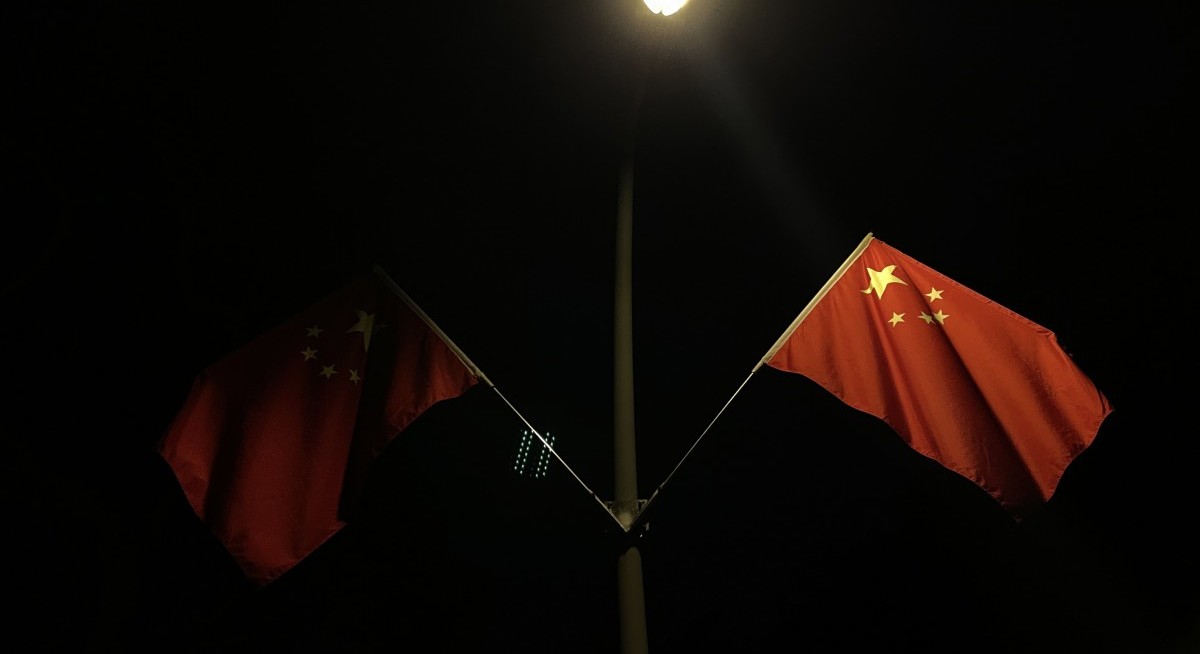


Singapore’s state investor Temasek has not been spared from these headwinds in China. According to Temasek’s filings in 2021, the Singapore investor trimmed down its stakes in Chinese tech companies like Alibaba and Didi as well as education providers TAL Education Group and New Oriental Education & Technology Group.
More recently, in December, Reuters reported that Temasek-backed Fullerton Fund Management was scaling back its private fund operations in China and had liquidated some of its China-focused fund products in 2025.
If you were to ask Temasek today whether it intends to stay invested in China, the answer would be both “Yes” and “No.” For one, Temasek’s exposure to China was up $10 billion over the year. That certainly does not look like a retreat from the world’s second largest economy.
Instead, Temasek seems to be taking a more selective approach, as it weighs China’s role in its broader basket of investments. For instance, Temasek’s underlying exposure in China was up $10 billion over the year, but its proportion within Temasek’s portfolio has fallen to 17% as of March 31, down from a high of 29% in 2020.
See also: Temasek is contrarian on private credit, seeds opportunities in private equity
“We continue to remain in China and I would say that more broadly across Seviora Group, whether its Fullerton Fund Management, but also beyond that, I think we continue to look at new ways which we can partner China,” says Gabriel Lim, CEO of Seviora Holdings, Temasek’s asset management subsidiary.
Aside from Fullerton Fund Management, Seviora Holdings comprises other asset management companies like Azalea Asset Management, Innoven Capital, SeaTown Holdings and Seviora Capital. “As China’s economic structure and its drivers for growth evolve, I think we correspondingly have to evolve with the Chinese economy as well.”
Temasek’s global direct investments (GDI) segment makes up 38% or $197 billion of Temasek’s record net portfolio value (NPV) of $518 billion on a mark-to-market basis in FY2026. That is an increase from FY2025 when GDI made up 36% or $169 billion of Temasek’s NPV of $469 billion on a mark-to-market basis. Overall, the GDI portfolio generated a 10-year internal rate of return of 7.6%.
See also: Temasek reports record net portfolio value of $518 bil despite challenging environment
Temasek Global Investments (TGI), which manages the GDI portfolio, has deployed $37 billion in capital and made $24 billion in divestments as of March 31, 2026. TGI’s key investments over the year include OpenAI, Anthropic and Luckin Coffee. It also completed divestments in Schneider Electric India, Global Healthcare Exchange and Axia Vegetable Seeds.
One notable shift would be TGI’s increased allocation to liquid, listed investments. GDI has been bolstering its public market capabilities and processes. As of March 31, listed investments now make up 63% of the GDI portfolio, while unlisted investments make up the remaining 37%, at an almost two-to-one ratio.
Nagi Hamiyeh, TGI’s president and head of Europe, Middle East and Africa, says the group is not fixated on maintaining a specific ratio between listed and unlisted investments. Rather, TGI is striving to achieve flexibility and agility when it comes to moving around their capital.
“Liquidity is very important, and being able to deploy in an agile manner in a complex world is very, very important,” Hamiyeh says. “When we go through phases where we see more value [in] the private space, we invest much more in the private space. We see sometimes, obviously, a better reflection of our goals and objectives in the public space. As long as we are nimble and able to deploy and go, that is only a guide for us.”
China remains competitive
According to Temasek’s CFO Png Chin Yee, it would be inaccurate to say that Temasek’s exposure to China has come down over the past decade. While China’s share of Temasek’s investment portfolio has decreased, that is due to the increased size of the overall portfolio as the group began growing its exposure to other markets such as the US and UK. In terms of absolute numbers, Temasek’s investments in China have risen by about $24 billion in the last 10 years.
“Obviously, those exposures have grown over time because those were the focus areas for us over the last decade,” Png says. “You need to look at it in conjunction with the overall portfolio shifts as we move away from just being a very Asian-focused investor to a much more global investor with opportunities that we see in the US as well as Europe.”
To stay ahead of Singapore and the region’s corporate and economic trends, click here for Latest Section
Nonetheless, China has been a drag on the group’s overall returns. Temasek says its five-year total shareholder return of 4.6% was weighed down by headwinds from China’s capital markets from 2021 to 2024. The group has since worked to sharpen their portfolio focus and to better position itself with China’s overall economic trends.
“We believe in the China economy moving into the next regime, from one of very high growth to a maturing economy, and we can expect [a] more maturing type of growth rate,” says TGI’s CEO Chia Song Hwee. “This is not new in China. They have gone through different phases of economic development and what we need to do is to evolve our portfolio accordingly. It is still a very competitive market.”
Even though the leading large language model companies in the world are not from China, Chia says the country still commands a credible position in AI as it has many companies that support the industry across different parts of the value chain.
“For example, they are very strong in optical transceivers and optical connectors. These are essential for data centres,” adds Chia, who was previously COO of GlobalFoundries and CEO of Chartered Semiconductor Manufacturing.
Indonesia is not in a 1998 situation
It has been a rough few months for Southeast Asia’s largest economy. Global index provider MSCI raised concerns over the limited transparency of Indonesia’s markets in January, causing a $101 billion market rout which the country has yet to fully recover from. Those outflows eventually resulted in Singapore overtaking Indonesia as Southeast Asia’s largest stock market on May 20, after the latter’s market capitalisation fell by over 30% to US$618 billion ($799 billion).
While January’s stock rout was Indonesia’s worst since 1998, when it was still in the throes of the Asian financial crisis, Temasek’s CIO Rohit Sipahimalani says he remains sanguine on the country’s prospects.
“Just look at the overall macro credentials for leverage etc., it’s no comparison between 1998,” Rohit continues. “It’s going through a rough patch right now, particularly this whole MSCI issue, but it’s also been quite obvious that the Indonesia Stock Exchange is working to address those issues, so I’m sure we will get through that too.”
“For us, we look at all these countries from a longer-term perspective. Our TPCs (Temasek Portfolio Companies) have been invested in these markets for decades, and their businesses continue to do quite well out there and they continue to look for more opportunities. So, I don’t think that has fundamentally changed how we are looking at the market in the longer term despite hiccups faced recently.”
AI matters but it’s not everything
When it comes to AI, Temasek says it is looking to triple its exposure from 6% of its portfolio in FY2026 to up to 15% by March 31, 2031. Notably, these figures exclude the group’s related exposure of its TPCs to AI. In fact, the target will translate to 25% of Temasek’s non-TPC portfolio, says Rohit. “We can always do more but given where we are right now, it is a significant increase of where we are right now.”
Temasek’s AI investments will be spread across the value chain, ranging from energy and data centres, semiconductors, cloud service providers, foundation models, as well as AI applications and software infrastructure.
“While it is important for us to invest in AI-innovative companies, which may well become scaled enterprises, the rubber hits the road in AI adoption. The remaining 85% of our portfolio must be focused on AI adoption for competitiveness. This is where the rest of our portfolio will see value capture,” says Temasek CEO Dilhan Pillay.
TGI’s Chia says the 15% figure is ultimately a target and not a hard number that Temasek must achieve by 2031. Whether or not that target can be achieved would depend on the investment opportunities that are available, he adds. “Sometimes conditions may not allow us to invest. If valuations get too high, even if there’s opportunity, we think it will not be prudent to invest, for example. So, it is a direction and we will adjust the pace as we see how the market develops.”




