




ST Engineering is off to a strong start for FY2026 in this regard.
Earlier this morning, the company announced it has won a contract from the Qatari army worth €315 million, or $470 million. Under this five-year contract, ST Engineering will help provide maintenance, repair and overall services for at least five different types of “platforms”.
The company hopes that this “milestone” contract will be the “vanguard” that can help open the doors for further similar contracts in this region, says Tan, who wears another hat as the group chief operating officer for technology and innovation.
ST Engineering joins other global defence contractors to enjoy a big run in the past year with renewed focus on weapons spending. However, its international defence revenue is relatively small.
See also: Beng Kuang’s subsidiary secured total of $85.2 mil in new contracts for 1HFY2026
For context, it won total contracts worth $18.7 billion in FY2025, bringing its total order book to $33.2 billion. Of the $18.7 billion won, $9.1 billion came from its defence and public security segment, with key wins such as the new generation Terrex infantry fighting vehicles for Singapore, plus various other maintenance and cybersecurity-related work.
When asked if a possible resolution of the fighting between Ukraine and Russia will lower defence spending as a result, the answer is ‘no’.
Besides land platforms, the company is in “quite advanced stages” in wooing other customers to buy its ships and other weapons, says Tan.
See also: Serial Achieva wins co-location service agreement contract worth RM17.8 mil
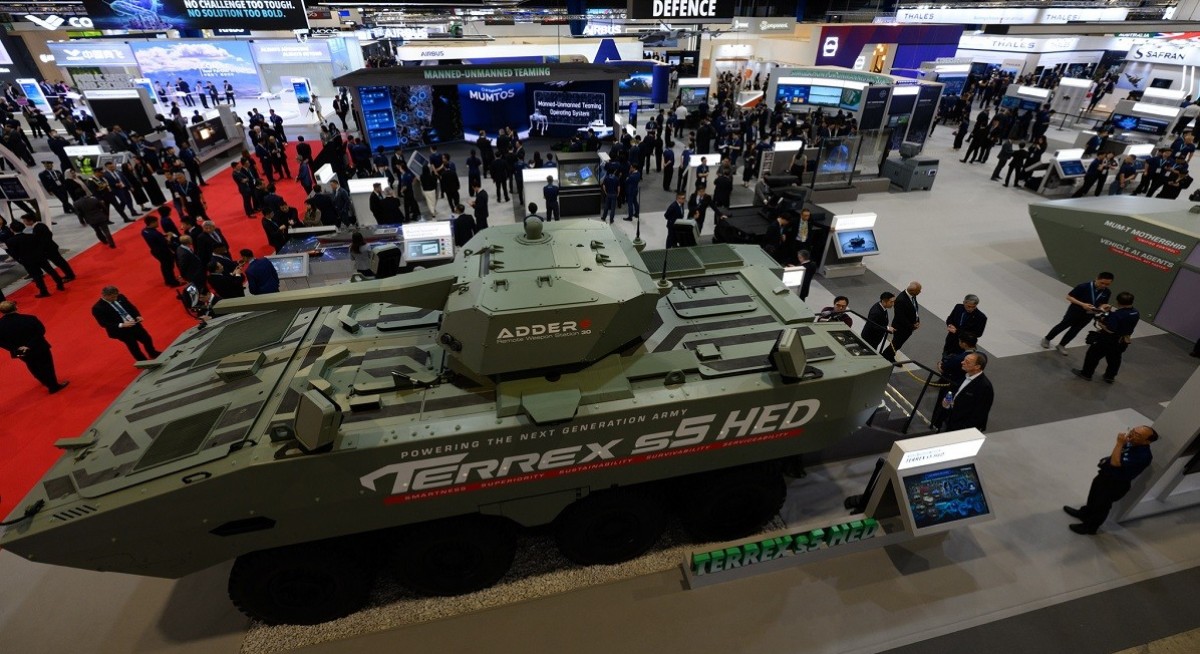
Specifically, it is trying to win orders for its Bronco all-terrain vehicle, and the Terrex infantry fighting vehicle. ST Engineering has teamed up with the likes of Italy’s Leonardo, which provides the turret that is mounted on the Terrex, to win new orders together.
According to Tan, besides those in the Middle East, potential customers with an “active interest” in its wares range from Finland, Austria and Sweden.
However, group president and CEO Vincent Chong cautions that while the company can have its ambitions, actual contract timings will depend on customers’ own prioritisation and therefore will not always show up nicely and regularly in his order book.
Chong says he obviously hopes conflicts anywhere can subside, but, the level of activity now seen by the defence industry, while “related”, is a “separate track”.
“There’s a structural change in how countries view defence spending. This upward trend will last some time,” he says.
As such, Tan says the company is sticking to its assessment that increases in defence spending will continue to be a “structural shift”, based on conversations he has had with individuals in charge of arms procurement.
Even if fighting in Ukraine is to end, the “perception of threat” will remain, especially in the European theatre, and that countries around the world are gearing up to deal with the next threat that will emerge.
As indicated at the Nato summit last June, member states have committed to ramp up their defence spending to 5% of their GDP by 2035. “We have never seen such a commitment by the disparate states of Nato,” says Tan.
Beyond Nato, major countries like Canada and Japan, too are beefing up. “You get a very strong sense that this commitment to rearm, to reconstitute defence capabilities, is structural in nature. Our assessment is even if the current war subside, such spending patterns will continue,” says Tan.




