


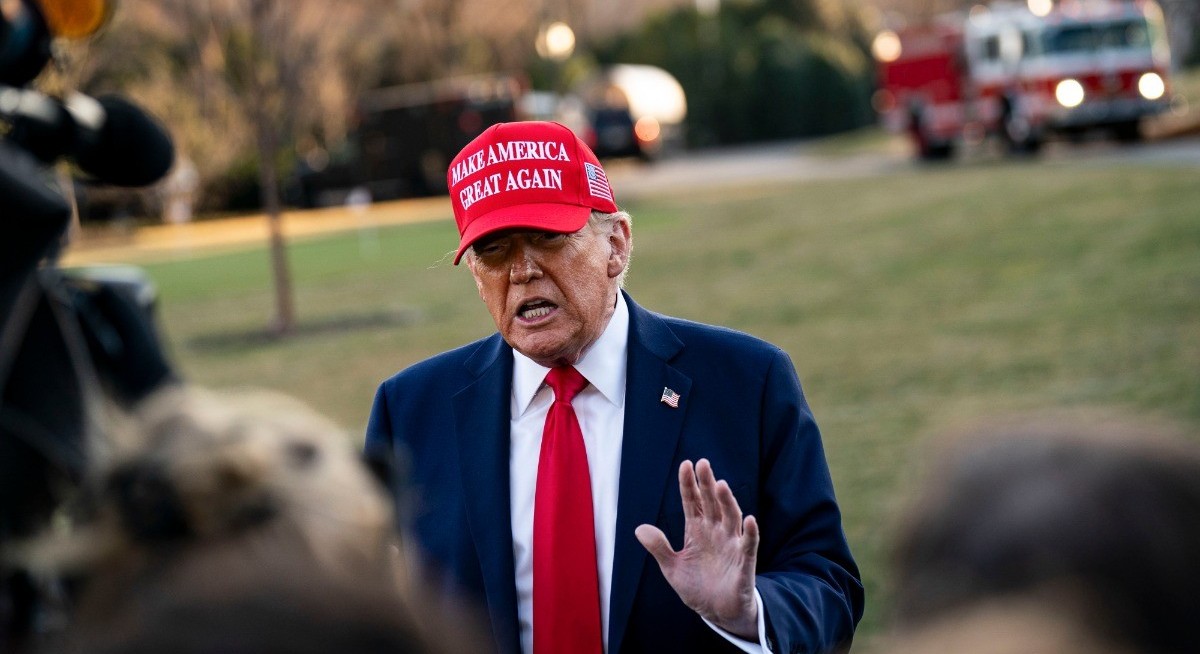


Trump’s actions are in line with his domestic policy changes aimed at removing curbs on pollution and fossil fuels, and follow a decision in January 2025 to begin a year-long process to quit the Paris Agreement, the binding 2015 accord to combat global warming. He made a similar decision during his first term in office.
The move to “retreat from the effort to reduce pollution and climate disasters will hurt the American people and businesses”, said Amanda Leland, an executive director of the Environmental Defense Fund, a non-profit. “It will turn over leadership to other countries, and the US will get no say in these critical decisions.”
Trump’s second term has delivered an acceleration of efforts to roll back action to tackle climate change, which he has labelled a “hoax” and “the greatest con job”. Funding programmes or tax incentives from his predecessor Joe Biden’s era covering areas like clean energy and electric vehicles have been scrapped, renewables projects halted, research grants frozen or cancelled, and public access to some climate-related data limited.

See also: Fourteen global trends set to shape the climate in 2026
The Trump administration is quitting institutions considered “to be redundant in their scope, mismanaged, unnecessary, wasteful, poorly run”, and advancing agendas contrary to those of the US, Secretary of State Marco Rubio said in a statement.
Exiting the UNFCCC would formally withdraw the US from the UN institution that rallies nations to set increasingly ambitious targets on emissions reductions, and coordinates the annual global COP summits to advance action on areas like decarbonisation and climate finance. US officials were absent from the most recent talks in Brazil last year.
The US withdrawal poses “the most serious challenge to international climate efforts since the adoption of the Paris Agreement”, said Li Shuo, the director of China Climate Hub at the Asia Society Policy Institute. “For China, the move means one less competitor in the clean technology race.”
See also: Hong Kong’s financial secretary calls Trump’s climate pullback ‘disappointing’
By exiting the UNFCCC, any future administration would likely face a more complex task to rejoin those efforts. In 2021, Biden moved to re-enter the Paris pact immediately after his inauguration.
Conservatives who encouraged Trump to leave the convention have argued that once the US withdraws, any bid to re-enter the UNFCCC would have to be accompanied by a fresh Senate vote, which would require a two-thirds supermajority. However, some legal experts have said a future president could simply re-accede to the accord without Senate approval.
Advocates of the exits insisted the US will be freed from policies that seek to eliminate fossil fuels and which they argue are raising energy costs. “His action is a clear signal that our country won’t be part of global efforts to tell people how to live their lives and how to produce and use energy,” said Daren Bakst, the director of the Competitive Enterprise Institute’s Center for Energy and Environment.
The IPCC, established by the UN and World Meteorological Organization in 1998, is regarded as the crucial global authority on humankind’s contribution to planetary warming and has produced six flagship assessments that shape climate policymaking. It has traditionally relied heavily on US funding and expertise.
In leaving the IPCC, the US “will no longer be able to help guide the scientific assessments that governments around the world rely on”, though individual scientists may still be able to contribute, said Delta Merner, an associate director for the climate accountability campaign at the Union of Concerned Scientists.
US involvement in the next major assessment, due in 2029, was already in question, amid mass firings and programme closures at some of the country’s leading federal weather and climate agencies. Some experts were prevented from participating last year in a preparatory meeting in China.
“The implications are substantial,” said Benjamin Horton, the dean of the school of energy and environment at City University of Hong Kong. “The US has traditionally contributed expertise, leadership in assessment chapters, and critical Earth‑system monitoring data. I am unsure how the IPCC can continue without the US.”
Uploaded by Tham Yek Lee




