




Businesses and banks may now access a framework to identify, evaluate and finance credible adaptation and resilience (A&R) investments.
Developed by DBS and Climate Bonds Initiative (CBI), the framework is published in their Adaptation and Resilience: Exploring Investable Opportunities in Asia-Pacific report issued on June 23.
The bank tells The Edge Singapore that it has seen growing interest from clients across industries to engage on A&R finance. Presumably, this is a motivating factor in publishing the report.
The report identifies a gap between A&R financing needs and financing flow, especially for Asia, which accounts for approximately 69% of global adaptation financing needs and 75% of the global financing gap by 2030.
For context, annual costs associated with physical climate risks for companies with significant operations in Asia are projected to reach US$336 ($436) billion by the 2030s, but less than 10% of climate finance flows support A&R and less than 11% of that comes from the private sector globally.
The report suggests the development of A&R financing frameworks, including taxonomies, thresholds and market definitions, have lagged behind mitigation finance. Thus, the publication of the report is a means to potentially boost A&R financing and close the financing gap, by providing banks and businesses with practical guidance on what constitutes a credible climate resilience investment and how these can be assessed.
See also: ETAF under Singapore's FAST-P raises US$250 million in first close
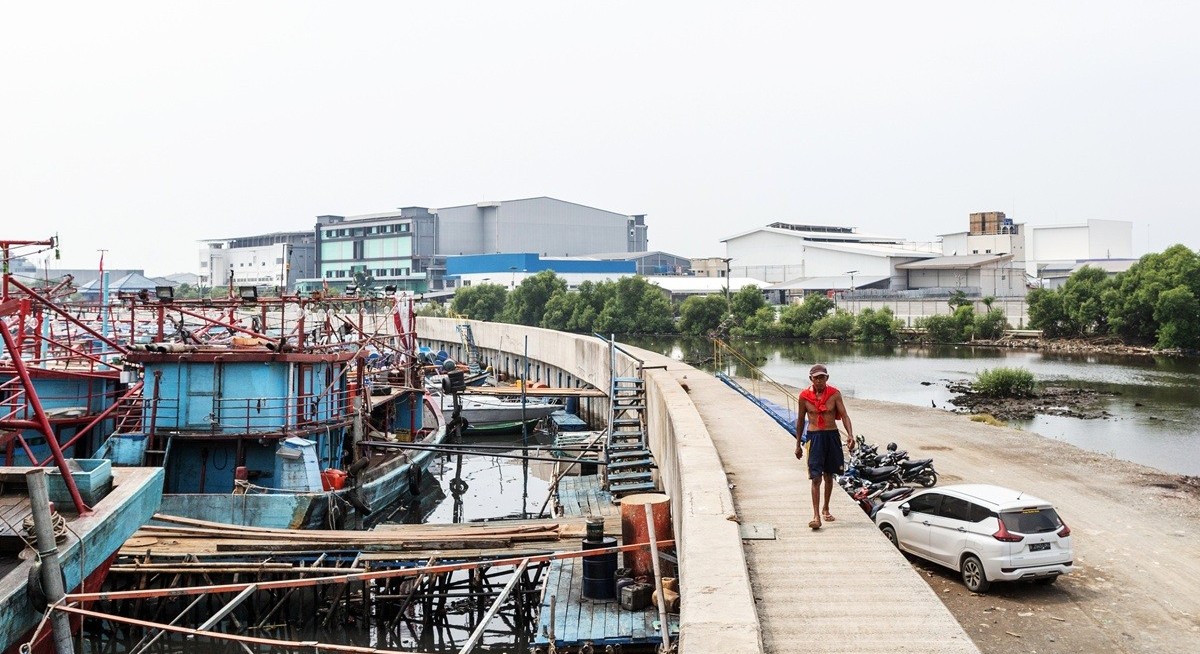
Mitigation finance focuses on reducing greenhouse gas emissions and slowing the pace of climate change while A&R finance addresses the unavoidable impact of climate change with measures such as building seawalls to prevent flooding from rising sea levels.
Noting that A&R finance is still at an early stage of development, DBS says that closing the financing gap will require coordinated action across the wider ecosystem, including financial institutions, businesses, policymakers and standard-setting bodies.
DBS explains that this initiative represents its first step in developing the bank’s A&R financing capabilities. Before investment can be scaled, there needs to be greater clarity on what constitutes a credible A&R investment and how such opportunities can be consistently identified and assessed, with the report serving as a good base for such a framework, adds DBS.
See also: Singapore brings back 19th-century tech to beat warming climate
Kelvin Wong, DBS chief sustainability officer, says that finance can be a “lever” that accelerates both the low-carbon economy transition and climate adaptation. “As climate change increasingly shapes how businesses grow in the decades ahead, organisations need to better understand not only their exposure to climate risks, but also the investments required to strengthen resilience,” he says.
Besides identifying A&R financing opportunities and assessing their credibility, the report also shares information on how to identify potential impact indicators and metrics to track and measure outcomes. It covers four sectors in four geographies — commercial real estate in India, data centres in Singapore and Malaysia, power infrastructure in China and transport corridors in Taiwan.
Illustrating how material climate hazards are already driving investable responses in various markets, the report aims to balance the rigour of resilience responses in local contexts while highlighting sufficient standardisation to support investment decisions, market confidence and capital mobilisation.
“Through our partnership with Climate Bonds Initiative, we hope this report contributes to the development of a more transparent and investable market across the region," says Shilpa Gulrajani, DBS head of sustainable finance for institutional banking. "Effective A&R solutions must be grounded in local conditions, while commercial banks need greater clarity and consistency in how A&R investments are assessed.”
CBI CEO Sean Kidney says that the effects of climate change, with more intense heat, floods are not just climate risks, but also financial risks. “That’s why adaptation and resilience is moving from the margins into the core of banking strategy and risk management,” he says. “ This report sends a strong signal that mainstream finance is ready to act to build the resilient societies, economies and businesses of the future.”




