




(May 6): As electric car sales soften in China after years of breakneck growth, electric trucks are taking off, with the emerging industry expected to get a boost from the Iran war.
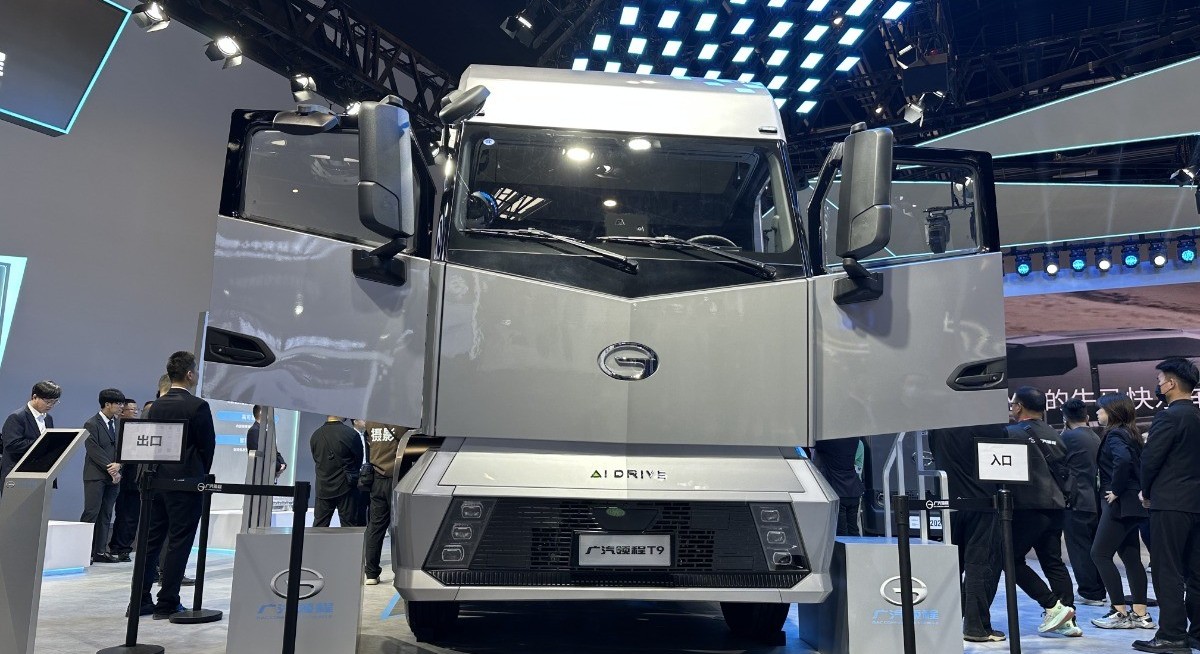
At the recent Beijing auto show, a hulking silver electric truck towered over the showroom of passenger cars advertised at discount prices.
Electric trucks, like the battery-powered model offered by GAC Lingcheng New Energy Commercial Vehicle Co, now make up 20% of the overall segment after sales tripled in 2025. Monthly sales doubled in March to more than 24,000, according to Bloomberg calculations based on China Automotive Technology & Research Center data, though February purchases were likely dented by the Lunar New Year holiday.
“Fleet operators are switching because the math finally works, not just because of regulatory pressure,” Xu Shuo, chief financial officer at GAC Lingcheng, said in an interview. The Guangzhou-based company sells commercial vehicles domestically, competing with heavyweights including XCMG Construction Machinery Co and China FAW Group Co.
Battery-powered big rigs remain more expensive than mainstream diesel models but Beijing has extended trade-in subsidies through the end of the year. Xu estimated that the payback period for spending an extra 100,000 yuan to 150,000 yuan on an electric truck could be as little as one year.

See also: Talking in circles in China
The economics for electric trucks have improved in recent months. The fuels powering traditional freight trucks have soared in China since the outbreak of the Iran war, with liquefied natural gas jumping 53% and diesel up 35% by the end of April, according to data from the National Bureau of Statistics.
On average it’s cheaper to run a truck on electricity than diesel but the economics vary as power prices can change based on time of day and location, said Maynie Yang, an associate for commercial transport at BloombergNEF.
“Higher diesel prices could further stimulate electric truck sales but it may take some time for fleets to react,” Yang said.
See also: Humanoid robots to drive next leg of China's export dominance — Morgan Stanley
Even before the war, clean truck sales were poised for further growth in the coming years. Improving battery and charging technology is making long-distance and heavy haulage a more viable candidate for electrification, and adoption rates are rising for trucks and other commercial vehicles in Europe as well as across China.
BNEF estimates show electric heavy-duty commercial vehicles reaching 63% of total sales in China by 2035 under a scenario that doesn’t factor in extra pressure from climate targets.
Xu believes the “momentum toward electrification is irreversible" and expects greater competition within China.
Electric vehicles are taking a growing share of long-distance travel during China’s holidays, with highway charging demand surging, the Securities Daily reported on Wednesday.
But long-haul trips remain a hurdle for heavy-duty e-trucks, which currently are largely used for short-haul trips, travelling between ports and factories, mines and railroads, or nearby cities.
The Chinese government targeted that gap in the 15th Five-Year Plan unveiled in March, aiming to build 10,000km of zero-emission freight corridors by 2030, and Chinese companies are scaling up charging stations with 9,000 announced as of last September.
Shen, a driver who asked to be only identified by his surname because he wasn’t authorised to speak to the media, was waiting at one such station newly built by TELD New Energy Co in Hebei province recently. He was delivering construction materials between Tianjin and Baoding, a roughly 170km journey that would typically require 200 yuan in petrol costs but now costs him 120 yuan in charging fees, he said.
“Charging may take some time but I plan it along with my breaks and it’s not a problem,” he said. “The cost savings really make a difference.”
Uploaded by Arion Yeow




