


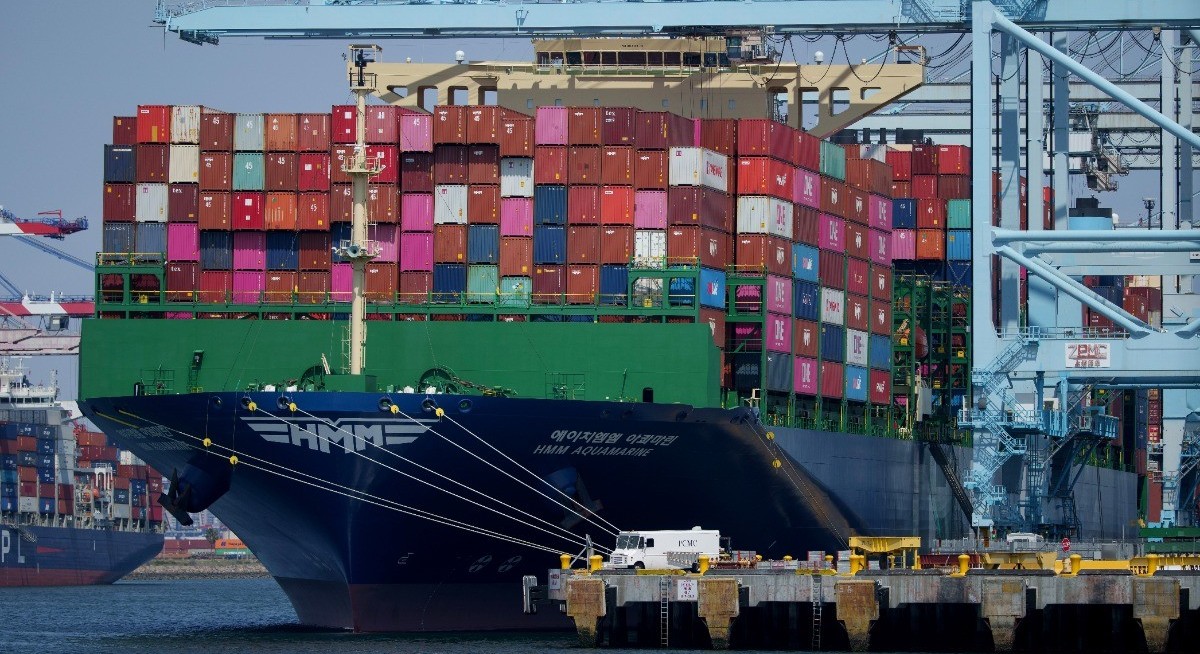


As China navigated the trade war and growing economic protectionism around the world, the country amassed a surplus of US$1.1 trillion, needing just 11 months to catapult it past a full-year record set in 2024. While shipments to the US plummeted 29% — the eighth month of double-digit declines and the biggest since August — strong growth in sales to regions like the European Union and Africa more than offset the slump.
The display of export dominance is stirring waves of resentment abroad. French President Emmanuel Macron, who visited China last week, has warned the EU may take “strong measures”, including imposing tariffs, should Beijing fail to address the imbalance.

“If the EU indeed does follow suit with tariffs, it would represent a significant risk to the external demand outlook for China,” said Lynn Song, chief Greater China economist at ING Bank NV.
See also: China summons Alibaba, other platforms over pricing practice
The milestone reached by China follows the recent de-escalation of tensions with the Trump administration. The huge surplus also underscores how Beijing is struggling to rebalance the economy away from its dependence on demand abroad, with net exports accounting for almost a third of economic growth this year.
“It does look like China’s export competitiveness is still standing firm against US tariffs,” said Michelle Lam, Greater China economist at Societe Generale SA, referring to robust shipments to other markets than America. Rising trade tensions with the EU are “a source of downside risk to watch out for,” she said.
On Monday, German Foreign Minister Johann Wadephul arrived in China for a two-day trip, becoming the latest senior European official to visit for talks. China’s exports to the EU expanded almost 15% last month — the fastest since July 2022 — with sales to France, Germany and Italy all seeing double-digit growth.
See also: Meituan warns of US$3.5 bil loss as China's food war worsens

Wadephul said before the trip that he’d raise trade curbs, especially on rare earths and “overcapacities” in electric vehicles and steel, with his Chinese counterparts. China’s auto imports are down almost 39% in the year to date.
Shipments overseas have boomed for much of this year, in spite of US President Donald Trump’s launch of a trade war early in 2025. The world’s second-biggest economy has emerged largely unscathed from the standoff as it delivered more goods to markets other than the US.
The year-on-year increase in exports of electronic and machinery products rebounded to almost 10% last month, versus October’s rise of just over 1%, according to Bloomberg calculations based on China’s customs data. Declines in shipments of consumer goods narrowed.
Exports to Africa surged nearly 28% in November while those to the Southeast Asian trading bloc gained only 8.4%, the least since February. Despite escalating tensions over the self-governing island of Taiwan, imports from Japan rose faster in November than exports to there, resulting in a US$1.3 billion deficit for China.
The historic trade surplus will help boost growth in gross domestic product after months of deterioration in the economy. Retail sales are coming off their longest stretch of slowdowns since 2021 while investment just shrank by a record amount.
Although the Chinese economy is expanding at a slower pace in the last quarter of the year, its strong performance earlier in 2025 means the official growth target of around 5% is likely within reach.
To stay ahead of Singapore and the region’s corporate and economic trends, click here for Latest Section
Foreign demand has been the one consistent driver of Chinese growth, helping compensate for lacklustre private consumption at home and the prolonged slump in the housing market.
But the trade picture has become increasingly unbalanced, with China’s weak demand and increasingly innovative firms slashing demand for imports.
While it’s “ultimately essential” for China to embrace a growth model driven more by domestic demand, such a pivot will take time, according to ING’s Song.
“We need to see what sort of concrete measures are put into place to boost domestic consumption and how those measures to increase win-win cooperation and establish international consumption centres play out,” he said. “It’s quite clear at this point that relying on external demand as the main growth engine is a risky bet.”
Uploaded by Arion Yeow




