


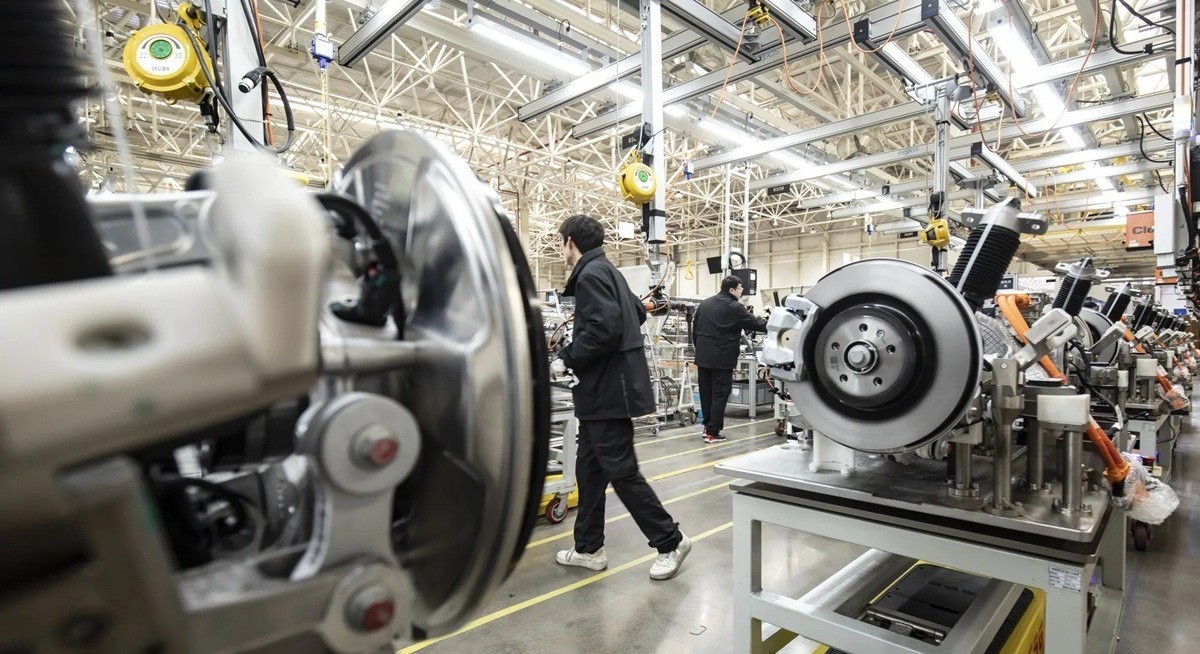


(May 11): China’s factory prices grew at the fastest pace since the pandemic four years ago as the fallout from the Iran war sharply raised costs.
Producer prices rose 2.8% in April from a year earlier after an increase of 0.5% in the previous month, according to data released by the National Bureau of Statistics on Monday. That was the fastest since July 2022 and higher than all estimates in a Bloomberg survey of economists, whose median was 1.8%.
Though food prices slumped, consumer inflation unexpectedly climbed to 1.2% from a year earlier from 1% in March, surprising analysts who expected a slight slowdown.
The Chinese yuan extended gains against the US currency after the data release, gaining as much as 0.2% to breach the psychological level of 6.8 per dollar. Chinese bond futures fell, with the 30-year tenor dropping to the lowest intraday level in more than a month.

The acceleration in producer prices was “driven by factors including the rapid rise in international commodity prices, increased demand in certain domestic sectors and improved market competition", NBS statistician Dong Lijuan said in a statement accompanying the release.
See also: Hedge fund CFM opens office in Shanghai, assets top US$27 bil
Triggered by the war in Iran, the worst energy disruption in generations has already helped end three and half years of factory deflation in China. But it’s also piling pressure on profits as companies struggle to pass on higher costs to their customers, as domestic demand remains weak and the labour market shows signs of deterioration.
Even in sectors like the services industry, firms are reducing their charges despite a sharp increase in the rate of input cost inflation.
In a sign of growing pressure on factories’ profit margins, the purchase price index rose 3.5% from a year ago. That’s the biggest gap with selling prices since August 2024.
See also: Pop Mart sales growth decelerates amid sharp overseas slowdown
China had been trapped in a deflationary spiral since late 2022, as a manufacturing glut and sluggish domestic demand led to intense price wars. Bloomberg Economics predicts the GDP deflator, a measure of price changes across the economy, may end its three-year streak of declines this quarter.
Price increases in non-ferrous metals’ mining and processing industries accounted for almost 1.6 percentage points of the year-on-year increase in producer inflation.
Meanwhile, several industries impacted by the Iran war — including crude oil extraction and processing, as well as chemical materials manufacturing — contributed 1.5 percentage points, according to Dong.
Electrical machinery and electronics manufacturing made up slightly less than half a percentage point of the overall increase in the producer-price index.
Uploaded by Arion Yeow




