


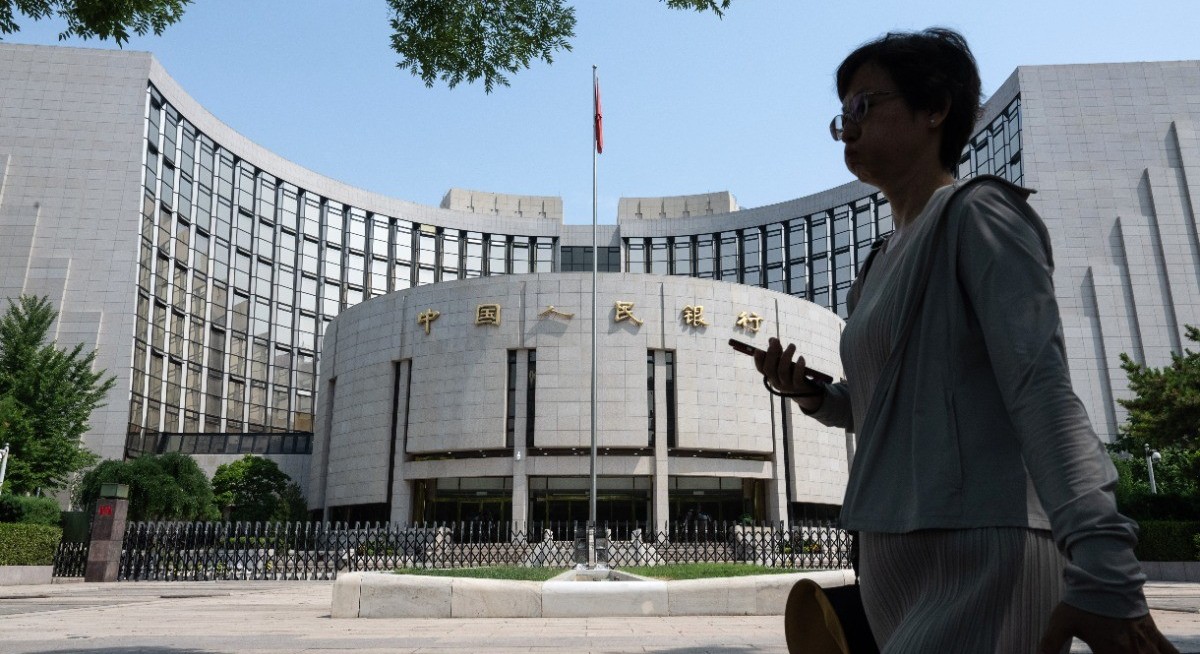


(June 25): China’s central bank is introducing an overnight tenor into its open-market operations, a key step towards reshaping how it steers short-term borrowing costs.
The People’s Bank of China (PBOC) will conduct overnight reverse repurchases in open market operations on June 29 and June 30, according to a statement from the monetary authority. The overnight funds will be offered at a fixed rate and the operation will better match the short-term liquidity needs in the banking system, it said.
A new overnight reverse repo rate will add to the PBOC’s regular seven-day reverse repo rate of 1.4%, which has served as the main policy benchmark. For its longer-term liquidity tools, the PBOC has changed the bidding method and scrapped a unified rate.
Some economists believe a stand-alone overnight rate brings the PBOC into closer operational alignment with major global peers like the US Federal Reserve, which relies heavily on overnight targets to steer the broader economy. The move deepens a campaign initiated by the PBOC in 2024 to transition its complex monetary framework towards a system focused on short-end funding costs.
“The key to watch is the interest rate. If this new overnight reverse repo rate is at 1.25% or below, we see it as a de facto rate cut by the PBOC,” said Becky Liu, the head of Greater China strategy at Standard Chartered Bank.
“Another issue to watch out for is whether this will become a regular operation or just ad hoc operation during time of tighter liquidity conditions,” she said.
See also: China said to push rating firms to review AAA glut in bond market

The move follows an announcement from PBOC governor Pan Gongsheng at the recent Lujiazui Forum, where he signalled plans to expand the central bank’s overnight reverse repo operations. During his address, Pan revealed several initiatives aimed at achieving greater precision in steering short-term funding costs, including narrowing the interest rate corridor and introducing a yuan repo facility for overseas central banks.
While having another policy tool rate creates the potential for a future shift to a new benchmark, there are concerns that the PBOC may face some challenges that impede the transition to an overnight key policy rate. The vast majority of contracts used by financial institutions to hedge against rate swings are still tied to the seven-day repo rate, making it hard to dislodge quickly, according to Bloomberg Economics.
See also: China auditor says top banks evaded tax, made improper loans
Jeffrey Zhang, a strategist at Credit Agricole CIB, expects the rate of the debut PBOC overnight reverse repo operation to be fixed at 1.3%, where the interbank market’s overnight repo rate usually begins.
“Overall, we believe the PBOC will still mainly rely on seven-day repo operations for its daily open market operations, while overnight reverse repos could be conducted to smooth out seasonal factors, and any transition to the overnight rate as benchmark policy rate would still take time,” he said.
Uploaded by Tham Yek Lee




