


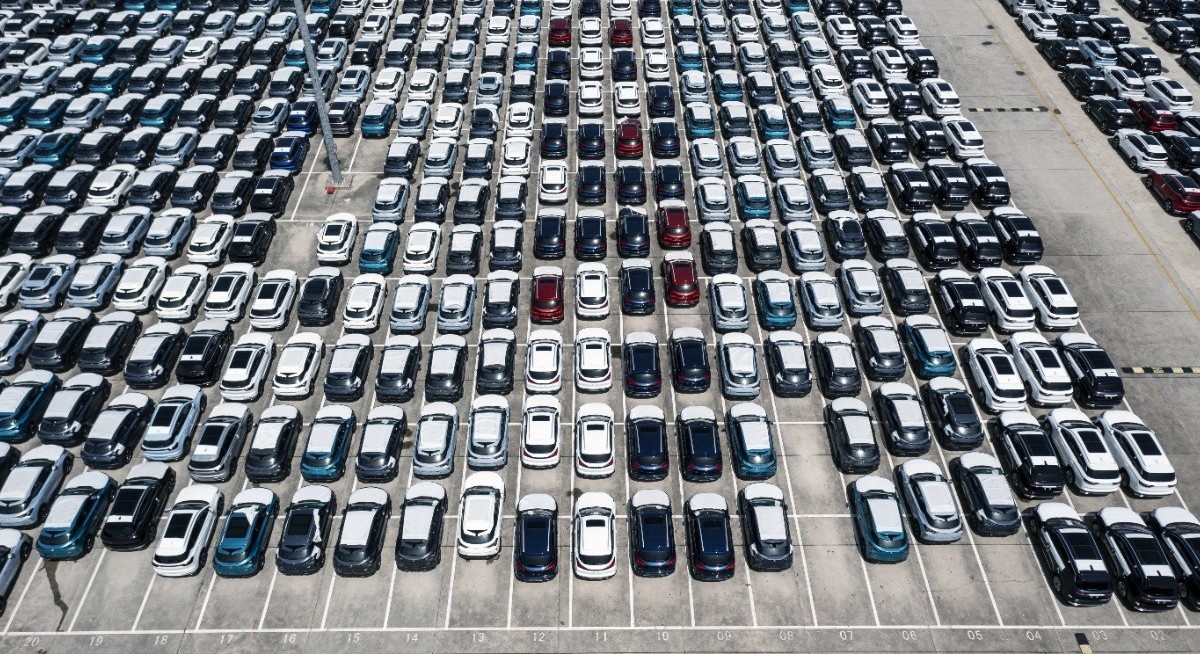


Shares of BYD Co and other Chinese makers of electric vehicles, who’ve been relying on discounts to prop up slowing demand, fell on Monday as the move signalled further scrutiny on the industry. Despite China publicly shaming automakers more than six months ago for their “rat-race competition” and warning about the financial health of the industry, prices have continued to drop.
It remains to be seen if the new rules will reverse the downturn in car prices, considering one of the biggest causes of the vicious discounting comes from weak demand and car production overcapacity, said Li Yanwei, an adviser to the China Automobile Dealers Association. “Some brands have used economies of scale in their capacity to gain an advantage in the market at this stage, exacerbating the price war,” he said.
More broadly, China’s clampdown on car prices is part of the government’s crackdown on “involution”, whereby hyper-competition brings diminishing returns.
Meanwhile, average car transaction prices have fallen, with BYD’s slipping from 116,200 yuan in June to 108,100 yuan in October, according to data compiled by China Auto Market. Manufacturers are still offering discounts to stimulate sales as state incentives for trade-ins and EV purchases get scaled back, leaving automakers and dealers in a tough spot.
See also: Treasuries decline on news Chinese banks asked to limit US bonds
BYD, the world’s largest maker of EVs, fell 1.7% in Hong Kong while Nio Inc lost 2.5%, Xiaomi Corp dropped 2.2% and Zhejiang Leapmotor Technology Co declined 2.8%.
“Investors in the sector have become increasingly aware of these regulatory headwinds over the last several months, which is one reason why there has been weakness in auto stocks,” said Eugene Hsiao, head of China equity strategy at Macquarie Capital. Overall, the proposed guidelines seem in line with the government’s broader anti-involution moves, he said.
Shares of some auto dealers rose on optimism that they’ll be under less pressure to roll out steep discounts to meet sales targets set by carmakers. China Yongda Automobiles Services Holdings Ltd rose 1.2% and Zhongsheng Group Holdings Ltd climbed 3%.
See also: China pumping cash to fill US$456 bil liquidity shortfall
Though dealers could narrow losses, execution remains a challenge, Morgan Stanley analysts including Shelley Wang wrote in a note Sunday. For example, it would be difficult for dealers to raise prices for consumers given the prolonged weakness in demand, particularly for luxury cars running on combustion engines, they wrote.
The regulator’s proposed rules, which are open to public feedback until Dec 22, also target collusion and recommend that carmakers and dealers establish systems to train staff, monitor prices and control risks.
Separately, authorities will also require carmakers to obtain export licences for EVs from next year to clamp down on so-called zero-mileage cars to prevent companies from inflating sales by booking deliveries before cars even reach end consumers.
Growing scrutiny of industry practices has led some carmakers to change the type of incentives they offer, moving away from outright discounts to offering buyers a better bang for their buck. Some brands, for example, sell large new SUVs for the price of a small one, according to Macquarie’s Hsiao.
Uploaded by Arion Yeow




