


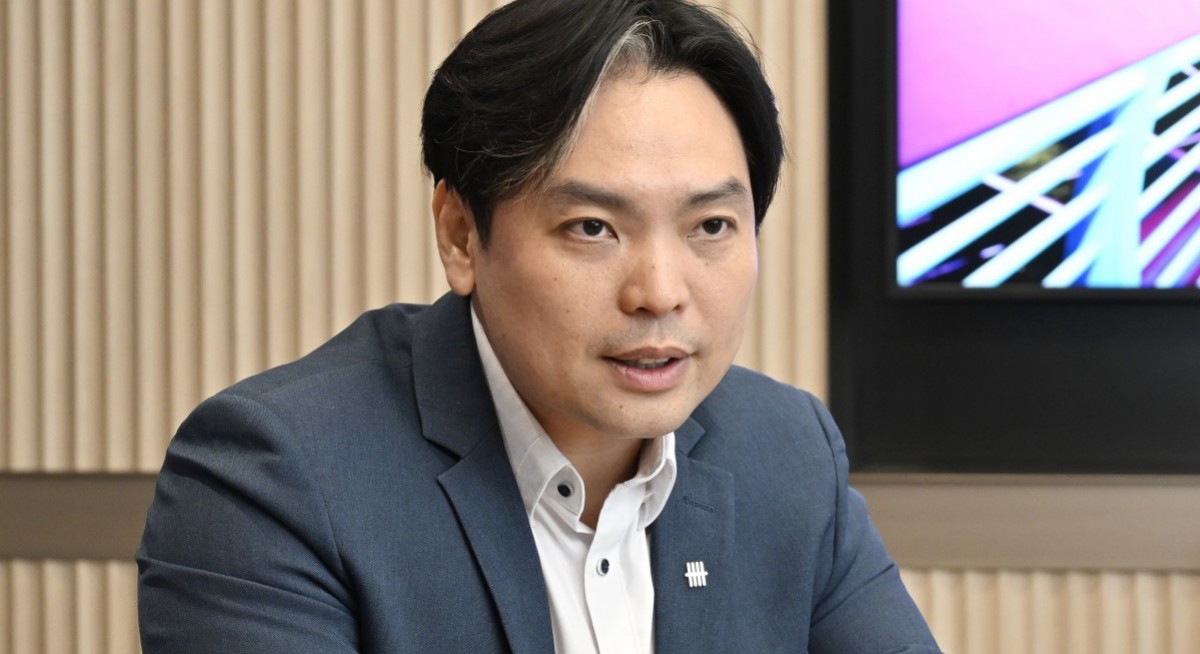


When Lee joined UOB in July, he restructured the innovation group and had the different teams work together to create more synergies as opposed to working on silo strategies for artificial intelligence (AI), data and blockchain, as they previously did.
At present, the bank has four guidelines for innovation. “It’s always about innovation with purpose. So we need to make sure we deliver what matters to the bank, rather than trying to chase after the new technology itself,” Lee says.
“Also, we place [a] very high importance on regulations and governance because we believe those help us to enhance the scale, rather than being an obstacle to innovation,” he adds.
Third, to the bank, a tool is not just a tool but also a means to observe processes end-to-end, which is part of its system thinking.
See also: JPMorgan doubled private bankers in Singapore team to top 50 — Bloomberg
The fourth guideline is people. “How do we make sure that we train people, we upskill our people and make sure that they are comfortable and confident with whatever that we’re going to roll out?” Lee says. With news of various organisations slashing jobs in their push for AI, Lee says the bank uses AI to lift productivity so its staff can focus on higher-value work as the business scales. One example he cites is writing source-of-wealth reports, which used to take over three weeks. With agentic AI, this task now takes just a few hours.
Outcome first, tools second
When it comes to deciding which technologies to adopt, Lee says the bank starts by focusing on the desired outcome. “The first thing that we look at is to understand the pain point. We start with the outcome in mind and not the tools first,” he says. “We try to move away from trying to churn out new technologies as they come, [and instead examine] what matters most to the bank and which tools can bring the most value.”
For instance, some of the anchors the bank looks at include increasing client trust, improving risk management, strengthening resilience and raising productivity. “The technology and the tools that we use have to follow these priorities and not the other way around.”
See also: OCBC enables Singpass for Singaporeans to open business account with OCBC Malaysia
This has led to the bank taking on a hybrid approach when it comes to building its tools or buying from a third-party provider. One of the reasons behind a decision to partner with external vendors is whether they have deep expertise on fast-moving areas, especially AI. The bank also considers partners that have experience in ecosystem integration, given that it is in several other markets across Asean. “We need to be able to work across markets where there are different rules and regulations, as well as uneven regulation and digital maturity. So, we need these types of digital and data platforms where we are able to capture some common standards and controls,” Lee says.
When it comes to partnerships, the bank looks more at co-creating tools as opposed to procuring them outright. Lee attributes this to the speed of evolution in technology today, which means the bank prefers to work with its consultants and partners to create a custom tool. “We don’t want to be locked down by any vendor,” he adds. “If it’s something that differentiates us, we want to build it, but if it is something that we want to launch quickly with speed, then we partner.”
A partnership to create a tool typically takes six to 12 months. Building a tool takes longer and depends on whether the bank already has the technology or it needs to source for it. One example Lee gives is an open source model like Llama 4. The bank took six months to assess security issues alone before any actual development work could begin.
Enterprise AI from established vendors moves faster because once the bank is satisfied with the security checks done by the enterprise, there is not as much work required whenever there are version upgrades, unlike open source models.
What’s already running
UOB has already launched Microsoft’s Copilot across the bank and trained more than 30,000 staff on it. “I think that is quite encouraging,” he says.
The bank has also created a build-your-own-bot capability, rolling out more than 14 bots last year, with around 20 more planned for this year. Other initiatives include machine learning models for tasks such as estimating branch waiting times and monitoring relationship managers in the private bank to ensure they are recommending appropriate products.
The take-up rate is encouraging, with positive feedback from staff so far. “The feedback on the ground is, can you go even faster?’”
To stay ahead of Singapore and the region’s corporate and economic trends, click here for Latest Section
Yet, due to the bank’s highly-regulated environment, the rollout of such initiatives will always be slower compared to public use, as it will have to clear security checks. As such, the bank will have to think of ways to streamline the onboarding process to try to keep up with the industry.
When asked about hacking fears from Anthropic’s Mythos, Lee says: “Protecting [the bank’s] customers and stakeholders from cybersecurity threats and risks remains our priority.”
He adds: “Our disciplined and responsible approach to innovation ensures that strong governance, ethical considerations and robust data stewardship are integral to our use of AI. To enable this, we have built enterprise platforms such as Model Analytics Platform and Enterprise GenAI Platform, which enable the controlled onboarding and deployment of AI models at scale. We also maintain the robustness of our systems by continually reviewing the bank’s cybersecurity framework.”
Furthermore, UOB works closely with the regulators and industry peers to “monitor emerging threats, share intelligence, and strengthen collective risk mitigation efforts”. “We will continue to monitor advancements in AI closely, ensuring that our operations and customer data remain safeguarded.”
When asked about tangible benefits, Lee says the bank is now working with a partner to define a value measurement framework that allows it to record benefits in a systematic manner.
“The numbers that are coming up from this framework — we will be able to announce [them] publicly as well, because it can be audited.”
Experimentation vs risk
When it comes to innovation, Lee, as the bank’s “chief experimenter”, believes it is important for the bank’s employees to “learn fast [and] fail fast” without fear.
The bank will also have to playpen test environments with guardrails, as well as governance that keeps pace with technology rather than lagging behind it.
Accountability for AI and digital data adoption has been pushed up to senior management and board directors, who have been “very supportive”. “When I talk to senior management and the board, it’s always about how do we put trust as the centre of everything, to be able to earn trust at scale.” Innovation, to Lee, has to be “designed to be safe, to be fair and to be accountable right at the start”.
The Asean opportunity
UOB’s strongest differentiator, notes Lee, is its Asean footprint. “We are always trying to work across markets where we design our platforms to be ready for fragmentation but prepared for harmonisation,” he says.
“If you look at Asean, we are in a very diverse region. So we need to make sure that we are able to apply strong local standards to make sure that we can adapt to local market conditions,” he adds. With this, he hopes that ongoing framework discussions within the Asean nations will help harmonise rules on data, digital identity and payments.
On where the biggest opportunity lies over the next three to five years, Lee sees it in the “interoperability between the Asean countries”. “This applies not only to digital and data. It applies to sustainability as well. We need to make use of digital and data platforms that are able to provide common standards and common control, so that we can scale some of these on a regional basis in a very responsible manner, rather than trying to solve it market by market,” he says.
In the meantime, he is looking forward to rolling out the strategies that have already been approved. “Over the next three years, we have different deliverables that we need to achieve, and all these are very encouraging and exciting because it really brings up the productivity and the proficiency level as a bank, when we look at digital and data and AI.”
“Overall, innovation only matters if it can earn trust and deliver value over time. So at UOB, the development of digital and data capabilities is about how we use them to scale in a responsible manner, as well as make a difference to our customers and the communities we serve,” he adds.




